JESD22 semiconductor packaging reliability test chambers HAST MSL
A semiconductor die is tough. The plastic mould compound around it is the weak link, since it drinks water vapour, swells, and carries that moisture down to the bond pads and the lead frame. Heat, bias and a reflow oven then turn the trapped water into corrosion, delamination or a popcorn crack.
JEDEC wrote the JESD22 series to force those failures out in weeks instead of years. The tests live in a climatic chamber, and each one fixes a temperature, a humidity, sometimes a pressure and a bias, all tuned to one packaging failure mode.
The climatic family at a glance
Each method carries a number and targets one mechanism.
| Method | Stress | Headline condition |
|---|---|---|
| JESD22-A101 | THB, biased damp heat | 85 C, 85 percent RH, under bias |
| JESD22-A110 | HAST | 130 C, 85 percent RH, 2 atm |
| JESD22-A102 | Autoclave, unbiased | 121 C saturated steam |
| JESD22-A113 | Preconditioning | soak then reflow before stress |
| JESD22-A105 | Power temperature cycling | powered swing across the range |
The die is the strong part
The silicon shrugs off heat and damp. The plastic mould compound around it is the weak link, and that is where these tests aim.
Hours that stand for years
A few hundred hours in the box stand in for years in a phone or a car. The acceleration is the whole point of the run.
THB, the 85 at 85 workhorse
Temperature humidity bias is the long, patient one. Part A101 holds a package at 85 degrees and 85 percent humidity for a thousand hours while a voltage sits across it, so any moisture path between conductors shows up as leakage or a short. The steady state THB chamber under A101 lives or dies on holding that band flat for six straight weeks, since a single excursion restarts the clock.
HAST, the pressure cooker

HAST is the test built to save time.
A thousand hours of THB is a long wait on a product launch. Highly accelerated stress test, part A110, drives the same moisture failure far faster by adding pressure. The HAST chamber at 130 degrees, 85 percent RH and 2 atmospheres pushes water vapour into the package under pressure the open air cannot match, and 96 hours inside it stands in for the full thousand hour soak.
The pressure is what makes the chamber a different machine. It is a sealed vessel rated for steam above the boiling point, closer to an autoclave than to a reach-in box, and it carries the safety interlocks a pressure vessel demands.
The unbiased cousin is the autoclave under A102, running saturated steam at 121 degrees with no voltage, a blunter screen for gross moisture ingress.
MSL, the number on the dry pack
Every surface mount package carries a moisture sensitivity level, and that level decides how it is shipped and how long it can sit on a bench before reflow.
The MSL classification chamber under J-STD-020 sets the level by soaking the part, running it through a simulated reflow, then checking for delamination. A level one part needs no dry pack. A level six part has to be baked and reflowed within hours of opening the bag. The preconditioning sequence under A113 applies that same soak and reflow before any THB or HAST run, so the package faces the stress in the state a real assembly line leaves it in.
A shop running mixed inventory leans on a preconditioning chamber for SMT components across MSL 1 to 6 to qualify every level on one floor.


Advanced packaging raises the stakes
Stacked and side-by-side dies changed the failure picture.
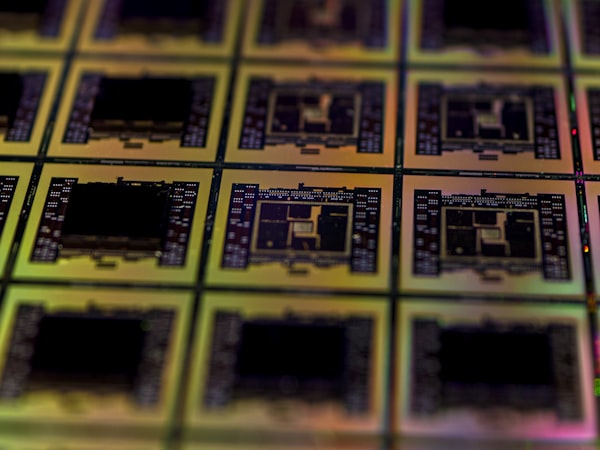
A flat single chip dries out evenly. A 2.5D or 3D package traps moisture between layers and along the interposer, where it has nowhere to escape during reflow. The reliability chamber for CoWoS advanced packaging exists because the interposer and the micro-bumps fail in ways a flat package never showed.
Memory stacks are the sharpest case. The chamber for HBM3 and HBM4 memory stacks has to qualify a tower of thin dies bonded with through-silicon vias, where one delaminated layer kills the whole stack and the AI accelerator it feeds.
Cycling and shock beside the moisture
Moisture is one axis. The package also sees temperature swings every time the device powers up and down, and the standards fold that in.
Part A105 runs power temperature cycling, swinging the part across its range while it draws current, which mixes self-heating with the chamber climate. Part A106 covers thermal shock, throwing the package between hot and cold in seconds to stress the mismatch between silicon, copper and mould. Board level solder joints get their own method, the solder joint thermal fatigue test under IPC 9701, which cycles an assembled board until the joints crack.
The dry side: ESD environment
Not every package test wants humidity high. Electrostatic discharge testing under part A114 needs the air held at a controlled low humidity, since damp air bleeds charge and hides the very failure the test hunts. The ESD test environment under A114 sits at the opposite corner of the envelope from HAST, dry and stable.
Past the chip, into the actuator
The same packaging discipline now reaches parts that are not chips at all. Robot builders borrow it to qualify the electronics and the sealed motors that drive a machine through a humid plant for years.
A line builder runs a durability chamber for humanoid robot joint motors and an endurance chamber for collaborative robot arms, applying the cycling and damp heat the joint electronics will meet on a factory floor. The package shrank, the standards grew, and the chamber followed both.
Why pressure buys the speed
The acceleration in HAST is not magic. It follows the Peck model, where the time to failure scales with humidity and temperature, and raising both shortens the wait in a predictable curve.
At 130 degrees and 85 percent humidity under two atmospheres, the vapour pressure driving water into the package is several times what 85 at 85 delivers at room pressure, and moisture that took a thousand hours to creep in at the gentler condition arrives in tens of hours instead. The damage mechanism stays the same, which is the whole point: the water reaches the same interfaces and feeds the same corrosion, only faster, so the result still maps back to field life rather than inventing a failure the field would never see. A test engineer can quote an acceleration factor against the THB baseline, a single number that says how many field hours each chamber hour stands for, and defend it when a customer asks how 96 hours can cover a thousand. The arithmetic only holds while the condition stays below the point where a fresh mechanism wakes up, so the vessel runs hot and wet but never so hard that it cooks the part by a route the shelf never would. The pressure vessel earns its higher price by handing back six weeks of schedule on every qualification.
Bias is the hidden variable
Damp heat without voltage finds gross moisture ingress. Damp heat with voltage finds the failures that only appear when an electric field drives ions through the moisture.
THB and biased HAST hold a static voltage across the package during the soak, set to stress the weakest nets without drawing enough current to self-heat the die and dry it out from the inside. Picking that bias is its own craft. Too low and the test misses the electrochemical migration it exists to find, passing a part that would corrode in service. Too high and the die warms, the local humidity at the surface falls below the chamber setpoint, and the reading on the wall no longer describes what the silicon actually feels. The standard leaves room here, so two labs can run the same part number at different bias and get different results, the kind of gap that turns into an argument when a supplier and a customer line their data up side by side. A careful plan fixes the bias against the part's real operating voltage and its known weak nets, records it alongside the temperature and humidity, and treats it as a first-class test parameter rather than a setting someone dialled in once and forgot. The voltage is as much a part of the condition as the 85 and the 85.
Reading the result, not guessing it
A packaging qualification is a sequence of read points spread across the whole soak.
The standard sets checks at 168, 500 and 1000 hours for THB, with electrical measurement at each. Between the climatic reads, parts go under a scanning acoustic microscope, since delamination at the die attach or the lead frame shows as an acoustic echo long before it shows as an electrical fault. A package can pass every leakage check and still fail the qualification on a CSAM image that reveals a sheet of separation creeping in from one corner.
Sample size is fixed too. The lot under test runs to a defined count so a single dead part carries statistical weight, and the standard spells out how many failures sink the lot.
The acoustic scan carries its own grading.
A package shows a percentage of delaminated area at the critical interface, and the criterion sets a ceiling on that percentage at the die paddle, the bond pads and the overmould. Cross-section follows when the acoustic image is ambiguous, since a physical slice through the package settles whether a dark patch is true separation or an artefact. Only after the electrical reads, the acoustic grade and the cross-section agree does the lot earn the qualification on paper.
Floor life and the dry pack
The moisture sensitivity level is not a lab curiosity. It governs the loading dock.
A level three part carries 168 hours of floor life once the dry bag is opened, a level five drops to 48, and the clock runs against the humidity in the building. An assembly house that opens a reel and lets it sit past the window has to bake the parts before reflow or risk the popcorn crack the soak was meant to predict. The number printed on the dry pack is the bridge between the qualification chamber and the pick and place machine downstream.
How moisture wrecks a package
The damage in a semiconductor reliability test is rarely the silicon itself; it is the package around it. Moisture diffuses through the plastic mould compound over hours of damp heat and gathers at the interfaces between the die, the lead frame, and the compound. On its own that water lowers insulation resistance and feeds corrosion and ion migration along the fine bond wires and pads. Add a bias voltage, as the highly accelerated tests do, and the wet, contaminated surface grows dendrites that bridge adjacent conductors and short them, a failure that a dry part would never show.
Heat then turns the trapped water into a mechanical weapon.
When a moisture-laden package hits a reflow oven during board assembly, the absorbed water flashes to steam and blows the compound apart from the inside, the delamination and cracking the trade calls popcorning. That single risk is why parts carry a moisture sensitivity level: the chamber soaks a sample to a known moisture state, the part goes through a simulated reflow, and the inspection looks for the lifting and cracking that tells a maker how long the part can sit on a humid factory floor before it has to be baked dry. The reliability chamber and the MSL rating are two halves of the same defence against water in a plastic body.
What it adds up to
A fab does not buy one box for all of this. THB and the long soaks run in a steady humidity chamber. HAST needs the pressure vessel. Thermal shock needs a two zone machine. Preconditioning needs a reflow-capable oven beside the soak. The JESD22 method on the qualification plan names which machine the part is heading into, and the moisture sensitivity level on the reel tells the assembly line how to treat it once it arrives. A buyer who maps the methods to the right boxes early avoids the trap of a single chamber asked to cover tests it was never built to run, and a qualification plan that names the method, the read points and the acceptance grade in one place is the plan that clears an audit without a second visit.