Moisture Sensitivity Level MSL Chamber Per JEDEC J-STD-020
J-STD-020 does not ask whether a package survives. It asks how long the package may sit in open air before it has to be soldered, then writes that answer on the part as a number.
JEDEC J-STD-020 exists to put one number on a plastic chip package: how sensitive it is to the moisture it picks up from the air, on a scale of one to six. Behind the number sits a hazard. A nonhermetic package takes up water as it waits in open air. Water carried into the heat of soldering flashes to steam that can split the package open. The standard turns that hazard into a rating, then ties the rating to a floor life, the hours a part may sit exposed before it must be reflowed or re-dried. A humidity chamber is where the rating gets earned. The floor life is the promise the rating makes to everyone who handles the part later.
What the level says
The moisture sensitivity level is a rating of how much water a nonhermetic surface-mount package can take up and still pass through reflow without cracking or delaminating. It runs from one to six, with two half-steps, 2a and 5a, that fill gaps in the scale. A level-one part is indifferent to humidity. It can sit on an open bench for as long as the line needs it. A level-six part is so sensitive it has to be baked dry, then soldered within hours.
Higher means worse. A larger number is a more sensitive part, one that holds less water safely and buys less time in open air. The scale reads against intuition for anyone who expects a high grade to be a good one. Here the grade measures vulnerability, so a level-five package is the fragile one and a level-two package the sturdy one.
The half-steps fill real gaps. Levels 2a and 5a were added because parts pile up between the main rungs, needing a rating the round numbers did not offer. Where a part lands on the scale follows its construction: a thick package with a lot of moulding compound holds more water and tends to rate more sensitive; a thin, small one with little plastic sits lower. The level is read off the part itself, the soak only confirming where it sits.
The whole ladder reads at a glance, each rung pairing a level with the floor life it earns:
Which parts get a level
Not every package carries a moisture sensitivity level. The rating belongs to nonhermetic parts, the plastic-encapsulated packages whose moulding compound lets water in. A hermetic part sealed in ceramic or metal keeps moisture out by construction, so it has no floor life to track and no level to earn.
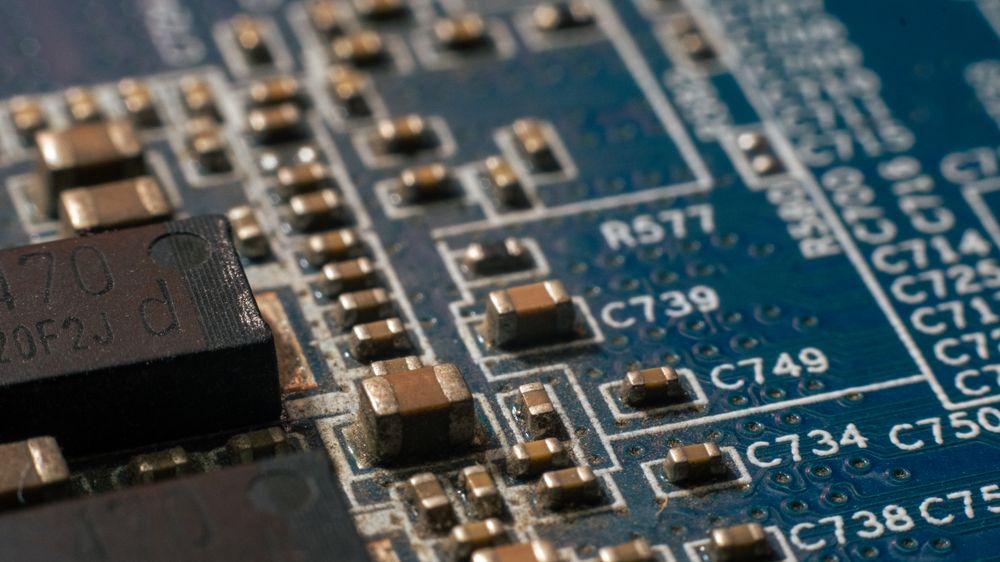
The trouble is the plastic itself. An epoxy moulding compound is hygroscopic by nature, holding a small, real amount of water that climbs with the humidity around it. The water works into the bulk of the plastic and gathers along the interfaces inside, the die face, the lead frame, the boundaries where two materials meet. None of it shows at room temperature. The level exists because that hidden water turns dangerous the moment the part meets soldering heat.
Plastic won the market, which is why the level matters so widely. Almost every surface-mount part on a modern board is plastic-encapsulated, from the smallest leadless package to the largest array. Each of them takes up water. Each carries a level it has to respect once its bag is opened. The standard exists because the dominant way to package a chip is the way that lets moisture in.
The floor-life clock
The floor life is the part of the rating a production line lives by. It names the time a part may spend exposed to ordinary factory air before it has to go through reflow or return to a bake. The clock starts the moment the sealed moisture-barrier bag is opened. From then on the part is taking up water. Its floor life is the budget of hours it has before it holds too much to solder safely.
The hours are specific. A level-three part carries 168 hours, a working week. A level-four part has 72 hours, a level-five part 48, a level-five-a part 24. The gentler levels stretch out: four weeks for 2a, a year for level two, no limit at all for level one. A level-six part has no floor life to speak of. It has to be baked, then soldered before the clock it has no slack in runs down.
Those hours are counted against a reference condition, ordinarily 30 degrees Celsius and 60 percent relative humidity, the figure for a temperate factory floor. Level one is the exception, referenced at the wetter 85 percent, since a part indifferent to humidity is rated to shrug off even that. A floor warmer or damper than the reference spends the budget faster, so a humid plant has to read the printed hours as generous.
The clock can be reset. A part taken past its floor life is not scrap. A bake drives the absorbed water back out and returns the part to a dry baseline, restarting the floor-life budget. The rating, then, governs every part of its kind, a clock the line spends down, then resets with a bake.
The reset has its own rules. A bake at 125 degrees drives the water out in a day or so for a part that can take the heat, the time stretching for a thicker package that holds moisture deeper. A part on tape-and-reel, whose carrier cannot survive 125 degrees, takes a far longer bake at a low temperature. Either way the part comes out dry, its floor-life budget restored to full, ready to start the clock over.
How the level leaves the factory
A rated part does not travel bare. A level-two or more sensitive package ships in a sealed moisture-barrier bag, the dry pack that keeps the floor-life clock from starting in transit. Inside the bag rides a desiccant to hold the air dry and a humidity indicator card to prove it stayed that way.
The bag is the part’s held breath. As long as it stays sealed, the part sits in dry air and ages not at all against its floor life. The clock is paused. Opening the bag is the act that starts it, which is why the standard counts floor life from that moment, never from the day the part was made.
The indicator card is the check on the seal. Its printed spots change colour as humidity climbs, so a line opening a bag can read at a glance whether the dry pack held or whether a pinhole let damp air in. A card showing the bag went humid is a signal the parts may have spent floor life no one was counting, a flag to bake before use.
The label carries the rating into the world. A part’s moisture sensitivity level is printed on the bag with its bake schedule, so whoever opens it knows the floor life they are spending and how to reset it. The number a chamber assigned in a soak becomes, on that label, an instruction the assembly line follows.
How a level gets assigned
A level has to be earned in a test the package passes. The maker takes a batch of fresh parts, soaks them in a humidity chamber to the condition that stands for a candidate level, runs them through a solder reflow, then looks inside for damage. Pass the inspection and the part holds that level. The rating is the outcome of a soak-and-reflow trial, the number that trial returns.
The trial spends its samples. A classification runs on a batch of dedicated parts, enough to speak for the population, since the reflow and the inspection leave them used up. The parts are fresh, measured before they begin, so any damage found at the end is known to come from the soak and the heat it met, never from a part that arrived flawed. A classification is a destructive test, paid for in the parts it consumes.
The candidate matters. A maker aiming to sell a part as level three soaks it to the level-three condition, reflows it, then checks whether it survived. The trial answers one question: did this package, carrying the water that a level-three floor life would load into it, come through reflow intact. A clean result earns the level. A failure sends the part down the ladder to a rating it can meet.
The soak is calibrated to the floor life
The soak is the heart of the whole method. It is also the reason a level means anything at all. A floor life is a promise about time in open air: so many hours at 30 degrees and 60 percent humidity before the part holds too much water to solder. No factory can wait out that promise to test it. Letting a level-two part sit for its rated year, then reflowing it to see whether the year was honest, is no kind of test. So J-STD-020 does something cleverer. It does not reproduce the floor life. It reproduces the end state the floor life would leave the part in. The soak loads the package, in a few set hours of controlled humidity, with the same quantity of water it would have taken up slowly across its entire floor life on the open bench. The soak time is calibrated to that equivalence. A level-three soak runs long enough that the part comes out holding the water a real level-three part would carry at the end of its 168 hours, no more and no less. The chamber compresses a week of slow absorption into a fixed, repeatable run. That single idea is what lets a few hours in a humidity chamber stand in for weeks on a factory floor, which is why the soak condition has to be held so tightly. Run the soak wet, and the part comes out holding more water than its floor life would ever have delivered, so it faces reflow over-loaded and may crack at a level it would survive in service. Let the soak run dry and the part is under-loaded, so it sails through a reflow it should have failed and earns a level it cannot keep. The equivalence rests on how water moves into plastic. Moisture diffuses into the moulding compound at a rate set by temperature and by the humidity at the surface, so a hotter, wetter soak drives water in faster than a temperate floor ever would. The standard uses that to its advantage. It can pick a soak harsher than the floor and a time short enough to be practical, as long as the pair lands the part at the right final moisture. The hours printed for each level are drawn from diffusion models and correlation work that fix each soak to the moisture it has to reach. A level is a measured statement that this package, holding the water of so many factory hours, survives the solder heat. The soak is where those factory hours get dealt into the part. Hold the soak true and the floor life on the label is honest. Let it drift and the number becomes a fiction the chamber wrote.
One condition, two ways to reach it
A part can arrive at its rated moisture by two routes. The standard allows either. The standard soak holds 30 degrees and 60 percent humidity, the same temperate condition the floor life is counted against, so the part takes up water at the rate a real floor would feed it. The catch is time. Loading a part to a week’s worth of water at floor conditions takes much of a week in the chamber, which ties up the box for a long, slow run.
The accelerated soak trades temperature for time. It holds 60 degrees and 60 percent humidity, warm enough to drive water into the package far faster, so the same final moisture lands in a fraction of the hours. A soak that would run for the better part of a week at 30 degrees finishes in a long day at 60. Labs lean on the accelerated condition for that reason, since it frees the chamber sooner for the same result.
The gentlest levels are qualified differently again. A level-one part is soaked at 85 degrees and 85 percent humidity for about a week, a level-two part at 85 degrees and 60 percent for a similar span. These soaks sit above any floor condition. They prove a sturdy part holds up after soaking hard, the qualification a part clears to claim it barely cares about humidity.
Either route ends at the same place. Whichever soak a lab runs, the part is meant to arrive at reflow carrying the moisture its candidate level defines. The condition is the destination. The two soaks are roads to it of different lengths, picked by how long a lab can give the chamber.
When the clock starts
The floor-life budget begins the instant the dry bag is opened.
Reading the verdict

Survival is judged by looking inside the package. A part that still powers up can carry damage that only an internal scan reveals. After the soak and the reflow, each part goes under an acoustic microscope, which sends ultrasound through the body and maps where the sound reflects off a gap. A sound package returns a clean image. A delaminated one shows the separation as a bright flag where moulding compound has lifted off the die or the lead frame.
The scan reads against a baseline. A part is imaged before the soak and again after the reflow, so the inspection compares the two and sees what the heat opened up. A separation present from the start is set aside. A new one, lifted by the steam of reflow, is the finding that counts, the damage the moisture did to a part that began sound.
Through-transmission scanning is the preferred read. The sound passes clear through the part to a sensor on the far side, which gives an image easier to trust and harder to misread. Where a scan leaves a question, a cross-section settles it, cutting the part open to see at what depth the crack or the lift sits. An electrical test runs alongside, catching a part the heat shifted out of spec.
The standard sets out what counts as a failure. Delamination across a critical area, a crack that reaches the die or breaks the surface, a lift along a wire bond: each is spelled out as a limit a part must stay within. Not every separation fails a part, since a small one in an unimportant spot may carry no risk, so the criteria name the locations and extents that matter and leave a harmless flaw alone.
A failure is a re-rating, not a reject
A part that fails its candidate level is not thrown out. It is rated down. A failure at level three says only that the part is more sensitive than level three. The trial repeats at level four, a lighter soak that loads less water, which the part may survive. The classification walks the part down the ladder until it finds the rung it can hold.
That is why the outcome of J-STD-020 is a number. The standard’s job is to find the floor life a package can honestly keep, never to clear it or reject it outright. A part that pops at level two and survives at level four is a level-four part, sold with a level-four floor life. Where a part cannot meet the criteria even at the bottom of the scale, the standard hands it to a fuller reliability assessment under JESD22-A113 and JESD47, the path for a package the simple ladder cannot place.
The reflow peak the level is proven at
The reflow in the trial is a specific heat. It climbs to the peak the package is rated for, the temperature its body will meet on a real assembly line. J-STD-020 sets that peak by the size of the package, since a small, thin body and a large, thick one cannot take the same heat. A thin package under 350 cubic millimetres is classified up near 260 degrees. A thick one past 2000 cubic millimetres is capped lower, around 245, its mass too slow to shed heat for a higher peak to be safe.
The peak is one point on a shaped profile. The part is brought up through a preheat, held in a soak zone that evens the temperature across the board, then driven through the peak and the time spent above the solder’s melting point near 217 degrees, before it cools. A classification runs that profile several times, commonly three, since a board is reflowed more than once as each side and any rework passes through the oven. The repeated heat is harder on a wet part than a single pass.
Matching that peak is what keeps the trial honest. A part soaked to its level, then reflowed below its rated peak, would face a gentler heat than the field, so the water inside would push less hard and the test would flatter the part. The classification reflow hits the real peak, so the trapped water flashes as hard in the lab as it would in production. What that steam does to a wet package, the pressure and the crack, the moisture-failure article covers; here the reflow is the heat that turns a soak into a verdict.
Why the number rules the stockroom
On a real line the level is a logistics rule before it is a physics one. A stockroom issuing a level-three reel has 168 hours to get it placed, reflowed, with the remainder resealed before the budget runs out. Track that across hundreds of part numbers, each with its own level and its own clock, so the floor life becomes a scheduling problem the line manages part by part.
An opened reel not used in time has two fates. It can be resealed into a fresh dry pack with new desiccant, the clock paused again at whatever hours it had left. It can be baked back to a dry baseline, the budget reset to full. Either way the line keeps the part legal to solder, paying for it in the handling and the oven time the rescue takes.
The bake is not free. Driving water back out of a sensitive part can mean hours, even a day, in a 125-degree oven. A part can take only so many bakes before the heat itself ages it. A level-five-a part with a 24-hour floor life, baked and rebaked as a line starts and stops, burns through both its bake allowance and the schedule. The high numbers are expensive to handle, which is its own reason to design with the lower ones where a part allows.
So the level reaches past the test bench into the way a factory runs. It governs how a part is stored, how long it can wait, then how a board is sequenced around the part with the shortest clock. The number a chamber assigns in a soak is the number a planner still reads months later, the reason the soak that set it has to be right.
The level a designer reads early
The level is a number a designer weighs long before assembly. A board crowded with level-one and level-two parts is easy to build, forgiving of a slow line and a humid day. Fill it with level-five parts and assembly turns into a race against a 48-hour clock, with dry cabinets and bake ovens standing by. So a designer choosing between two parts that do the same job looks at their levels, since the gentler one spares the factory a running fight with moisture.
The number rewards a package that handles its own water. A part built to keep moisture out, or to vent it harmlessly at reflow, earns a low level and an easy life on the line. The rating, set in a chamber, feeds all the way back to the choices a package designer makes, since the level a part earns is the level a customer has to live with for the life of the board.
What an honest level owes the chamber
A level is only as honest as the soak that earned it, which puts the weight on the humidity chamber. The rating rests on the part arriving at reflow holding a precise quantity of water. That quantity is set entirely by the chamber, by the humidity and temperature it holds across the soak hours. A chamber off its setpoint produces a confident, printed level that is wrong, a floor life the part cannot keep.
Humidity tolerance is the sharp edge. A chamber running a couple of points high on relative humidity over-soaks the batch, loading water past what the candidate floor life would deliver, so a part that should pass its level may crack and be rated needlessly sensitive. Run a couple of points low, and the batch is under-soaked, so a part sails through and earns a level it will fail in a customer’s oven. The tighter the chamber holds humidity, the more the assigned level can be trusted.
Uniformity matters alongside accuracy. A classification soaks a batch together, then treats them as one population. A chamber with a wet corner and a dry shelf soaks its parts to different moistures, so the batch no longer shares a level. Even air and even humidity across every part is what lets one trial speak for the whole lot.
A classification chamber has to run both soak conditions. The standard 30-degree run and the accelerated 60-degree run are both legitimate, so a lab serving makers across the ladder needs a box that holds either, steadily, for soaks that stretch from a day to weeks. The long runs ask for stability the chamber keeps without drift from the first hour to the last.
The record closes the loop. A soak logged across its hours, humidity and temperature traced against the standard’s condition, is the evidence the level was earned honestly. A rating without that trace is an assertion. With it, the floor life on the part is a measured fact, the whole reason the classification earns its number in a controlled chamber where an estimate would only guess.
Common questions
What is the moisture sensitivity level set by J-STD-020?
It is a rating, one to six with half-steps 2a and 5a, of how much moisture a nonhermetic surface-mount package can absorb and still pass through reflow soldering without cracking or delaminating. A higher number is a more sensitive part. The rating comes with a floor life, the time the part may sit in open air before it has to be soldered or baked.
What is floor life?
Floor life is the time a part may spend exposed to factory air, counted from when its sealed bag is opened, before it must be reflowed or re-dried. It runs from unlimited at level one down to 24 hours at level 5a, with level six baked before every use. The hours are referenced to about 30 degrees Celsius and 60 percent humidity.
How does the chamber assign a level?
It soaks a batch of parts to the humidity condition that stands for a candidate level, loading them with the water that level’s floor life would deliver. The parts then go through a classification reflow, after which an acoustic microscope and a cross-section check for cracks or delamination. Passing earns the level; failing sends the part to a lighter one.
Why are there standard and accelerated soaks?
The standard soak holds 30 degrees and 60 percent humidity, matching the floor condition, which makes for a long run. The accelerated soak holds 60 degrees and 60 percent, driving water in faster so the same final moisture lands in far fewer hours. Both aim the part at the same moisture; the accelerated route frees the chamber sooner.
What happens to a part that fails its level?
It is rated down, not rejected. Failing a candidate level means the part is more sensitive than that level, so the trial repeats at a higher number with a lighter soak the part may pass. The classification finds the floor life the part can honestly keep. A part that fails even the lowest level goes to a fuller reliability assessment.
Part of the Envsin guide to semiconductor reliability testing. J-STD-020 reads a package as a floor-life number, earned in a humidity soak and proven at the solder peak, so a factory knows how long the part may wait before the heat.