Reliability / Chamber Design
Unmanned 24 Hour 7 Day Operation Chamber Design
The protection, alarms and fail-safe logic a chamber needs to run with nobody in the room
A chamber designed for unmanned 24-hour, 7-day operation runs its test for days or weeks with no operator present. That single fact drives the whole design. Every fault the chamber can reach while no one is watching has to end in a safe state and a call for help, because there is no hand on the switch to catch it.
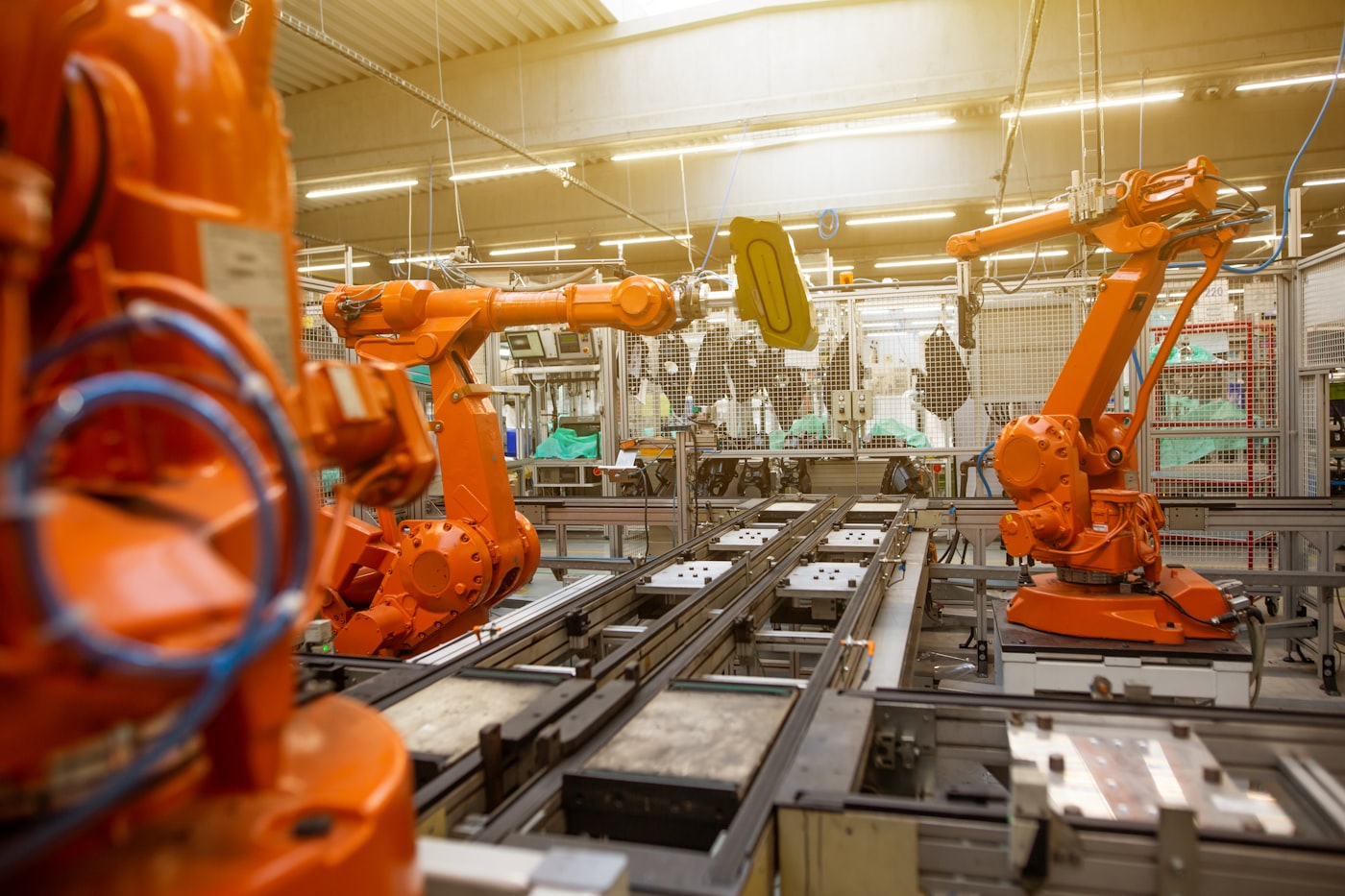
What unattended operation demands
An attended chamber leans on the operator as its last line of defence. A reading drifts, a noise changes, a smell of hot insulation rises, a hand reaches for the switch. A test running for two weeks straight has no such person on the night shift, through the small hours, or across a long holiday weekend.
So the design has to supply two things the operator used to. It has to fail into a safe state by itself when something breaks. It also has to reach a human who is somewhere else. Every feature that follows serves one of those two jobs.
Fail safe first, then raise the alarm.
The independent protector
The conditioning system answers to a digital controller. That controller can fail like any electronics; a chamber left alone has no one to notice the moment it does.
A sensor can short and read cold while the chamber cooks; a control output can weld shut and drive the heaters flat out. With an operator nearby that is a whiff of hot insulation and a reach for the switch. Overnight and alone, it is a fire. The answer is a layer of protection that owes nothing to the controller: an independent over-temperature protector with its own sensor and its own hardware-wired contactor, set a margin above the highest temperature the test will reach. It watches one thing, the limit. Cross that limit and it cuts power to the heaters directly, with no software in the path, then latches off until a person comes to reset it. The margin matters. Set the protector too close to the test temperature and it trips on a normal overshoot, halting good runs for nothing; set it too far above and it lets the chamber climb dangerously before it acts. The right margin sits just above the hottest the test will reach and well below the point where anything inside could ignite, a window the buyer fixes from the load and the test. The German standard DIN 12880 frames these cutoffs as protection classes, from a basic class that guards only the chamber up to an adjustable class set to the load’s own safe ceiling; a serious unmanned chamber carries the class its test calls for. This one device is what the whole unattended scheme leans on, since it is what stands between a controller fault and a burning room.
A matching protector guards the cold end and the humidity system, so a runaway in either direction trips out before it does harm.
A protector earns its keep only if it works on the day it is needed, so it is tested on a schedule, its trip point checked against its setting, its sensor and wiring kept clear of the controller’s. A cutoff that has quietly failed is worse than none, since the chamber looks protected while it is bare.
One sensor can lie
The reason the protector carries its own sensor is simple: a control scheme that trusts a single probe trusts a single point of failure. The fault likeliest to start a fire is the one sensor that quietly stops telling the truth, holding a safe reading while the chamber climbs past it unseen.
The protection classes, in detail
The independent protector is graded; the grade decides what it guards and how. The German standard DIN 12880 lays out the classes the industry leans on.
A basic class protects the chamber itself, cutting the heat if the equipment runs away, the trip fixed near the chamber’s own ceiling. The next class up protects the load as well, set so the product inside is spared a temperature that would ruin it. The adjustable classes go further: one with a high-limit cutout the user sets to the load’s safe ceiling, one with a low-limit cutout for a test where the cold is the danger, then one that carries both, guarding the load against an excursion in either direction.
The class a chamber needs follows the test it runs. A bake of rugged metal parts wants the protector set near the chamber’s ceiling, since the parts shrug off heat. A run loaded with something that ignites or melts a little above its setpoint wants the adjustable class set tight to that load, so the cutout fires long before the danger. A cryogenic test wants the low-limit guard, where freezing the wrong thing solid is the failure. Reading the class on a chamber’s specification tells a buyer what the protector will do at the worst moment. A chamber sold with only a basic class, run with a delicate load, is protected for the box and not for the thing inside it, which is the gap a careful specification closes.
Standards for a chamber left alone
An unmanned chamber answers to more than the test standard it runs; it answers to the rules that keep a building safe.
The safety of the chamber as a piece of laboratory equipment falls under IEC 61010, the standard for electrical measurement, control and laboratory gear, which sets how it must behave under a fault, how it is earthed, how a hazard is guarded. On top of that sit the local electrical code, the building’s fire rules, plus an insurer who will ask, before covering a lab full of unattended chambers, what stops one of them starting a fire on a Sunday night.
A serious site writes a risk assessment for unattended running. It names the faults that could go wrong, the protection against each, the response when one trips, so the case that the chamber is safe to leave alone is made on paper before it is left alone in fact. The independent protector, the alarms, the logging are the answers that assessment demands. None of this is the test talking. It is the line between a chamber that may safely run through a weekend unattended and one that, whatever its test rating, should not be left to.
Fire is the worst case
Behind every feature of an unmanned chamber stands one scenario, the one that turns a lost run into a lost building: a fire.
The path to it is short. A control sensor fails low, the controller reads the chamber as cold and drives the heaters at full power. With no one to catch the smell of hot insulation, the heaters run until something ignites: the insulation, the wiring, a flammable specimen, the dust on a coil. A chamber holding a load that burns or gives off vapour raises the stakes further, since now the fuel sits inside the working space.
This is the scenario the independent over-temperature protector exists to break. It owes nothing to the failed sensor, so it reads the true temperature climbing and cuts the heaters before ignition. It latches off so the fault cannot reset itself and try again. A run loaded with anything flammable adds the smoke and temperature interlocks in the work space. A site running many such chambers may house them in a fire-rated room with detection and suppression of its own. Every other protection guards a run or a sample; this one guards the building and the people in it. A chamber that fails to hold its temperature loses a study. A study can be run again. A chamber that catches fire unattended is the outcome the whole discipline is built to prevent, which is why the protector, and not the controller, holds the last word over the heaters.
Protecting the conditioning system
Past the fire risk, the chamber has to keep itself alive through a long run so the test is not lost. The protections here guard the hardware.
The humidity boiler carries a low-water cutoff. A tank gone dry would let the immersion heater burn out in minutes, so the cutoff drops it first. The run holds on temperature alone until someone tops the water up.
The refrigeration system carries a high-pressure switch and a compressor overload, the two faults that otherwise wreck a compressor mid-test. A blocked condenser or a hot plant room drives the discharge pressure up; the switch stops the compressor before the relief valve has to.
A stalled fan is caught on its own line. Still air inside a running chamber lets heat stack against the same sensors that should be reading it, so a fan fault trips the heat directly.
Each of these drops to a safe state and logs the reason, so the morning reads a clear story of what stopped and when.
When the specimen is powered
Many endurance tests run the product live inside the chamber: a board under bias, a motor under load, a battery on charge. A powered specimen is its own hazard; an unmanned chamber has to manage it as carefully as its own heaters.
The specimen supply runs through the chamber’s safety chain, so a chamber trip cuts the product’s power in the same instant it cuts its own. A specimen that overheats, draws a fault current, or vents loses power before it can add a fire of its own to an empty room.
Where the test allows, a smoke or temperature interlock inside the work space adds one more layer, killing everything and alarming at the first sign of the specimen failing in a way the chamber’s own sensors would miss.
Telling someone
A safe shutdown that no one hears about still costs the test. The other half of unattended design is reaching a person who has gone home.
The chamber raises a local alarm, lamp and sounder, while at the same time driving a set of volt-free contacts wired into the building management system. Through its network port it sends the alarm onward as an email or a text, so a deviation at two in the morning reaches the engineer on call.
The alarm distinguishes a soft warning, a drift back toward the band, from a hard trip that has stopped the run, so the response matches what happened. A careful scheme does not rest on one message: an unacknowledged call escalates to the next name on the list. A heartbeat signal lets a remote monitor flag a chamber that has gone silent, the one failure a chamber cannot announce for itself.
Remote monitoring and the cloud
The engineer who has gone home can still watch the chamber. Modern unattended design assumes they will.
Beyond the local alarm and the dry contacts to the building system, a networked chamber serves its live trace to a web page or a phone app, so the temperature, the humidity and the alarm state can be read from anywhere. An on-call engineer woken by a text can see what the chamber is doing, judge whether it needs a drive in or a remote acknowledgement, then watch the recovery without leaving the house.
The convenience carries a caution. A chamber on the network is a device on the network, with the exposure that implies, so a careful site keeps it behind the protections any connected instrument needs and does not let remote access become a remote way in. The link reads the chamber and raises its alarms; the safety still rests on the hardwired protector, which owes nothing to a network that could itself go down.
What the remote link adds is reach. It does not replace the fail-safe that acts with no human in the loop; it shortens the time between a fault and a person who knows about it, which on a long run can be the line between a recovered study and a lost one.
Soft warnings and hard trips
An alarm is not one thing. An unmanned chamber sorts its alarms into two kinds, the two asking for different responses.
A soft warning says the chamber has drifted while still running and still safe: the temperature has wandered to the edge of its band, the humidity has slipped, a door was left ajar a moment too long. The run continues, the warning reaches the on-call engineer; the response can wait for morning or a remote glance. Nothing has stopped; something has slipped.
A hard trip says the chamber has shut a system down to stay safe: the over-temperature protector has fired, a compressor has tripped on pressure, the water has run dry. The run is paused or ended; the response cannot wait, because samples are sitting in a chamber no longer holding their condition. The message that carries a hard trip says so, so the engineer knows to come in and not to roll over and sleep.
Telling the two apart is the line between an engineer who learns to ignore a chamber that cries wolf every night and one who trusts that a call at two in the morning means a chamber that has genuinely stopped. A scheme that fired the same alarm for a half-degree wobble and a dead compressor would soon be muted, the muting being the failure that loses a run.
Riding through a power cut
Mains power fails sometimes. An unmanned chamber has to know what to do when it comes back. The behaviour is set in advance: resume the profile from where it paused, hold at a safe condition, or shut down and alarm, chosen to fit what the test can tolerate. A reliability run that must not lose its accumulated hours picks up where it stopped; a safety test where a half-conditioned specimen is a hazard stays shut until a person checks it.
A long subzero run brings its own interruption in automatic defrost, a brief warm pulse the chamber schedules and logs so it reads as planned rather than as a fault. The logic that handles a power cut and the logic that handles a defrost are the same idea: the chamber has to manage its own upsets and account for them in the record.
Defrost without breaking the run
A chamber running cold and damp grows ice. Clearing it without wrecking the test is a problem an unattended run has to solve on its own.
Air pulled below freezing lays frost on the cooling coil; a frosted coil loses its grip on the heat, so the chamber slowly stops holding its cold. Left alone long enough, the run drifts off condition with no one to notice. The cure is a defrost: warming the coil to melt the ice and drain it away, on the chamber’s own schedule.
The trick is to defrost without spoiling the test. A defrost warms the space briefly, so the chamber schedules it, logs it, then times it for a moment the test can absorb, the warm pulse recorded as planned and set apart from a real excursion when the data is read. Some chambers route warm gas through the coil to clear it fast; others time a gentle warm-up into the cycle. Either way the run continues, the ice gone, the record honest about the brief warm spell.
For a long subzero campaign this is the line between a chamber that holds for weeks and one that frosts itself blind on the second night. Defrost is part of the design that lets the cold run unattended at all.
The record runs itself
An unattended run is only as good as its log. The chamber records temperature, humidity and every alarm continuously to its own memory, on a clock that does not depend on a technician remembering to start it. The logging interval is set fine enough to resolve a short excursion, the memory sized for the full run with room to spare; the stronger designs mirror the data to a networked store so a chamber failure cannot take its own evidence down with it.
That record is what turns an overnight excursion from a mystery into a timed, bounded event a reviewer can judge. Without it, a deviation found in the morning has no shape. The whole run then falls under doubt.
Reliability is the quiet half
Protection and alarms handle the faults that do happen. The other discipline is making fewer of them happen across a run that never pauses. Components are derated so none sits at its limit for a week on end, a contactor switching a heater is sized for many times the cycles a short test would ask, the compressor is chosen to loaf rather than strain. A scheduled service replaces the parts that wear before they fail, the door seal and the drier among them. None of this shows on a datasheet of ranges and tolerances, yet it is the difference between a chamber that survives a thousand-hour test and one that trips out on the third night and takes the test down with it. The same thinking books a service interval ahead of the long campaigns, so a chamber about to run a thousand hours begins them with a fresh drier, a clean condenser, a seal that still seals.
Redundancy where it counts
The surest way through a long run with no one watching is for no single fault to be able to stop it, a tolerance bought with redundancy, placed where it pays.
A chamber built for the longest and costliest runs can carry a second refrigeration system that takes over if the first trips, so a compressor fault on night three drops the cooling to half and not to nothing. The run holds while the fault waits for morning. A backup power supply can ride the chamber through a brief outage. A second sensor can cross-check the first, so a probe drifting is caught against its twin.
Redundancy costs, so it goes where the loss would hurt hardest. A short test on a cheap load needs none; a thousand-hour qualification of a costly batch, weeks from a deadline, earns every doubled part it carries. The buyer weighs the price of the redundancy against the price of losing the run; the answer changes with the run.
What redundancy does not change is the need for the fail-safe. A doubled system that still cannot fail safe is two ways to the same fire; the protector and the alarms come first; redundancy is what keeps a sound chamber running through a fault the protector would otherwise have stopped it for.
The cost of a lost run
The whole case for the protection, the alarms and the redundancy rests on what a lost run costs, and on a long campaign that figure is large.
A reliability qualification can run a thousand hours, six weeks of chamber time, on a batch of samples prepared at real cost, against a deadline a product launch depends on. Lose it on the third night to a fault that shut the chamber down hard. The cost is the whole run restarted, the samples remade, the schedule slipped by weeks, all of it from one night.
Set against that, the spend on an independent protector, a good alarm chain, a logged record and the redundancy a valuable run earns is modest. The protection is insurance, priced against the run it guards, and on a long, costly campaign it pays for itself the first time it turns a hard crash into a logged pause a person fixes in the morning.
This is why unattended design is a discipline of its own and not an afterthought bolted on. The chamber that runs alone is trusted with weeks of work at a time. The features that let it be trusted come cheap against what the work would cost to do again.
Maintenance for the long haul
A chamber asked to run for weeks without a pause has to be ready for it before the run starts. That readiness is a maintenance question.
The wear items decide how a long run ends. A drier near the end of its life, a condenser thick with dust, a door seal gone hard, a fan bearing starting to whine: any of them can hold a short test and still fail across a thousand hours. So the service that matters is the one done before a long campaign, replacing the parts that would wear out during it before they fail mid-run.
A readiness check rounds it off. Before the chamber is left alone, the protector is tested to prove it still trips, the alarm chain is exercised to prove a fault would reach a person, the logging is confirmed to be recording, the water topped and the coil clean. The check is short against the run it protects, and it is what turns a chamber that should hold for weeks into one that will.
The discipline is the one the whole design rests on: a fault not prevented has to be caught; a fault best prevented is the one a fresh part and a pre-run check kept from happening at all. An unattended chamber is only as trustworthy as the care taken before the door is closed on it.
Questions on unmanned chamber operation
What makes a chamber safe to run unattended?
An independent over-temperature protector with its own sensor and hardware-wired contactor, separate from the controller, that cuts power and latches off if the chamber exceeds a safe limit. Around it sit low-water, high-pressure and overload cutouts, continuous logging, and remote alarms. Together they let every fault end in a safe state and a notification.
Why does the over-temperature protector need its own sensor?
Because a controller running from a single probe has a single point of failure, and a shorted sensor reading falsely cold is the fault likeliest to drive the heaters to a fire. A protector with its own independent sensor and wiring still sees the real temperature and trips when the controller cannot.
What does a defrost do on a long subzero run?
It clears ice from the cooling coil before the frost stops the chamber holding its cold. The chamber schedules and logs the defrost, warming the coil for a moment the test can absorb, so the brief warm pulse reads as planned and not as a fault. Without it, a long cold run would frost itself blind with no one to notice.
Does remote monitoring make a chamber safe to leave alone?
No on its own. Remote monitoring shortens the time between a fault and a person who knows, but the safety rests on the hardwired independent protector that acts with no human in the loop. The network link reads the chamber and raises alarms; it cannot be the thing that prevents a fire, since the network itself can fail.
What is DIN 12880 protection class?
DIN 12880 defines temperature protection classes for heating chambers and ovens, ranging from a basic class that guards only the equipment to an adjustable class set to the load’s safe ceiling. The class fixes how the independent over-temperature protector behaves, and a chamber is specified to the class its application demands.
How does an unmanned chamber alert operators?
It raises a local lamp and sounder, drives volt-free contacts into a building management system, and sends alarms over its network as email or text. A soft warning for a drift is distinguished from a hard trip that has stopped the run, so the on-call response matches the event.
What happens after a power failure?
The behaviour is configured in advance: resume the profile from where it paused, hold at a safe condition, or shut down with an alarm, chosen to suit the test. Continuous logging records the interruption so its effect on the run can be judged afterward.
How does design reduce faults on a long run?
By derating components so none runs at its limit for days, sizing contactors and compressors for far more cycles than a short test needs, and servicing wear parts such as seals and driers on schedule. Fewer parts run near their edge, so fewer fail during an unattended endurance test.