Durability Test Chamber For Humanoid Robot Joint Motors
A robot’s joint is a motor, a gearbox, and its electronics sealed into one fist-sized actuator. Testing it means holding a climate around a part that turns under load and makes its own heat, then reading how it fades while it still runs.
A humanoid robot stands or falls on its joints. Each joint is a small machine in its own right, a brushless motor geared down hard, an encoder reading the angle, bearings and grease, a seal, a driver board, all packed into one actuator the size of a fist. Dozens of them carry the robot’s weight, hold its balance, move its limbs every second it is awake, so the robot lasts only as long as its joints do. Testing one is unlike testing a part that sits still, because this part is alive in the chamber, turning under load and making its own heat while the climate works on it from outside. A durability chamber for these joints has to hold an environment and run the actuator at once, then read how the joint fades over a life it could never wait out in real time.
What a humanoid joint is
A single joint packs more into a small space than its size lets on. A brushless motor spins fast and weak; a harmonic or cycloidal gearbox trades that speed for the slow, strong turn a limb needs; an encoder counts the angle to a fraction of a degree; bearings carry the load; grease keeps the gear teeth and the bearings from wearing; a seal keeps the world out; a driver board switches the motor and reads the encoder. All of it is bonded into one actuator the size of a fist; the durability test asks whether the whole bundle survives years of motion together.

No single part is the weak link; the joint is. Each piece has its own way of wearing out, so the actuator is only as durable as the first of them to give. A test cannot pull the joint apart and age each part alone, since they wear together, the heat from the motor cooking the grease, the load through the gear pressing the bearings. The durability question is about the bundle, never its pieces taken one at a time.
The joint also has to be small and light, which fights its durability. Every gram in a limb is a gram the other joints must move, so a designer shrinks the motor and the gear to the edge of what the load allows, leaving little margin. A joint built to the weight a humanoid needs runs closer to its limits than an industrial drive ever would, so it wears faster and the test matters more.
It also has to stay quiet and precise, year after year. A joint that grows backlash, the slack between gear teeth, loses the fine control a humanoid needs to balance and to handle things gently. So the test does not only ask whether the joint still turns; it asks whether it still turns precisely, counting grown backlash and lost motion as failures of their own kind.
A part that runs while you test it
A chip sits still while a chamber tests it. A joint runs. This is the line that separates a durability test for an actuator from every test built for a passive part. The chip is heated and cooled and damped as it does nothing; the joint takes the same climate as it turns under load, doing the exact work it does in the robot. The motion is not a complication added to the test; it is the test.
Running the part changes everything the chamber must do. A passive test needs only to set the climate and wait. An active one needs to drive the joint through its duty and hold a load against it, counting its turns while it watches the temperature and the torque, all with the climate running in the background. The chamber becomes half environment, half test rig, the two working on the joint at once.
It also changes what failure looks like. A passive part fails at a moment, a crack or a sudden open. A running joint fails slowly, its torque sagging and its backlash widening, its efficiency slipping as the grease dries, until one day it can no longer do its job well enough. The test has to catch a slow fade, measuring the joint again and again as it runs, the failure arriving as a decline the chamber has to track.
The motor makes its own heat
A joint motor does two things at once, moving the limb and heating itself. Pushing current through its windings to make torque, it turns part of that current into heat, more of it the harder the joint works. A humanoid holding a pose or carrying a load runs its motors near their limit, where the heat pours out fastest, so a joint can run far hotter than the air around it, hot from the inside.
That self-heat is what ages the motor. The windings sit in insulation that breaks down faster the hotter it runs, so a motor worked hard for years loses its insulation to slow thermal ageing. The magnets that make its torque lose strength as they heat, a partial demagnetisation that drops the torque the joint can deliver. The hottest joints, the wrists and the fingers working fine and fast, age this way soonest.
So the test has to let the joint cook itself as the climate sets the stage. The chamber holds the ambient the joint will live in, warm or cold or damp, then the joint adds its own heat on top as it runs, reaching the temperature it would in service. A test that ran the joint cold, or held it still in a warm box, would miss the heat the work itself makes, the same heat that ages the motor.
How a joint wears out
The gears wear first in many joints. A harmonic drive flexes thin steel teeth millions of times to make its reduction, so those teeth fatigue; a cycloidal drive rolls its lobes under high contact stress, so those surfaces pit and wear. Either way the gear that turns the motor’s speed into the limb’s strength is working metal against metal, wearing a little with every turn the joint makes.
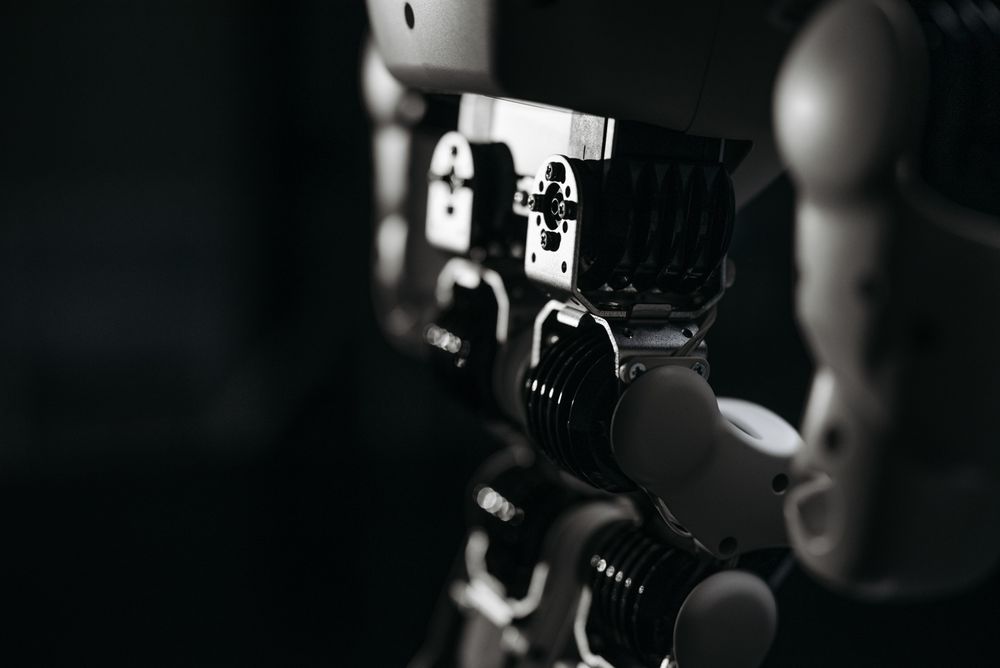
The bearings carry the load and the wear that comes with it. They hold the shaft true against the forces a limb puts through the joint, then slowly lose that trueness as their surfaces fatigue, letting the shaft wobble and the joint lose its precision. A worn bearing shows up as play and noise long before it seizes, a fade the test can track.
The grease has a life of its own. The lubricant on the gear teeth and in the bearings thins and dries with heat and time, oxidising as it goes, so a joint that ran smooth when new grinds harder as its grease gives out. Lost grease speeds every other kind of wear, the gears and the bearings chewing themselves faster once the film between them goes.
And the electronics age in the heat with the rest. The driver board that switches the motor and reads the encoder sits in the same hot, damp space, its parts ageing as any electronics would, its solder joints worked by the same thermal swings. A joint can fail at its board as surely as at its gears, so the durability test watches the whole actuator, the silicon and the steel together.
Where the test is different
This joint runs as you test it, wearing as it runs.
The chamber holds a climate and runs the part
What makes a durability chamber for a robot joint a different kind of machine is that it has to do two jobs at once that no passive test ever combines: it has to be the weather, and it has to be the work. As the weather, it holds the ambient the joint will meet in service, the warmth of a summer floor, the chill of an unheated room, the damp of a humid day, steady and known around the part. As the work, it drives the joint through its duty, turning it back and forth under a load that stands in for the limb it moves, hour after hour, for the millions of cycles a service life contains. The two run together on the same joint at the same time, because that is the only way the wear comes out right. The joint’s heat depends on how hard it works, so the test cannot set a temperature and walk away; the joint sets part of its own temperature by running. The grease ages by heat and motion together, the gears wear by load and turns together, the insulation ages by the heat the work makes, so none of these can be aged honestly by climate alone or motion alone. Only the two combined reproduce the life the joint will actually have. And the chamber has to read the joint the whole time, not just at the end, since the failure it hunts is a slow fade, the torque drifting down, the backlash creeping up, the efficiency slipping away, each measured again and again as the run goes on. A durability test for a joint is therefore closer to a life lived than an environment held, the chamber playing the world as the joint plays itself, the two acting out years of service in weeks so the fade can be watched from start to finish. That is the demand the joint places on the box: be the climate and the load at once, steady in the first and honest in the second, and never stop reading the part as it slowly wears toward the end of its life.
Reading the fade
The thing the test measures is a decline, so it measures the joint over and over. At set points through the run, the chamber pauses the duty and takes the joint’s vital signs: the torque it can still make and the backlash that has opened in its gears. Each reading is a point on a curve that bends down as the joint ages.
Backlash is the reading that weighs heaviest for a humanoid. The slack that opens between worn gear teeth turns into lost motion at the limb, so a joint with grown backlash can no longer place a hand or hold a pose as finely as a fresh one. A humanoid can keep walking on joints that have lost some torque; it cannot balance or manipulate well on joints that have gone loose, so backlash often marks the end of a joint’s useful life before an outright failure does.
So the test reports a life, the cycles or the hours at which the joint’s numbers cross out of spec. A joint reaches an age, the point where its torque has sagged too far or its backlash has grown too wide to trust. The durability chamber exists to find that age honestly, by running the joint to it and measuring the whole way down.
Where the line sits is set before the test. A joint is out of spec when its torque drops below what the limb needs, or its backlash grows past what the control can correct, the limits drawn from the robot’s own requirements. The chamber runs the joint until it crosses one of those lines, then reports the cycle, so the life it returns is the life the robot can use, ending well before the joint would finally seize.
The gearbox takes the worst of it
Of all the parts in a joint, the gearbox lives the hardest life. It carries the full load of the limb, multiplied by its own reduction, through teeth or lobes smaller and more stressed than anything else in the actuator. A humanoid’s gears see the steady load of holding a pose and the shock of a footfall or a stumble, each a spike far above the steady torque.
The harmonic drive trades durability for size. Its thin, flexible teeth fold into a small, light gear of high precision, which is why humanoids favour it; those same thin teeth still fatigue under the cyclic flexing; a hard shock can overload them past their rating. A robot landing from a jump can drive five to ten times the rated torque through a knee in an instant, the kind of spike that shortens a harmonic drive’s life with every occurrence.
The cycloidal drive answers with toughness, paying in size. Built around rolling lobes, it carries shock and cyclic load better, lasting longer under the same abuse, so a designer who needs a joint to survive picks it where the weight can be spared. The choice between the two is a durability choice; the test is what tells a designer which gear buys the life the joint needs.
Every joint a different case
A humanoid carries dozens of joints, each living a different life. The hips and the knees carry the body’s weight and take the shock of every step and landing, so their gears see the highest loads; the shoulders and elbows swing the arms and whatever they hold; the wrists and fingers run small fast motors near their limit, the hottest parts in the machine. A durability programme cannot test one joint and call the robot covered.
So the test covers the joint types across their real duties. A hip actuator is run under the load and the motion a hip sees, a wrist under a wrist’s fast and hot duty, each aged the way its own place in the robot would age it. A joint that passes for a wrist might fail as a knee; a load that ages a knee fairly would barely touch a finger, so the duty has to match the joint.
The shared parts still let the test scale. A maker uses a few actuator sizes across the body, the same joint design serving several places, so a test on each size stands for every joint built from it. The programme ages the family of actuators under the range of duties the body puts them through, enough to know the life of each kind without running all forty.
Heat from outside, heat from within
The joint meets heat from two directions at once. The climate brings it from outside, the warmth of the room the robot works in; the motor makes it from inside, the heat of its own work. The two stack: a joint working hard in a warm room reaches a temperature neither the room nor the motor would make alone, the worst case the durability test has to reach.
Damp works on the joint as it runs warm. Humidity from the air finds its way past the seal over time, into a joint whose own heat and motion pump air in and out as it warms and cools, so moisture reaches the grease and the bearings and the board inside. A durability test holds the damp the joint will meet, so the corrosion and the grease breakdown that moisture brings get their years inside the test, the same as the heat and the load.
The combined heat sets a ceiling on the work. A joint can pour out only so much heat before it cooks itself, so the test finds the duty it can sustain without crossing that line, the load and the pace at which its temperature levels off, never climbing away. That sustainable duty, found in the chamber, is what tells a designer how hard a joint can be worked for good.
A life measured in cycles and hours
A joint’s life is counted two ways at once, in cycles and in hours. Every back-and-forth of the joint is a cycle that wears its gears and bearings a step; every hour it spends hot ages its insulation and its grease a step. A humanoid moving constantly runs up both counts fast, millions of cycles and thousands of hours across a working life, which the test has to compress into something a lab can run.
So the test runs the joint hard and warm to age it fast. It cycles the joint more often and holds it hotter than an average day would, loading it to the heavy end of its duty, so a few weeks in the chamber stand for years in the robot, then leans on the way wear scales with use and heat to read the short test as a long life. The chamber’s task is to push that hard without driving the joint to fail in a way it never would in service.
The compression has a limit. Push the joint too hard or too hot to save time, and it fails by a mechanism it never would in service, a melted winding or a snapped tooth no real duty would cause, so the accelerated life means nothing. The art is to age the joint faster along the same path it would wear in service, hard enough to finish in weeks, gentle enough to keep the failure the one the field would see.
Holding a climate around a hot, moving part
Holding a steady climate around a robot joint is harder than around a still one, because the joint fights the chamber. The motor pumps heat into the air the chamber is trying to hold steady, so a chamber running several joints at once has to carry away the heat they pour out, still holding its setpoint, a moving target a passive load never sets.
The load on the joint has to be real and controlled. A durability rig holds a load against the joint as it turns, a brake or an opposing motor standing in for the weight of a limb and the forces of a task, steady enough to mean something and adjustable enough to match the duty the joint will meet. Getting that load right is half the test, since a joint loaded too light ages slowly and one loaded wrong fails in a way it never would.
And the joint has to be watched as closely as it is worked. Sensors follow its temperature and torque, its position and current, through the whole run, so the slow fade shows up as it happens and the cause can be told apart, a hot winding from a worn gear or a dry bearing. A durability chamber for joints is part instrument, part environment, reading the part as carefully as it ages it.
Knowing the life sets the service
A measured life matters because it sets a schedule. Humanoid joints are built as modules, made to be unbolted and swapped, so an operator who knows a joint’s life can replace it before it wears out, ahead of any failure in the field. The durability number turns a joint from a thing that breaks down into a thing that gets serviced, the wear-out age becoming a maintenance interval.
That is why the test aims for a life. A pass would say only that a joint clears some bar; a life says when it will need attention, which is what an operator running a fleet of robots needs. The durability chamber exists to deliver that number, the honest age a joint reaches, so the robots it goes into can be kept running on a plan, their joints renewed before they fail.
What an honest durability chamber provides
Everything a joint durability chamber needs follows from the one fact that the part runs while it is tested. The chamber has to be the world around the joint and the work the joint does, both at once, held steady and read closely across a life run fast. That asks for things a passive chamber never has to bring.
It has to run the joint, not just hold it. A load rig turns the joint through its duty under a real, controlled force, so the wear comes from the work the joint actually does, hour after hour, for the cycles a life takes. A chamber that only set a climate would age a joint that never moved, a joint no robot has.
It has to hold the climate against the joint’s own heat. The setpoint stays steady even as the motors pour heat into the chamber, even across a load of joints all running at once, so the ambient the test names is the ambient the joints feel. The joint’s self-heat then stacks on a known climate, reaching the real service temperature, never a drifting one.
It has to read the fade the whole way down. The joint’s torque and backlash, its efficiency and temperature, are measured again and again through the run, so the decline is tracked from new to worn, the age the joint reaches found to the cycle. A test that only checked the end would know the joint failed, never how it got there, the curve the durability question asks for.
Together these make a chamber that lives a life with the joint. It holds the climate and drives the load, counting the cycles and reading the fade, then hands back the age a joint reaches under the heat and the work together. That is what the durability test of a humanoid joint comes down to: a life a part is run through, climate and load together, measured to the cycle it wears out.
Common questions
What does a humanoid joint durability test do?
It ages a robot’s joint actuator the way years of service would, then measures how far it has worn. The chamber holds the temperature and humidity the joint will meet while a rig runs the joint under load through its motion, so the actuator wears by heat and damp and work together. The test reports a life, the cycles or hours at which the joint’s torque, backlash, or efficiency falls out of spec.
Why test the joint while it runs?
Because a robot joint wears by running, by the heat and motion of doing its job. Its motor makes heat under load and its gears wear with every turn, its grease ageing with heat and motion. A test that held the joint still would miss all of that, since the wear comes from the work. Running the joint under load in the chamber is the only way the test ages it the way real service does.
How does a joint wear out?
Its gears fatigue or pit under millions of load cycles; its bearings lose their trueness and let the shaft wobble; its grease thins and dries, raising friction; its magnets and winding insulation age in the motor’s heat; its driver board ages like any electronics in heat and damp. The joint is only as durable as the first of these to give out.
What is backlash and why does it matter?
Backlash is the slack that opens between worn gear teeth, turning into lost motion at the limb. A humanoid needs fine control to balance and to handle things, so a joint that has grown loose can no longer place a hand or hold a pose precisely, even if it still turns. Backlash often marks the end of a joint’s useful life before an outright failure, which is why the test tracks it closely.
Why does the chamber control both climate and load?
Because the joint’s wear comes from the two together. Its temperature depends on how hard it works, so the climate alone cannot set it; its mechanical wear depends on the cycles it turns, so the load alone cannot age the gears. Only holding the climate while running the joint under load reproduces the combined heat and wear the joint sees in service, which is the life the test is built to measure.
Part of the Envsin guide to reliability and durability testing. A humanoid joint chamber holds a climate while it runs the actuator under load, ageing the joint by heat and damp and work together, so the life it measures is the life the joint will really have.