Accelerated Moisture Resistance Test Chamber Per JESD22 A102
The autoclave does not wait for humidity to seep in. It forces saturated steam into the package under pressure, with no voltage on the part, to see what moisture alone can break.
An accelerated moisture resistance test by unbiased autoclave drops a part into saturated steam at 121 degrees Celsius, held above atmospheric pressure at around two atmospheres. The standard behind it is JESD22-A102. The test is also called the pressure cooker test, after the appliance that works the same way. It carries no electrical bias. The part sits in the steam dead, with no voltage anywhere on it. That single choice sets the autoclave apart from the biased humidity tests in its family. It asks one plain question of a package. Can it keep this water out. Can its materials survive the water that gets in. The chamber that runs the test is not a humidity cabinet. It works as a pressure vessel, built to hold hot saturated steam above atmospheric pressure safely for hours.
Pressure forces the water in
An autoclave test forces water into a package under pressure. It does not wait for the moisture to seep in on its own. The method drops the part into saturated steam at 121 degrees Celsius, held above atmospheric pressure at around two atmospheres. Saturated steam means the air holds all the water it can at that temperature, with no room left to take any more. Water condenses freely on every surface in the vessel. The pressure pushes that water into the package faster than ambient humidity ever could. A part that would take a thousand hours to wet through at 85 over 85 wets through in a fraction of that time in here. The test runs unbiased. No voltage sits on the part. This sets the autoclave apart from the biased members of its family. The biased tests add a voltage to drive electrochemical failure. The autoclave adds none. It asks one question only. Can the package keep this water out. Can its materials survive the water that does get in. The failures it finds come from the moisture by itself, from corrosion where a contaminant meets water, from a package swelling or cracking as it saturates. Condensation works for the test here, not against it. Where a biased humidity test guards against a single droplet on a live part, the autoclave soaks the part on purpose, in saturated steam, under pressure, to see what the moisture breaks. The chamber that runs it works as a different machine for that reason, a pressure vessel built to hold hot saturated steam above atmospheric pressure safely for hours on end.
The conditions
The pair reads 121 degrees Celsius at 100 percent relative humidity. The temperature matters less for raw speed than for what it does to the steam. Water boils at 100 degrees at normal pressure. To hold saturated steam at 121 degrees, the vessel has to run above atmospheric pressure, at roughly two atmospheres. That pressure is what lets the steam reach 121 degrees while staying saturated. The pressure is not a separate stress dialled in for its own sake.
Saturation defines the test. At 100 percent humidity the air carries its full load of water, so any surface at or below the steam temperature runs wet. The part sits soaked for the full exposure. This is the opposite of a controlled humidity test, where the air stays below saturation to keep surfaces dry. The autoclave puts the water onto the part. It saturates the steam, then lets it condense.
The numbers come from JESD22-A102, the JEDEC standard for accelerated moisture resistance by unbiased autoclave. The standard names the method the pressure cooker test, or PCT, after the everyday appliance that works the same way. A kitchen pressure cooker raises the boiling point with pressure to cook faster. The autoclave raises it to drive moisture into a package faster. The physics matches. The purpose differs.
No bias, on purpose
The autoclave applies no electrical bias. The part sits in the steam dead, with no voltage on any pin. This narrows what the test can find. It cannot drive electrochemical migration, the dendrite growth that needs a voltage across a wet surface. It cannot surface a bias-dependent leakage path. Those failures belong to THB and HAST, the tests that power the part during the soak.
What it does find is the moisture resistance of the package itself. A part can fail the autoclave with no voltage anywhere near it. Water reaches a bond pad, then corrodes it. Moisture collects at an interface, then lifts it. The package absorbs water, then cracks under the pressure. None of these need a bias to happen. The autoclave isolates the moisture mechanisms by leaving the voltage off, which makes it a clean screen for the package, for its materials, kept separate from anything electrical.
What the autoclave screens for
The test screens four kinds of moisture damage. Corrosion comes first. Water reaches the metallisation. It finds an ionic contaminant left from manufacture, then builds a tiny electrolytic cell that eats the metal. A flux residue is enough to start it. The corrosion thins a conductor or opens a bond, which shows up as a failed electrical reading after the soak.
Delamination follows as the second kind. Moisture collects at the interface between the moulding compound and the metal it covers, the lead frame or the die surface. The water weakens the bond. The layers separate. A delaminated package loses its seal against more moisture, so the next failure comes faster. Delamination shows in an acoustic scan more than in an electrical test.
Popcorn cracking comes third. A package that has absorbed moisture meets a sudden heat, the reflow of a later soldering step. The trapped water flashes to steam inside. The pressure of that steam cracks the package open with an audible pop, the failure that gives the effect its name. The autoclave loads the package with the moisture that makes this possible, so it pairs with a reflow step to expose the weakness.
Plain moisture ingress comes fourth. Some packages let too much water through, with no single dramatic failure, just a slow saturation that degrades the part. The autoclave measures how well the package bars water at all. A package that soaks through quickly fails the intent of the test even without a crack or a corroded line.
The duration conditions
The soak length comes in steps the standard names by letter. Condition A runs 24 hours. The steps climb from there, through steadily longer soaks, out to Condition F at 336 hours. A test picks the step that matches the stress the part has to prove against. Labs commonly pick ninety-six hours, long enough to wet a typical package through, short enough to turn a result around in days.
The right length trades coverage against time. A short soak risks passing a part that a longer one would have failed, since the moisture had less time to do its work. A long soak catches more, at the cost of more days in the vessel, with a harsher exposure that can push past what the field would ever apply. The choice sits with the qualification plan, matched to how the part will be used.
Why the autoclave over-stresses
The autoclave pushes harder than the field ever will. No part in service sits in saturated steam at 121 degrees under pressure. The condition exists to force failures fast, well away from any real environment. This makes the autoclave a screen, a quick way to weed out a weak package, more than a faithful model of field life.
The harshness has a cost. The autoclave can induce a failure mode the field does not produce, a false alarm that fails a part good enough for real use. The saturated condensing steam attacks in ways ambient humidity does not. A part rejected on an autoclave artefact gets investigated, sometimes redesigned, for a weakness that would never have mattered in service.
This is why many qualification flows now lean on HAST for the job. HAST keeps the bias. It runs at a less extreme 130 degrees under pressure. It reaches an answer in similar time without saturating the part. The autoclave keeps a place as a fast, cheap moisture screen, useful early in development. The biased tests carry the weight where a result has to predict field behaviour.
The autoclave among its biased cousins
Three tests share the moisture-reliability family, each with a different bargain. The autoclave runs unbiased at 121 over 100 under pressure, saturated, condensing, the harshest of the three, the fastest too. THB runs biased at 85 over 85 unpressurised, in vapour with no condensation, the closest to field conditions, across a thousand hours. HAST runs biased at 130 over 85 under pressure, accelerated like the autoclave, carrying the voltage of THB, in around 96 hours.
The choice follows the question. A lab screening a package for basic moisture resistance reaches for the autoclave, fast, unforgiving. A lab proving a part for humid field service runs THB, slow, realistic. A lab needing speed together with a bias picks HAST. The autoclave holds its place at the screening end, where a quick harsh pass or fail saves the longer tests for the parts that deserve them.
What the chamber has to be
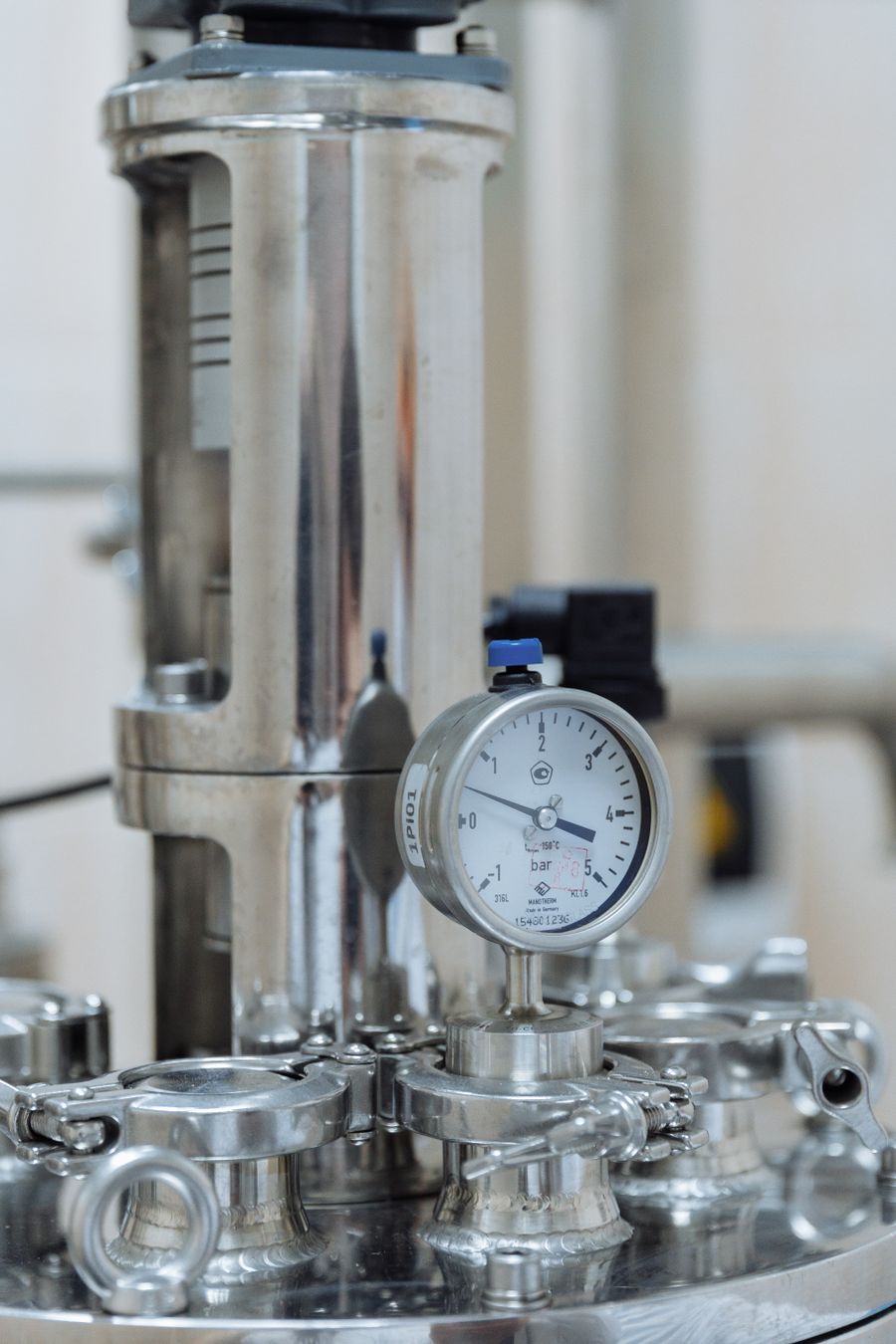
The chamber for this test is a pressure vessel, a long way from a humidity cabinet. It has to hold saturated steam at 121 degrees above atmospheric pressure, at around two atmospheres, without leaking or failing. The wall is built to that pressure rating. The door seals, then locks against it. This is autoclave construction, closer to a steriliser than to a climate chamber.
Safety drives the design as much as the test does. A vessel holding hot steam under pressure carries real stored energy. A relief valve caps the pressure. An interlock keeps the door shut until the vessel has vented. The controls bring the pressure up, then back down on a ramp, with no sudden release. The hazard is the reason an autoclave is a regulated pressure vessel, inspected, certified, where a humidity chamber is not.
The steam needs clean water. The vessel boils water to make its saturated steam, so whatever the water carries ends up condensing on the parts. Tap water would leave mineral scale, with ionic residue, on every surface, which would confuse a corrosion result. The autoclave runs on pure water, deionised or distilled, so the only thing reaching the part is clean condensate.
The inside has to survive the same attack the parts face. Saturated steam at 121 degrees corrodes ordinary steel fast. The vessel interior runs in stainless or a coated surface the steam cannot eat, so the chamber does not shed its own corrosion onto the parts. A rusting vessel would contaminate every test it ran.
Loading and timing round out the design. The parts go in on racks that let the steam reach every surface. The vessel seals, then ramps to pressure. It holds the soak. It vents, then cools on a controlled schedule. The parts come out wet, dried before the electrical readout. Every step protects the one thing the test rests on, a clean saturated soak at a known condition for a known time.
Drying and the readout
A part comes out of the autoclave soaked. The readout cannot start there. The surface water has to go first, since a wet part can read a false short at the bench, the same artefact condensation causes in a biased test. The lab dries the parts on a set schedule before any measurement, so the reading reflects the damage from the soak, free of the leftover surface water.
The readout reaches past the electrical test. An electrical measurement catches a corroded line or a shorted pad. It misses a delamination that has not yet broken a connection. An acoustic scan finds that hidden separation inside the package, mapping where moisture has lifted a layer. The two readings together show whether the package held, then where it failed.
The rule in one line
The autoclave drives saturated steam into the package under pressure, with no voltage, to find what moisture alone can break.
Matching the chamber to the test
The test calls for a pressure vessel, a machine apart from a climate box. It has to reach 121 degrees in saturated steam at around two atmospheres, hold it for the rated hours, vent down safely. It has to run on pure water so the steam leaves no residue. Its interior has to resist the corrosion the steam drives. A standard humidity chamber meets none of these, since it never holds pressure at all.
The autoclave sits in its own equipment class. It shares the moisture goal with the humidity chambers, the hardware with a steriliser. A lab that needs A102 buys or books a rated autoclave, run on pure water, inspected for pressure safety. The result it gives is only as clean as the steam it makes from pure water on a controlled ramp.
Common questions
What conditions does JESD22-A102 use?
A102 holds the part in saturated steam at 121 degrees Celsius at 100 percent relative humidity, under pressure at around two atmospheres, with no bias. The steam condenses on the part on purpose. The common soak is 96 hours, with conditions running from 24 hours up to 336 hours. JESD22-A102 defines this unbiased autoclave method, also called the pressure cooker test.
Why does the autoclave use no bias?
The autoclave tests the moisture resistance of the package itself, apart from anything electrical. With no voltage on the part, the only failures it can produce come from moisture alone, from corrosion or a cracked package. That isolates how the package behaves under water. The biased tests, THB and HAST, cover the electrochemical failures that need a voltage to appear.
Why is the autoclave run under pressure?
Water boils at 100 degrees Celsius at normal pressure, so the steam cannot reach 121 degrees while staying saturated without more pressure. Raising the vessel to around two atmospheres lifts the saturation point to 121 degrees. The pressure also drives the moisture into the package faster than ambient humidity could. The pressure provides the mechanism here, the reason the steam can sit at 121 degrees saturated.
What failures does the autoclave find?
It finds moisture damage with no electrical cause. Water corrodes a metallisation where a contaminant feeds the reaction. Moisture lifts an interface, delaminating the package. Absorbed water flashes to steam in a later reflow, cracking the package open. A weak package soaks through on its own. Each one traces to moisture, caught at the electrical bench or in an acoustic scan.
How does A102 differ from the biased tests?
A102 runs unbiased in saturated condensing steam at 121 over 100 under pressure, the harshest of the family, in about 96 hours. THB runs biased at 85 over 85 unpressurised in vapour, with no condensation, the closest to field conditions, over a thousand hours. HAST runs biased at 130 over 85 under pressure in around 96 hours. The autoclave screens the package fast. The biased tests predict field behaviour.
Is the autoclave still used given HAST?
Yes, as a fast moisture screen. The autoclave gives a quick, cheap pass or fail on a package’s basic moisture resistance, useful early in development. Its harshness can produce failures the field would not, so it works as a screen more than a life test. Many qualification flows now use HAST for the result that has to predict field life, keeping the autoclave for the early sort.
Part of the Envsin guide to semiconductor humidity reliability testing. An A102 autoclave is a rated pressure vessel, specified for pressure safety and pure-water steam before any climate spec.