Highly Accelerated Stress Test HAST Chamber Per JESD22 A110 At 130 Degrees 85 Percent RH 2 Atm
HAST is the biased humidity test run under pressure. The pressure does one job, holding 85 percent humidity at 130 degrees, above where water would boil in open air. That higher temperature does in days what the slower test does in weeks.
A highly accelerated stress test runs a powered part at 130 degrees Celsius at 85 percent humidity, held under about two atmospheres of pressure. The standard behind it is JESD22-A110. The slower biased test holds a part at 85 over 85 for a thousand hours. HAST reaches the same damage in roughly 96 hours, by running hotter. The pressure is what makes the higher temperature possible at 85 percent humidity, since water cannot hold that humidity at 130 degrees in open air. HAST stays unsaturated at 85 percent on purpose, so it can carry a bias without a droplet shorting the part. It drives the same corrosion the slower test drives, only faster, which is why it has become the common qualification choice.
Pressurized THB, not a biased autoclave
A highly accelerated stress test takes the biased humidity test and runs it under pressure. The pressure exists for speed. The slower biased test holds a part at 85 degrees Celsius at 85 percent humidity for a thousand hours, powering it throughout. HAST holds the same kind of part at 130 degrees, still at 85 percent humidity, still powered, for about 96 hours. The higher temperature speeds the chemistry, so the same damage builds in a fraction of the time. The pressure is what makes 130 degrees possible at 85 percent humidity. Water boils at 100 degrees at normal pressure, so 85 percent humidity cannot exist at 130 degrees in open air. Raise the chamber to around two atmospheres. The water then stays liquid past 100 degrees, so 85 percent humidity holds at 130. The pressure buys the temperature ceiling. It does not turn the test into something else. HAST keeps the humidity at 85 percent, below saturation, on purpose. An unsaturated chamber lets the part carry a voltage with no droplet shorting it, the same as the slower test. So HAST drives the same failures the slower test drives, the corrosion, the migration under bias, only faster. It stands apart from the unbiased autoclave, which saturates the steam at 100 percent with no voltage at all. HAST keeps the bias of the gentle test, with its unsaturated humidity, borrowing only the pressure vessel of the harsh one.
Why pressure buys speed
Heat speeds the chemistry of failure. The corrosion that humidity drives runs faster as the temperature climbs, the way reactions do. So does the metal migration. Move the test from 85 degrees to 130. The reactions that took a thousand hours then finish far sooner. Temperature gives HAST its lever for acceleration.
Temperature alone runs into a wall at 100 degrees. Humidity needs liquid water somewhere in the system to set the vapour level. At normal pressure water boils at 100 degrees, so above that the chamber cannot hold a defined humidity. An open chamber at 130 degrees holds dry steam, far from 85 percent humidity. The acceleration stalls at the boiling point.
Pressure moves the wall. Raise the chamber above atmospheric pressure, to around two atmospheres. Water then stays liquid well past 100 degrees. With liquid water available at 130, the chamber can hold 85 percent humidity there. The pressure does one job, lifting the boiling point so the humidity survives the higher temperature. That is the trick at the heart of HAST.
Unsaturated on purpose
HAST holds the humidity below saturation, at 85 percent. This is deliberate. A saturated chamber, at 100 percent humidity, condenses water on every surface. Condensed water on a biased part makes a short, the wrong failure for a test meant to find corrosion. Keeping the humidity at 85 percent leaves the part wet with adsorbed moisture, with no liquid pooling to short it.
The unsaturated condition is what lets HAST carry a bias. A voltage across a damp surface drives the corrosion the test looks for. A voltage across a wet, condensed surface drives a short, the failure HAST avoids. So HAST stays unsaturated to keep the bias meaningful, the same reason the slower biased test stays unsaturated. The autoclave goes the other way, saturating the steam, dropping the bias, since it tests moisture resistance with no voltage.
The bias drives the failures

HAST powers the part through the soak. A bias supply holds the rated voltage on the device, the same as the slower biased test. The voltage turns the adsorbed moisture into an active attack. Without it, the part would sit warm, damp, aging slowly. With it, the part corrodes, migrating metal, on the accelerated clock.
Corrosion eats the metallisation. The moisture film, driven by the voltage, attacks the aluminium or copper of the conductors. It thins a trace, then opens a bond. HAST drives this in days where the slower test takes weeks. The mechanism stays identical. The clock runs faster.
Electrochemical migration grows dendrites. Metal leaves a biased conductor as ions, travels through the moisture film, plates out toward the opposite polarity. The deposit branches into a filament that bridges two conductors. A bridge makes a short or a leakage path. The pressure with the heat of HAST speed the migration along, finding the weak spacing faster than the gentle test would.
The failures match the slower test exactly. A part that fails HAST by corrosion would fail the slower test by the same corrosion, given the time. This is what makes HAST a stand-in for the long test. It reaches the same verdict on the same mechanism, in a fraction of the hours. A part that passes HAST has shown the moisture-bias resistance the long test would confirm.
The numbers
The standard sets the conditions by letter. Condition A runs 130 degrees Celsius at 85 percent humidity for 96 hours. Condition B runs 110 degrees at 85 percent for 264 hours, a milder temperature over a longer soak. Both carry the bias. The two trade temperature against time, the hotter one finishing sooner.
The acceleration sets the value. Roughly 250 hours at 130 over 85 matches the damage of 1000 hours at 85 over 85, the slower test’s full run. So HAST reaches in days what the slower test reaches in weeks. The exact factor depends on the failure mechanism, since temperature speeds some reactions more than others. The qualification plan picks the condition, matched to the part.
Where HAST sits among the three
Three humidity tests share a lab, each at its own conditions. The slower biased test runs at 85 over 85, unpressurised, biased, across a thousand hours, the closest to field conditions. HAST runs at 130 over 85, pressurised, biased, unsaturated, in about 96 hours. The unbiased autoclave runs at 121 over 100, pressurised, saturated, unpowered, in a similar short time.
HAST shares its mechanism with the slow test, its hardware with the autoclave. It keeps the slow test’s bias and its unsaturated humidity, so it produces the same field-relevant failures. It borrows the pressure vessel of the autoclave to run faster. That mix is what makes HAST the workhorse, fast like the autoclave, meaningful like the slow biased test.
What the chamber must do
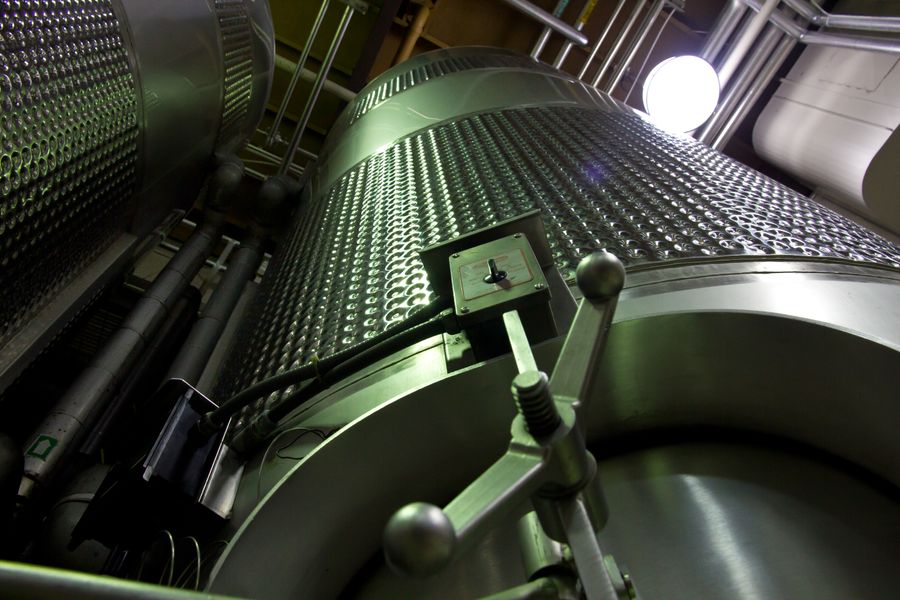
The chamber works as a pressure vessel first. It has to hold around two atmospheres at 130 degrees without leaking or failing, the wall built to that rating. This part of it looks like the autoclave, a sealed vessel rated for hot pressure. The door seals, then locks against the pressure inside.
The humidity control is what sets it apart from the autoclave. HAST has to hold 85 percent humidity at 130 degrees, kept below saturation. That means metering the water precisely, holding the vapour at a set fraction of saturation under pressure, where small errors swing the humidity fast. The control is harder than the autoclave’s. The autoclave only has to saturate. HAST has to hold a precise unsaturated level.
The bias has to get in. Sealed feedthroughs carry the voltage through the pressure wall, the same as the slower biased test needs, now rated for the pressure too. The feedthroughs hold against 130 degrees at two atmospheres without leaking. The bias supply outside drives the parts inside, holding the rated voltage across the soak.
Condensation control runs through all of it. The chamber stays unsaturated, so the humidity itself does not condense. The surfaces still have to stay above the dew point, since a cold spot would bead water on a biased part even in an unsaturated chamber. Uniformity holds the full volume at the condition, with no cold corner to pool water.
Pure water feeds the humidity. The chamber makes its vapour from the water it holds, so any mineral in that water ends up on the parts. Tap water would leave residue that confuses a corrosion reading. HAST runs on deionised water, so the only thing reaching the part is clean moisture. Safety frames the build, since a vessel of hot humid air under pressure carries real stored energy, vented down on a controlled ramp.
The condensation line still holds
An unsaturated chamber still has to avoid condensation. HAST sits at 85 percent humidity, below saturation, so the air itself does not condense at the chamber temperature. A surface below that temperature is another matter. A part colder than the chamber pulls water out of the humid air as liquid, the same trap the slower biased test faces.
The procedure guards the transitions. The chamber ramps to 130 over 85 first, holds until stable, then the bias goes on. The bias comes off before the chamber depressurises, then cools. A part left biased through a cooling ramp would risk condensation under voltage, the failure the test design avoids. Power on at the steady state. Power off ahead of the ramp down.
The pressure adds a step to the same logic. The chamber has to reach its pressure, with its temperature stable, its humidity stable, before the bias goes on. It has to release the bias, then vent the pressure, then cool. Each transition is a chance for condensation on a live part, so each one happens with the bias off. The order matches the slower test, with a pressure stage wrapped around it.
Reading the result
A HAST result reads out at the electrical bench, the same as the slower test. Parts come off at intervals or at the end. A shift past a limit counts as a failure. A corroded line counts, so does a grown dendrite or a climbing leakage. The bench cannot tell which test produced the failure, since the mechanism is the same.
The pass carries the same meaning as the long test, in less time. A part that clears the HAST hours has shown it resists moisture-driven failure under bias, the result a qualification needs. The shorter clock is what makes HAST the common choice for that qualification. The long test stays the reference where the closest match to field timing matters.
The rule in one line
HAST takes the biased humidity test under pressure. The pressure holds 85 percent at 130 degrees, so 96 hours does the work of a thousand.
Matching the chamber to the test
The test calls for a pressure vessel with precise humidity control. It has to hold 130 degrees at 85 percent humidity, around two atmospheres, unsaturated, across the soak. It has to carry bias through sealed feedthroughs rated for the pressure. It has to stay free of cold spots, so no droplet forms on a live part. A plain humidity chamber cannot reach the pressure. A plain autoclave cannot hold the unsaturated humidity, nor the bias.
The unsaturated humidity under pressure is what separates a HAST chamber from the rest. Anyone specifying the test checks the pressure rating, then the humidity control at 130 degrees, then the biased feedthroughs. A chamber that saturates becomes an autoclave. A chamber that cannot pressurise becomes the slow test. Only the combination of pressure, unsaturated humidity, and bias runs a true HAST.
Common questions
What is HAST per JESD22-A110?
HAST runs the biased humidity test under pressure to save time. It holds a powered part at 130 degrees Celsius at 85 percent humidity, around two atmospheres, for about 96 hours. The pressure lets the chamber hold 85 percent humidity above the boiling point, so the higher temperature accelerates the same corrosion a slower test drives. JESD22-A110 defines the biased HAST method.
Why is HAST faster than the 85/85 test?
Heat speeds the chemistry of failure. The slower test runs at 85 degrees for a thousand hours. HAST runs at 130 degrees, where the same corrosion builds far faster, finishing in about 96 hours. Roughly 250 hours at 130 over 85 matches 1000 hours at 85 over 85. The pressure is what lets 85 percent humidity exist at that higher temperature.
Why does HAST need pressure?
Humidity needs liquid water to set its level. Water boils at 100 degrees Celsius at normal pressure, so 85 percent humidity cannot exist at 130 degrees in open air. Raising the chamber to around two atmospheres keeps water liquid past 100 degrees, so 85 percent humidity holds at 130. The pressure buys the higher temperature, which buys the speed.
How is HAST different from the autoclave?
Both run under pressure. They do opposite jobs. HAST holds 85 percent humidity, unsaturated, with a bias on the part, to drive electrochemical failure fast. The autoclave saturates the steam at 100 percent with no bias, to test moisture resistance alone. HAST keeps the bias, with the unsaturated humidity. The autoclave drops both for saturation.
What conditions does HAST use?
The common one is Condition A, 130 degrees Celsius at 85 percent humidity for 96 hours, under about two atmospheres, with bias. Condition B runs 110 degrees at 85 percent for 264 hours, a milder temperature over a longer soak. Both stay unsaturated, both carry the voltage. The qualification plan picks the condition for the part.
Does HAST still need condensation control?
Yes, despite running unsaturated. The air at 85 percent does not condense at the chamber temperature. A cold surface still can. A part colder than the chamber beads water on itself, which shorts a biased pin. So HAST powers the bias only at the steady state, with the bias off through every ramp of pressure or temperature, the same discipline the slower test uses.
Part of the Envsin guide to semiconductor humidity reliability testing. A HAST chamber is a pressure vessel that holds a precise unsaturated humidity under bias, so specify all three before any single figure.