Steady State Temperature Humidity Bias Test Chamber Per JESD22 A101 THB
THB runs a part at 85 degrees at 85 percent humidity with its power on. The humidity carries water to the surface. The bias does the damage. The chamber has one hard job, to keep that water a vapour on a live part with no droplet forming.
A steady state temperature humidity bias test holds a powered device at 85 degrees Celsius at 85 percent relative humidity for a long soak, usually a thousand hours. The standard behind it is JESD22-A101. The test looks like a humidity test. The active ingredient is the bias. Damp heat alone soaks a part with moisture. The bias turns that moisture into an electrical attack. That attack corrodes the metal inside the part. It migrates metal across the gaps between conductors. A field part meets the same slow damage over years of powered service in a humid place. The chamber that runs the test carries one dominating requirement under all the obvious ones. It has to deliver the humidity to the part as vapour for the full soak, with no condensation on any surface that is carrying voltage. Liquid water on a biased pin makes a short, far from the slow corrosion the test exists to find.
Bias does the work
Bias does the work. The phrase sounds odd for a humidity test, so it pays to follow the mechanism step by step. Water vapour reaches the surface of a packaged device through the plastic, since no nonhermetic package keeps moisture out forever. The water settles into a thin adsorbed film on the die, across the metallization. That film on its own does almost nothing. A film with a voltage across it becomes an electrolyte. Current leaks through it from one biased conductor toward another. The leakage carries metal ions off the positive conductor. It plates them along the path of the field. It grows conductive filaments toward the negative conductor. The same current corrodes the metallization, eating into the aluminium or copper where the moisture sits. None of this unfolds in damp heat without a voltage present. The bias is the part of the test that turns a damp part into a failing one. This reframes what the chamber is for. The chamber supplies the water that builds the film. The bias supply drives the failure through that film. The two have to act together at the surface of the die, in vapour, at a controlled temperature, for the length of the soak. Raise the temperature too far. The water will not stay on the surface. Cool one spot too far. The water beads into a drop. Cut the bias. The film sits there doing nothing at all. Hold every variable inside the narrow window where moisture stays a thin film under voltage. The part then ages the way a field part ages, only faster. That window is what the test buys. It is the reason the conditions sit exactly where they do. Everything the chamber must guarantee follows from holding that window open for a thousand hours on a live device.
Where the moisture gets in
The test targets nonhermetic parts for a reason. A hermetic package in metal or ceramic seals moisture out, so humidity stays out of its die. A plastic package does not seal. It absorbs water from humid air over time. The moisture diffuses through the moulding compound to the die surface inside. THB exists to stress exactly this class of part, the plastic-encapsulated devices that make up the bulk of the electronics in service.
The path the water takes shapes the result. Moisture moves along the interface between the moulding compound and the lead frame. It collects at the die surface where the bias sits. A package with a weak interface lets water travel faster, so it fails sooner under the same soak. A well-sealed compound slows the ingress, so the part lasts longer. The test reads the package together with the die passivation, since both stand in the way of humid air reaching the biased metal.
This ingress takes time, which sets the soak length. Water needs hours to saturate the package and reach the die in quantity. A short exposure would end before the moisture even arrived. A thousand hours gives the water time to get in, build its film, then drive the failure under bias for many hundreds of hours after that. The long soak is not padding. It matches the pace at which moisture actually crosses a plastic package.
Why the numbers are 85 over 85
The condition reads as a pair, 85 degrees Celsius over 85 percent relative humidity, held steady through the soak. Each number sits where it does for a reason. The temperature runs high to speed the chemistry, since reaction rates climb with heat. It stays under 100 degrees on purpose. Water boils at 100 degrees at normal pressure, so 85 keeps the test in liquid-film territory without the phase change that boiling would bring.
The humidity runs high to load the surface. Air at 85 percent relative humidity lays down a thick adsorbed film without reaching saturation. Push the humidity to 100 percent and the air would condense at the smallest cold spot, so 85 percent holds a heavy moisture load with a margin against beading. The pairing of high heat with high humidity gives the fastest surface chemistry the test can run without tipping into liquid water.
The numbers come from JESD22-A101, the JEDEC standard that defines the steady state temperature humidity bias life test. The standard fixes the conditions so results compare across labs. A part that survives a thousand hours at 85 over 85 under bias in one lab means the same as a pass in another. That shared definition is the point of citing a standard at all.
What the bias breaks

Two failure mechanisms dominate the result. The first mechanism, electrochemical migration, moves metal through the moisture film. Metal leaves a biased conductor as ions. It travels through the film toward the opposite polarity. It deposits there as a branching filament. That filament is called a dendrite. A dendrite that bridges two conductors makes a short, or a leakage path that was not present before.
Corrosion follows as the second mechanism. The same moisture film, driven by the same bias, attacks the metallization directly. It eats into the aluminium pads, into the fine traces, thinning each conductor until its resistance climbs or the line opens. Corrosion needs the water with the voltage present together, the reason a dry part survives where a biased damp one fails. Both mechanisms read out later as a parametric shift or an outright failure at the electrical bench.
The test board and the bias pattern
The parts ride into the chamber on a test board. The board holds many devices at once, wiring each to the bias supply that carries the voltage to every pin. A single soak can run dozens of parts together, which is how a lab gathers enough samples for a statistical result. The board has to survive 85 over 85 itself, so its own material has to resist the humidity that the parts are there to feel.
The bias pattern decides which conductors get stressed. The voltage goes onto the pins in a static pattern, with no switching, so the device sits under a steady field for the entire soak. Adjacent pins often carry opposite polarity, since the worst migration happens between a biased conductor and its neighbour at the other potential. A test plan picks the pin pattern that puts voltage across the spacings most at risk.
The bias level itself stays at or near the rated voltage. The point is to mimic a part powered in the field, not to overdrive it. A voltage far above rating would force failures the field never sees, which would tell the wrong story. The plan holds the bias realistic, so the failures it produces map onto real service.
The self-heating trap
The bias has to stay low in power. This catches anyone who assumes more stress always means a harder test. Push too much current through the device. It heats itself from within. A self-heated die runs hotter than the air around it. The surface right at the die dries out, since a warmer surface holds less adsorbed water. Local humidity at the die falls below the 85 percent the chamber reports. The test now runs at a condition no one chose, milder than the label claims, because the part cooked off its own moisture film.
Standards hold the bias down to stop this. Published work on the method often caps the bias near 80 volts for that reason, the level chosen so the device dissipates almost nothing. The aim is a voltage that biases the conductors without warming them. A part tested this way sees the full 85 over 85 right at its surface. The humidity the chamber meters reaches the die unspoiled by self-heating.
The condensation red line
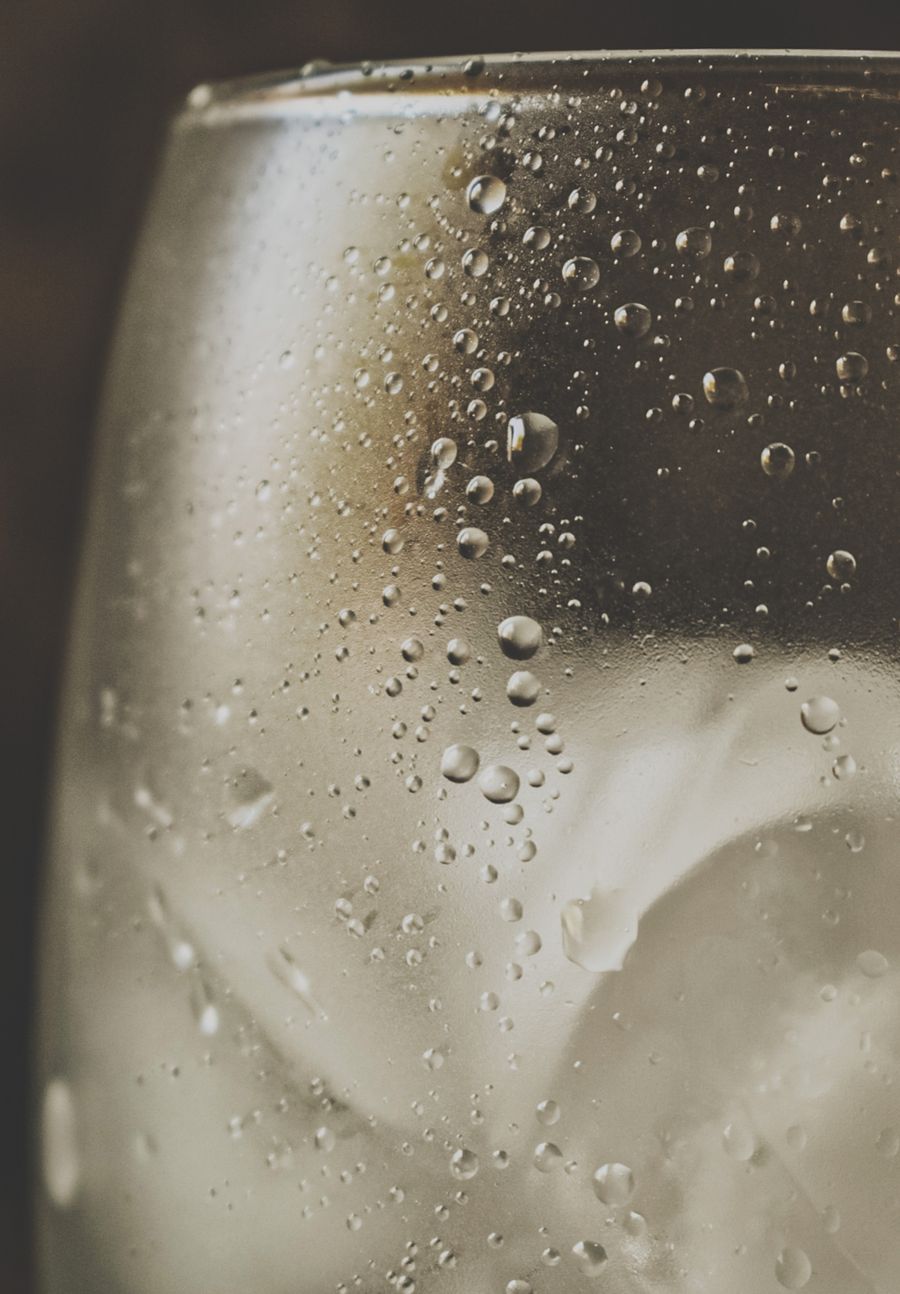
Condensation is the failure the chamber must never cause. The entire test depends on the moisture staying a vapour at the part. A drop of liquid water bridging two biased conductors is a direct short. That short counts as an artefact. It says nothing about the part’s corrosion resistance, only that water pooled where it should not.
Cold spots are where condensation starts. Air at 85 over 85 sits close to its dew point already, far closer than room air ever does. A surface even a few degrees colder than the chamber air will pull water out of that air as liquid. A chamber with any cold surface, a wall or a shelf below the air temperature, grows droplets right there. A droplet that finds a biased part takes the soak off the rails.
Uniformity is the defence against it. A chamber that holds the same temperature everywhere in its working space gives condensation no cold surface to form on. The air stays a few degrees above its dew point at every point a part might sit. Good air movement keeps it that way, sweeping warm humid air across the full volume so no pocket drifts cold.
The part itself can be the cold spot at the start. A device placed cold into a hot humid chamber sits below the dew point until it warms through. Water condenses on it during those first minutes. The cure is procedural, covered next, since the chamber cannot warm a part faster than its own mass allows.
The order of operations
The procedure protects the part across every transition. The chamber ramps to 85 over 85 first. It holds until the conditions read stable. The bias goes on only after the chamber, with the parts inside it, has reached temperature, past the point where anything sits cold enough to condense. This single rule removes the start-up condensation risk in one move.
The shutdown reverses the same logic. The bias comes off before the chamber cools. A part left biased while it cools would risk condensation under voltage during the ramp down, the exact event the test guards against. Power down first. Cool second. The order decides everything here. It separates a valid soak from a chamber full of shorted artefacts.
What the chamber must hold
The chamber’s job list starts with two control points. It holds the air at 85 degrees, usually within about two degrees. It holds the humidity at 85 percent, usually within about five percent. Both have to stay there for the length of the soak, a thousand hours or longer, with no drift across days of running.
Uniformity ranks with stability. The set point means little if one corner of the box runs cooler than the sensor reads. The design moves air to erase those gradients, holding every part of the working volume at the same condition. A part on the bottom shelf has to feel what a part on the top shelf feels, or the soak is uneven across the sample.
The bias has to get into the sealed space. Sealed feedthroughs carry the wiring through the wall, so the conductors reach the parts without opening a path for heat or moisture to leak. The feedthroughs handle many channels, since a test board often holds dozens of biased parts at once. The seal around them keeps the humid air in, the room air out.
A low-power bias supply feeds the parts. It delivers the rated voltage to each device, holds it steady, draws almost nothing beyond the leakage current. Many setups monitor that leakage live, since a rising current flags a part starting to fail. The supply logs the reading through the soak, building the record the result rests on.
Condensation control runs under all of it. The chamber avoids cold surfaces, keeps the air moving, so the water it carries stays where it belongs, in the vapour at the surface of each part. Every requirement here serves the one window the test depends on. Lose the window. The thousand-hour soak then proves nothing about the part.
Preconditioning before the soak
Many parts meet a preconditioning step before THB. The flow simulates what a part goes through on its way onto a board, a moisture soak followed by the heat of solder reflow, defined in a companion standard. The reflow can crack a moisture-laden package or lift an interface, which then changes how the part behaves under the humidity bias test that follows. Preconditioning makes the THB result reflect a part that has been assembled, not one fresh from the moulding press.
A baseline electrical readout comes before the soak too. Each part gets measured at time zero, so the post-soak numbers have something to shift from. A failure is a change from that baseline past a set limit, which means the baseline has to exist first. The readout repeats at intervals, building a curve of how each parameter drifts as the hours add up.
THB against HAST
HAST runs as the faster cousin of this test. It runs at 130 degrees Celsius at 85 percent humidity under about two atmospheres of pressure, defined in JESD22-A110. The pressure lets the air hold high humidity above the boiling point, which crushes the timescale. A HAST soak finishes in around 96 hours where THB needs a thousand.
Each test buys something the other gives up. THB stays at field-like conditions, so its result maps onto real service with little argument. HAST reaches an answer in days, so it suits a fast development loop. Many programs now accept HAST for the speed. THB stays the reference where the closest match to field behaviour carries the greatest weight. A lab picks by what it needs, a quick screen or a field-realistic proof.
Reading a result
A THB result reads out at the electrical bench, away from the chamber. Parts come out at set intervals, or at the end of the soak. Each goes onto a tester that measures the parameters the part has to hold. A shift past the limit counts as a failure. A clean reading counts as a pass.
The failures point back to the mechanisms. A short or a low resistance between conductors suggests a dendrite has bridged them. A rising series resistance or an open suggests corrosion has eaten a conductor. A leakage climbing through the soak, caught by live monitoring, shows a failure building well before the part dies outright. Each signature ties to a physical cause a cross section can later confirm.
The valid result depends on trusting the soak. This is where condensation matters once more. A part that shorted on a droplet reads like a dendrite failure at the bench, a false positive that blames the part for the chamber’s fault. A lab that runs the start-up sequence correctly can trust its failures as real. The discipline at the chamber is what makes the bench data mean anything.
What a pass proves
A pass marks a milestone, not a lifetime certificate. A part that clears a thousand hours at 85 over 85 under bias has shown its package with its passivation resists moisture-driven failure under a realistic field stress. That is a qualification result, the kind a part needs before it ships into humid service. It does not promise a fixed number of years in the field, since real conditions vary far more than a fixed soak.
The result draws its weight from the conditions behind it. A pass means more when the soak held 85 over 85 with no condensation for the full thousand hours. A soak that drifted, or that beaded water on a part, gives a number no one can lean on. The credibility of the pass rests on the chamber holding the window, the same window the method is built around.
The rule in one line
Keep the water a vapour on a live part for a thousand hours. That single condition is the test.
Matching the chamber to the test
The test names the chamber it needs. The box has to hold 85 over 85 across a large working volume for a thousand hours without drift. It has to stay free of cold spots, so no droplet forms on a biased part. It has to pass many bias channels through a sealed wall. It has to log the conditions, with the leakage current, across the full soak. A chamber short of any one of these cannot run a clean THB.
The bias hardware matters as much as the climate. A supply that holds rated voltage at almost no current, channel by channel, with live logging, turns the soak into data. The chamber holds the window. The bias drives the test through it. A facility that treats the two as one system runs THB that means what it claims.
Common questions
What conditions does JESD22-A101 THB use?
THB holds the device at 85 degrees Celsius at 85 percent relative humidity with a continuous bias near the rated voltage. The soak runs about a thousand hours for qualification, sometimes two thousand for a longer life claim. The 85 over 85 condition sits below the boiling point on purpose, so the moisture stays a liquid film without a phase change. JESD22-A101 defines the method.
Why does THB apply a bias?
The bias does the damage. Damp heat alone loads the surface with a moisture film. A voltage across that film drives current through it, which moves metal as dendrites, then corrodes the conductors. Those are the field failures the test reproduces. Without the bias the part just sits damp, so the test would miss the mechanism it exists to find.
Why must the bias be low power?
A high-power bias heats the device from within. The self-heated surface dries out. Its local humidity drops below the 85 percent the chamber reports. The test then runs milder than its label. Standards cap the bias low, often near 80 volts in published work, so the device dissipates almost nothing. The surface then sees the full humidity.
Why is condensation a problem in THB?
Condensation puts liquid water on the part. A droplet across two biased conductors makes a direct short, which reads as a failure that has nothing to do with corrosion. Air at 85 over 85 sits near its dew point, so any cold surface beads water fast. The chamber avoids cold spots. The procedure powers the bias only at stable temperature, which keeps liquid off a live part.
How does THB differ from HAST?
HAST runs hotter, under pressure, at 130 degrees Celsius at 85 percent humidity near two atmospheres, defined in JESD22-A110. The pressure pushes humidity above the boiling point and cuts the time to about 96 hours. THB stays unpressurised at 85 over 85 for a thousand hours, closer to field conditions. HAST wins on speed. THB wins on field realism.
How long does a THB test run?
A thousand hours is the common length for qualification. A part proving a longer service life may run two thousand hours or more. The duration is long because the test does not use pressure to accelerate, so it leans on time for its acceleration. The readouts come at intervals through the soak and at the end.
Part of the Envsin guide to semiconductor humidity reliability testing. Specify the chamber’s uniformity and condensation control before its headline range.