SMD Preconditioning Chamber Per JESD22 A113
Preconditioning is not a reliability test. It runs before them, putting a part through the bake, soak, and reflow of assembly, so the test that follows judges the part the field will actually hold.
A surface-mount part reaches the field only after assembly. It sits on a shelf taking up moisture, then runs through a solder reflow oven onto a board. JESD22-A113 reproduces that journey in the lab, before any reliability test begins. It bakes the part dry, soaks moisture back into it to a rated level, then runs it through reflow heat. Only then does the part go to the humidity or temperature stress test. The point is to put the part into the state assembly leaves it in, so the reliability result reflects a real part. The standard is a preconditioning flow, a setup ahead of any test.
The rehearsal before the test
Preconditioning is not a reliability test. It runs before them. A113 takes a fresh part and ages it through what assembly will do to it on the way to a board, so the reliability tests that follow judge a part in the state the field will see. A part leaves the factory dry, sealed against moisture. It sits on a shelf, soaking up humidity from the air. It goes onto a board through a reflow oven, taking a blast of heat. Each of those steps changes the part before it ever powers up in service. A reliability test on a pristine part would miss all of it. So A113 reproduces the sequence on purpose. It dries the part to a known baseline, lets it soak moisture back to its rated level, then runs it through the reflow heat, before the humidity or temperature stress test begins. The reflow heat brings the sharp end. A package that soaked up moisture can crack when that water flashes to steam at the reflow temperature. Preconditioning drives that out first, so the reliability test reads a part that has already survived assembly, the way a fielded part has. Skip the preconditioning. The test then grades a part no customer ever receives, a pristine sample the field does not see. The entire value of A113 sits in that swap, trading a fresh part for an assembled one before the grading starts.
First, the baseline reading
The flow opens with a reading. Each part gets measured electrically before anything else happens, so the test has a starting point. A failure later means a change from this baseline, which means the baseline has to exist first. The parts also get an external visual check, recording any crack or mark already present.
The baseline samples a batch. Preconditioning runs a group of parts together, enough for a statistical result on the reliability test that follows. The full group takes the same flow, so every part reaches the stress test in the same condition. A part that fails the baseline check drops out before the flow spends any effort on it.
Then the bake dries it out
The first stage bakes the part. The part goes into a dry oven at 125 degrees Celsius for at least 24 hours. The heat drives out whatever moisture the part picked up since it left the factory, in shipping or on the shelf. The bake resets every part to a known dry baseline, so the soak that follows starts from the same point for all of them.
A dry start matters for the soak to mean anything. A part that went into the soak already damp would end up wetter than its rating, taking a harsher precondition than the standard sets. A part baked dry first takes up exactly the moisture the soak specifies, no more. The bake makes the soak repeatable across parts that arrived in different states.
The bake is gentle next to the reflow ahead. At 125 degrees the part only dries, with no stress on the package. The standard fixes the temperature tightly, since too hot a bake could itself age the part. The point is to remove water, leaving everything else untouched.
Then the soak loads the moisture back
The soak puts moisture back into the dry part, to a controlled amount. The part sits in a humidity chamber at a fixed condition for a set time, taking up water until it holds the level its rating calls for. That level comes from the part’s moisture sensitivity rating, the figure that says how much moisture it can carry into reflow safely.
The rating fixes the soak, with the chamber only delivering it. The soak depends on the part’s moisture sensitivity level, a classification set in its own standard. A more sensitive part soaks lighter, a tougher one soaks harder, each to the condition its level defines. That classification has its own method, its own article. Here the soak just brings the part to the moisture it would hold in real storage before assembly.
Then the reflow heat hits
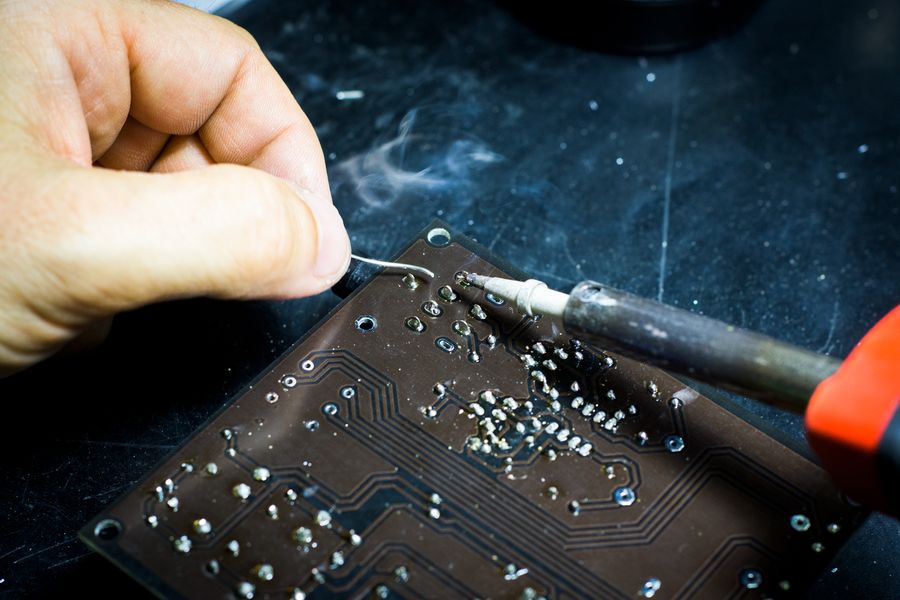
Reflow is where the precondition turns sharp. The soaked part runs through a solder reflow profile, the same heat a board assembly would put it through. The temperature climbs to the package’s classified reflow peak, often in the range of 245 to 260 degrees Celsius for lead-free solder. The part takes this several times, commonly three, to match a board reflowed more than once.
The heat does two things at once. It melts the solder that would hold the part to a board, the function reflow serves in real assembly. It also drives the moisture in the package toward steam, the function that matters for the precondition. The first is why reflow exists. The second is why preconditioning borrows it.
The peak temperature comes from the part’s own classification. A package rated for a given reflow peak gets preconditioned at that peak, so the heat matches what the part will really meet. The profile follows the assembly standard for its shape, from the ramp up through the peak to the cool down. Matching the real profile keeps the precondition representative.
Three passes is the common count. A board often sees reflow more than once, a first side, then a second side, sometimes a rework. Preconditioning matches that with multiple passes, so a part that clears one reflow, then fails the third, gets caught. The repeated heat is harder on a wet package than a single pass would be.
What the reflow exposes
A wet package can fail the reflow itself. Moisture trapped in the plastic flashes to steam at the reflow peak. The steam pressure builds inside the package faster than it can escape. It cracks the package open with a pop, the failure named popcorn for that sound. The crack can run to the die, or lift an internal layer apart.
Delamination runs quieter. The steam can peel an interface apart inside without cracking the package open, lifting the moulding compound off the lead frame or the die. A delaminated part may pass a visual check, hiding the damage inside. An acoustic scan finds it, mapping the separation the reflow opened. Preconditioning exposes both faults before the reliability test, so a part that would have popped in a customer’s oven fails here first.
Then the real test begins
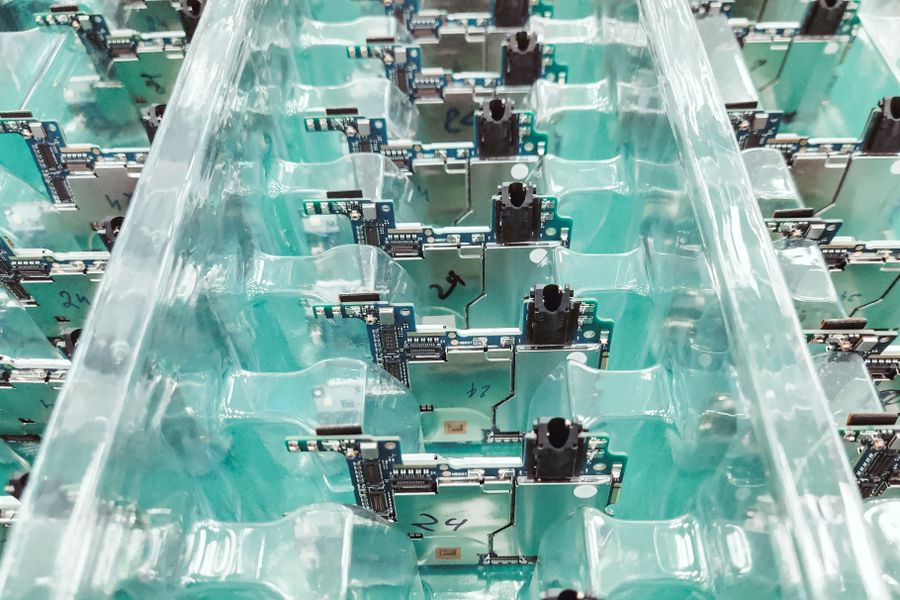
Preconditioning hands the part to the reliability test in field condition. A part that clears the bake, the soak, then the reflow is now an assembled part, moisture-cycled, heat-stressed, the way the field does it. From here it goes into whichever reliability stress test the plan calls for. Each one now judges a part that has been through assembly.
This is the role A113 plays for the entire flow. It does not grade the part. It prepares the part, so the grading that follows means something. A pass on a humidity test after preconditioning says the part survives assembly, then field humidity. A pass without preconditioning says only that a pristine part survives, a weaker claim. Preconditioning ties the lab result to the real part.
Why precondition at all
A fresh part is not the part the field uses. Every part in service has been through assembly first. It absorbed moisture on the shelf. It took the reflow heat going onto its board. By the time it powers up, it carries the marks of all of that. Testing reliability on a part that skipped assembly grades the wrong object.
Preconditioning closes that gap. It puts the fresh part through assembly in the lab, so the reliability test sees what the field sees. The cost is a few stages of equipment, with the time they take, before the real test. The return is a result that maps onto a real part, the point of running the test at all.
The reflow stress is the part nobody can skip. A moisture-sensitive package that never saw reflow would pass tests it should fail. The field would then crack it on the assembly line, long before any humidity stress. Preconditioning catches that part in the lab, where a failure costs a sample, sparing a production run.
Three machines, run in order
Preconditioning needs three machines, not one. The flow runs through a bake oven, then a humidity soak chamber, then a reflow system, in that order. No single box does all three, since each stage needs a different environment. The lab moves the parts from one to the next on the schedule the standard sets.
The bake oven is the simplest stage. It holds a dry 125 degrees for the bake hours, with good airflow to carry the moisture out. Nothing about it is exotic, a dry oven held at a steady temperature. Its only job is to remove water cleanly from a batch of parts.
The soak chamber runs as a humidity chamber. It holds the soak temperature, the soak humidity, steady for the soak time, so every part takes up the same moisture. This stage looks like the humidity chambers used elsewhere in the lab, set to the soak condition. Its accuracy decides how repeatable the moisture loading is.
The reflow system carries the heat. It runs the soaked parts through the classified reflow profile, hitting the peak temperature for the passes the flow calls for. A reflow oven or an equivalent profiled heater does this, matched to the assembly standard. This stage exposes the popcorn fault, so its profile has to track the real one closely.
The chain only works run in order. A part soaked before it is baked dry would carry the wrong moisture. A part reflowed before it soaks would skip the moisture the test depends on. The order carries the test, since each stage sets up the next. A lab running A113 sequences the three machines as one connected flow.
Reading the precondition result
Preconditioning produces a readout of its own. After the reflow, each part gets the visual check and the electrical check again. A part cracked by popcorn, or shifted past a limit, fails here, before the reliability test ever runs. An acoustic scan checks for the delamination a visual would miss.
A failure at this stage is still useful. It means the part could not survive assembly, a real defect worth catching. The part never reaches the reliability test, since it already failed the rehearsal. A part that clears preconditioning is ready for the reliability test, arriving in the condition the field would deliver it.
The rule in one line
Preconditioning is not the test. It rehearses assembly first, so the test judges the part the field will actually hold.
Matching the equipment to the flow
The flow calls for three capabilities in sequence. A dry bake at 125 degrees, then a humidity soak at the part’s rated condition, then a reflow at the classified peak. Each has to meet the standard’s numbers, since a soft stage softens the entire precondition. A lab assembling A113 lines up the three, run in the order the standard sets.
The reflow stage carries the heaviest weight. It is the one that exposes the moisture fault, the reason preconditioning exists. A lab can run the bake in a basic oven. The soak takes a standard humidity chamber. The reflow needs a profile matched to the assembly standard. Get the reflow profile right. The precondition then does its job.
Common questions
What is JESD22-A113 preconditioning?
A113 is a preconditioning flow, a step ahead of any reliability test. It ages a surface-mount part through the steps of board assembly, a dry bake, a moisture soak, then a solder reflow, before any reliability test runs. The point is to bring the part to the condition the field will see it in. The reliability test that follows then judges an assembled part.
Why bake the part before the soak?
The bake dries the part to a known baseline. A part arrives carrying whatever moisture it picked up since the factory. Baking it at 125 degrees Celsius for at least 24 hours removes that, so every part starts the soak dry. The soak then loads a controlled, repeatable amount of moisture, the same for every part in the batch.
What does the reflow step do?
The reflow puts the part through the heat of soldering it onto a board. The temperature climbs to the package’s classified peak, often 245 to 260 degrees Celsius for lead-free solder, usually for several passes. The heat melts solder in real assembly. In preconditioning, it also flashes any soaked-in moisture to steam, which can crack a wet package.
What is popcorn cracking?
Popcorn cracking is a package failure at reflow. Moisture trapped in the plastic turns to steam at the reflow peak. The steam pressure cracks the package open with an audible pop, the source of the name. Preconditioning drives this out in the lab, so a moisture-sensitive part fails there, well before a customer’s assembly line.
How does preconditioning relate to the moisture sensitivity level?
The moisture sensitivity level sets the soak. A part’s level says how much moisture it can carry into reflow safely, which sets the soak condition the preconditioning uses. The level itself comes from a separate classification method, covered in its own standard. Preconditioning uses the level to pick the soak, no more.
Is preconditioning a pass-or-fail test?
It works mainly as a preparation. It can also fail a part. A part cracked or shifted by the reflow fails preconditioning, dropping out before the reliability test. A part that clears it moves on, now in field condition. So the main job is preparation, with a failure at this stage flagging a part that could not survive assembly.
Part of the Envsin guide to semiconductor reliability testing. A113 is a sequence of three machines, a bake oven, a soak chamber, a reflow system, run as one flow before the stress tests.