AEC Q automotive grade IC qualification test chambers
An automotive part lives a hard life. It rides through summer heat soak under the bonnet, cold starts at minus thirty, condensation every morning, vibration on every pothole, and a service life measured in years rather than the months a phone gets. A consumer grade chip would not last a season in that bay.
The Automotive Electronics Council wrote the AEC-Q documents to set one bar every Tier 1 and Tier 2 supplier has to clear. The qualification runs in climatic chambers, and the grade a part earns decides where in the vehicle it can sit.
The AEC-Q document family
Each document covers a class of component.
| Document | Covers | Core climatic test |
|---|---|---|
| AEC-Q100 | Integrated circuits | grade-based temperature and damp heat |
| AEC-Q101 | Discrete semiconductors | THB, temperature cycling |
| AEC-Q200 | Passive components | damp heat, biased humidity |
| AEC-Q104 | Multi-chip modules | thermal shock, moisture |
| AEC-Q006 | Copper wire bonded devices | biased damp heat |
The road writes the test
A car part is qualified to the life it will live. The mission profile, rather than a round number, sets the temperatures and the hours.
Zero is the bar
Consumer parts allow a few failures per million. Automotive aims at zero defects, and the chamber plan is built around that harsher target.
Grades decide the seat
AEC-Q100 sorts integrated circuits into temperature grades, and the grade is the first number a designer checks.
Grade 0 runs the widest band, minus 40 to plus 150 degrees, the range an engine control unit bolted to the block has to take. Grade 1 stops at plus 125, Grade 2 at plus 105, Grade 3 at plus 85. A part qualified to Grade 3 cannot sit under the bonnet, and a designer who reads the Q100 chamber qualification across Grade 0 to 3 early avoids placing a cabin grade part next to a turbocharger.
Why automotive is harsher
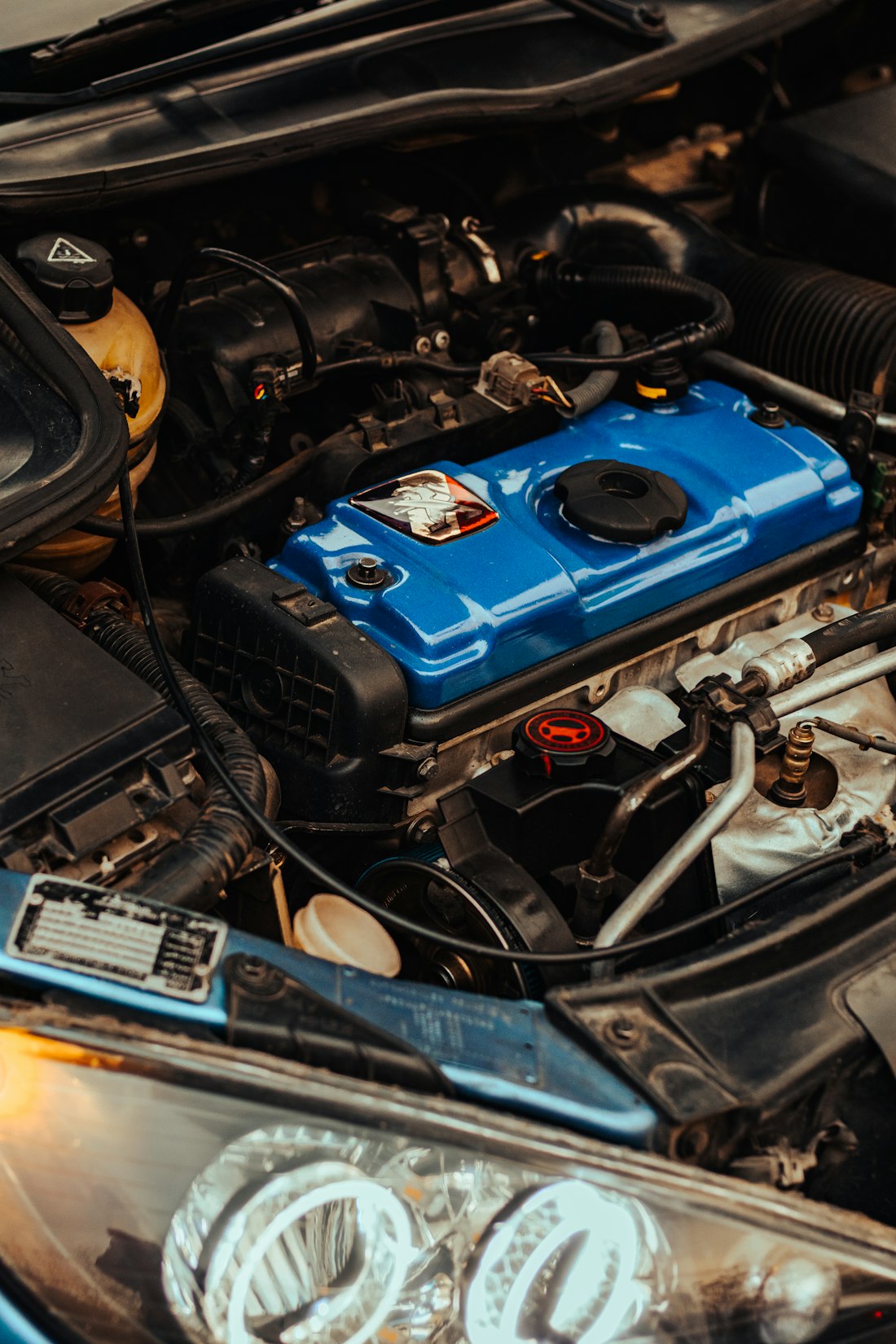
The under-bonnet bay is one of the cruelest places electronics ever sit.
Heat soak after shutdown pushes the temperature higher than the running engine, since the airflow stops while the block stays hot. Winter mornings drop the same part below freezing, and the swing repeats twice a day for a decade and a half. Road spray carries salt and grit that ordinary indoor electronics never face. The qualification has to compress that into a fixed plan, and the chamber time runs far longer than a consumer part would ever see.
Damp heat, the automotive way
Carmakers did not settle for the generic damp heat profiles. They wrote their own.
The cyclic damp heat chamber under VDA 230-208 follows the German automotive association method, a frost and dew cycle built around the day-night swing a parked car lives through. The cyclic condensation chamber under DIN 50018, the Kesternich test, adds sulphur dioxide to the condensation so the run reproduces the acidic moisture of an industrial or roadside atmosphere. These methods sit beside the AEC documents on a carmaker spec, and the chamber has to deliver the gas dosing and the condensation control the generic boxes never needed.
HAST for the capacitors
Passive parts ride the same bay and get the same scrutiny. An automotive multilayer capacitor faces bias and moisture together, and the HAST chamber for an automotive grade capacitor accelerates the failure under pressure the way it does for a packaged IC. The passive component reliability chamber under AEC-Q200 wraps the wider passive qualification around it, from resistors to inductors to the capacitor banks a power module leans on.
Discretes, modules and the wire inside
Discrete semiconductors carry their own document. The temperature humidity chamber under AEC-Q101 qualifies the transistors and diodes that switch the high currents in a drivetrain.
Multi-chip modules raise the difficulty again. The thermal shock chamber for a multi-chip module under AEC-Q104 stresses the joints between several dies in one package, where mismatched expansion cracks the interconnect long before the silicon gives.
Copper wire bonding brought a quieter risk. Copper resists corrosion differently from gold, so the council added AEC-Q006, and the Q006 qualification chamber for copper wire bonded devices runs the biased damp heat that exposes a weak copper bond before it reaches a car.
The test groups behind a Q100 number
A Q100 pass is not one chamber run. It is a battery of groups, and the climatic chambers carry the heaviest ones.
The accelerated environment stress group holds the damp heat work, the autoclave and the temperature cycling. The accelerated lifetime group runs high temperature operating life, where the part sits powered at its grade ceiling for a thousand hours so the silicon ages under bias. A package integrity group adds the thermal shock and the physical dimension checks. Each group reports against a fixed sample size, and a failure in any one sinks the whole qualification, so a supplier schedules the chamber time months ahead of a launch.
The damp heat inside that first group is where the under-bonnet moisture gets reproduced. Temperature humidity bias for a thousand hours, biased HAST to shorten the wait, autoclave for gross ingress, each tied to the grade the part is chasing.
Zero defects is the automotive bar
Consumer electronics live with a return rate. A car does not.
A single failed airbag controller or brake sensor is a recall and a headline, so the automotive supply chain runs on a parts-per-million mindset and pushes toward zero defects across a fleet of millions. That culture changes the chamber work from the first day of planning. The sample sizes climb from a handful to dozens or hundreds per lot, because a defect rate measured in parts per million only shows itself in numbers that large. The read points multiply, so a part is checked not once at the end but at intervals through the soak, building a curve rather than a single pass-or-fail. A marginal result that a consumer programme would wave through triggers a fresh lot and a root-cause hunt before the qualification can move on. Three lots from three production runs are often required in place of one, to catch the variation that only appears across batches. The chamber is asked to prove not just that a sample works but that the whole population behind it carries almost no hidden weak units, and that demand sets the sample size, the duration, and the number of chambers a programme has to book.
Acceleration and the high grades
The grade ceiling drives the lifetime maths.
A Grade 0 part rated to 150 degrees ages faster at its ceiling than a Grade 3 part at 85, and the Arrhenius relationship lets a lab trade chamber temperature for time. Every ten-degree step up roughly doubles the rate of a thermally driven mechanism, so running the high temperature operating life hotter than the field ceiling lets a thousand chamber hours stand in for many years on the road. That arithmetic is what makes a qualification finish inside a project schedule instead of running for the life of the car. The trade has hard limits. Push the temperature past the point where a fresh failure mode wakes up, and the acceleration model breaks, because the chamber is now aging the part by a route the road would never take, and the extrapolation back to field life falls apart. Picking that ceiling is part of writing the qualification plan, and it rests on knowing which mechanism the heat is meant to speed up and which one waits just above, ready to spoil the result if the plan reaches too far.
Robustness over a bare pass
The newer automotive thinking asks for more than a pass at the spec corner.
Robustness validation pushes a part past its rated limits to find where it breaks, then measures the margin between that edge and the mission profile. A chip that passes at 150 degrees and dies at 152 is a different risk from one that passes at 150 and holds to 175, even though both clear the same Grade 0 line. The chamber supports this by running step stress beyond the rating, and the margin it reveals tells the carmaker how much headroom the design carries before a hot summer or a long climb eats it.
Electrification raises the heat bar
The traction inverter changed the thermal picture under the floor of a car. Silicon carbide power modules switch hard against a battery pack and run their junctions far hotter than the logic chips that came before them. A Grade 0 rating that once described a sensor bolted to the engine block now describes the gate driver sitting beside a SiC bridge, and the qualification plan follows the heat.
That shift pulls more parts into the top grade.
Power devices for an inverter carry their own qualification weight. The die attach has to hold under thousands of fast power cycles, where the chip heats and cools across tens of degrees in seconds rather than over a slow drive across a mountain pass. A chamber handles the ambient soak and the damp heat that the package sees on the road, while a separate power-cycling rig drives the self-heating that cracks solder layers and lifts bond wires off the pad. The climatic plan and the active-stress plan run in parallel, and the final dossier carries results from both rigs.
Battery management boards sit in a milder thermal spot, yet they face a humidity story of their own. They live close to a pack that breathes moisture through its vents and swings temperature with every charge and fast-charge cycle. Condensation on a single sense line reads back as a cell fault, so the cyclic damp-heat plan weighs on a BMS board as heavily as it does on anything mounted forward of the firewall.
Autonomy hardware adds the last layer of climatic load. Radar and camera modules tucked behind the grille take the full thermal swing of the road plus the heat their own processors throw off, and a roof-mounted lidar bakes in afternoon sun then chills through the night. Each module maps to a grade, runs the temperature and humidity soak its mounting position demands, and earns a place in the same audit trail every other qualified part has to clear.
A design change keeps the loop running. Swap the mould compound, move a bond pad, or shift a wafer fab, and the affected qualification groups run again before the part returns to the line. The chamber time that change demands is written into the supplier agreement long before the first sample goes in. The climatic plan sits at the centre of an automotive launch rather than at its edge.
From a vehicle life to chamber hours
A carmaker does not test forever. It builds a mission profile.
The profile takes the temperature, humidity and vibration a model will see across its market and its service life, then translates that into a fixed number of cycles and soak hours a chamber can run in weeks. A car sold in a Nordic market and one sold in the Gulf carry different profiles, and the same chip qualifies against the harsher of the two when a platform ships worldwide. The mission profile is the bridge between a fifteen year life on the road and a qualification plan a lab can finish before the model launches.
From mission profile to chamber hours
Automotive qualification starts not with a test but with a mission profile, a description of the thermal life the part will lead: how many hours under the bonnet at high temperature, how many cold starts on a winter morning, how the temperature swings as the engine heats and the car parks and cools. That profile is what the AEC-Q grade encodes, and the chamber recreates it. A Grade 0 part bolted near the engine sees a wider, hotter band than a Grade 3 part in the cabin, so its qualification runs more cycles across a harsher range, and the test groups, the bias humidity, the temperature cycling, the thermal shock, each map onto a stress the road delivers.
The acceleration is where the engineering hides. A car has to last fifteen years and a few hundred thousand kilometres, far longer than any test can run in real time, so the plan leans on the Arrhenius relationship and field data to compress that life into chamber hours, running hotter and harder than service to age the part faster while still failing it the way the road would. Read the grade, build the profile, pick the acceleration, and the chamber turns a fifteen-year promise into a qualification a supplier can finish in months and a carmaker can audit before the part ever rides under a bonnet.
Pulling it together
Automotive qualification is a stack, not a single test. AEC-Q100 grades the IC, Q101 the discretes, Q200 the passives, Q104 the modules, Q006 the copper bonds, with VDA and Kesternich layered on for the moisture a road throws at a car. A supplier maps each component to its document and its grade, runs the climatic plan the mission profile demands, and hands the carmaker a dossier that survives the audit before the part ever rides under a bonnet.