Stability Test Chamber For Cosmetic And Fragrance Product Shelf Life
A face cream is oil, water, forced to live together. The stability test is where you find out how long the truce holds.
Most cosmetic products are mixtures that would rather come apart. An emulsion is oil suspended in water against its own preference; a fragrance is volatile molecules waiting to escape; a pigment is a colour part-way through a slow reaction with light, with air. Stability testing uses controlled temperature, sometimes controlled humidity, to make a formula reveal in weeks the breakdown it would otherwise hide for the months a buyer expects on the shelf. The clearest way to read the discipline is to treat the formula as something with intentions, then watch the chamber provoke each one in turn.
The shelf-life claim, defined
Two numbers govern a cosmetic product’s life. Shelf life is the time an unopened product stays fit for use, the period a stability study sets out to justify. Period after opening, the PAO, is the time a product remains safe once the seal is broken, shown on pack as the open-jar symbol with a figure such as 12M. Under the EU Cosmetics Regulation, a product whose shelf life passes thirty months must carry a PAO; the figure rests on in-use stability data, not on a marketing guess.
Both numbers demand evidence before they reach a label. A claimed shelf life with no stability study behind it is an assertion a regulator can challenge, a returns line a brand can predict. The chamber supplies the evidence, ageing the product under defined conditions so the claim rests on a measured curve.
Why a cosmetic formula wants to fail
A cosmetic formula is a metastable arrangement, held together by emulsifiers, preservatives, chelators, antioxidants that each fight a losing battle against physics. The emulsion is the clearest case: oil, water carry different densities, so the droplets want to rise or sink, then coalesce into the two layers thermodynamics prefers, with the emulsifier only slowing that separation, powerless to prevent it. The fragrance is a second rebellion, its top notes the most volatile molecules in the bottle, primed to evaporate first, shifting the scent as they go, with oxidation waiting to turn citrus, aldehydes rancid once air reaches them. The colour is a third: many pigments, many natural dyes sit part-way through a photochemical or oxidative reaction, their shade a snapshot of a process that warmth accelerates toward brown. The preservative system is a fourth front, its concentration slowly consumed by the very microbes it suppresses, its protection thinning across the months until a threshold passes, until growth begins. Heat speeds every one of these reactions through the same Arrhenius behaviour that governs any chemistry, which is why a few weeks at an elevated temperature can preview a year on a warm bathroom shelf. The stability chamber does not damage the product; it removes the patience the product was relying on to keep its failures off-stage until after purchase. Reading each test condition as a deliberate provocation of one specific rebellion turns a confusing matrix of temperatures into a short list of questions, each with a visible answer.
The accelerated bet
The workhorse condition is elevated-temperature storage. Samples sit at 37 degrees, often at 45 degrees, for eight to twelve weeks, against controls held at 25 degrees for ambient reference, at 5 degrees for a near-frozen baseline. The warm samples age fast, the comparison against the controls separating real change from measurement noise.
The logic is a calculated bet: that the failures appearing at 45 degrees are the same failures that would appear slowly at room temperature, merely hurried. The bet holds for most physical breakdown, for most chemical breakdown, since warmth accelerates the reactions that drive separation, discoloration, fragrance loss. The bet has limits worth stating, since a temperature high enough to melt a wax or invert a particular emulsifier creates a failure room temperature never would, so the accelerated result reads as a strong indicator that real-time data confirms, never a substitute for it.
Real-time storage runs beside the accelerated bet, the product held at its label conditions for its full claimed life, the slow truth against which the fast preview gets checked. The two run together: the accelerated study clears a product to launch, the real-time study confirms the launch was justified.
Borrowing the pharmaceutical calendar
Cosmetic stability has no single binding test standard the way a pharmaceutical does, so the industry borrows the structure of pharmaceutical stability practice, scaled to the lower risk. The borrowed elements are the storage conditions, the interval schedule, the idea of accelerated study supporting a real-time claim, the discipline of reading every attribute against a control.
The borrowing stops short of the full pharmaceutical burden. A cosmetic study uses fewer replicates, accepts wider acceptance limits, runs fewer conditions than a drug submission demands, since a face cream that separates is a returns problem, well short of a patient-safety event. The judgement of how much pharmaceutical rigour a given product needs is itself part of the work, a sunscreen with an active claim sitting closer to the drug end of the scale, a bath salt closer to the cosmetic end.
The shared vocabulary pays off when a contract laboratory runs the study. A protocol written in the pharmaceutical idiom, conditions named, intervals tabulated, attributes specified with limits, transfers cleanly between a brand, its testing house, its regulator, since all three already speak it. A study described in loose terms invites the disputes the borrowed structure exists to prevent.
The method in one line
Warm the truce until it breaks, then read how long it would have lasted cold.
The emulsion’s bid to separate
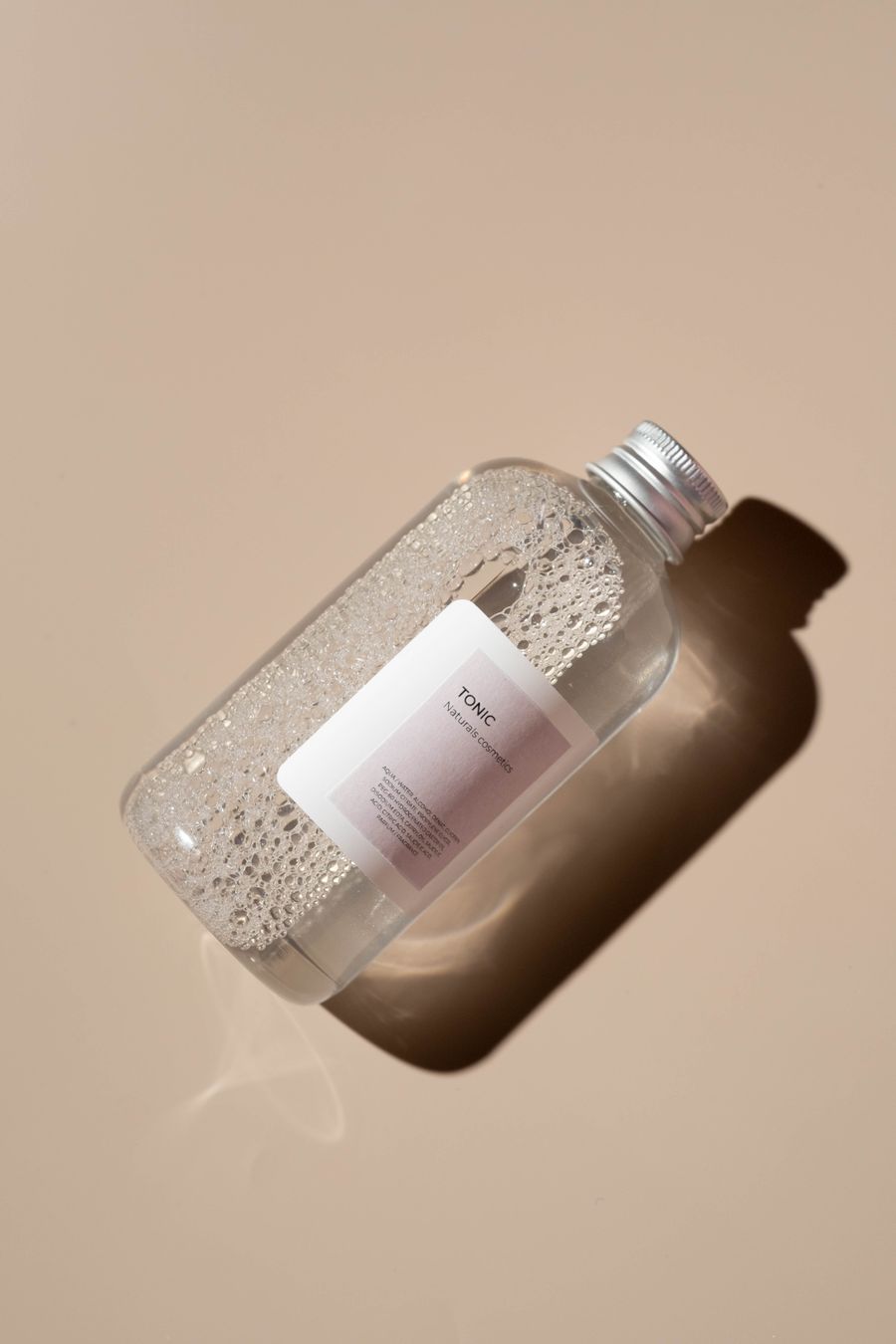
Emulsion breakdown is the most watched failure because it is the most visible. The early stage is creaming, the droplets migrating up or down to form a concentrated layer that still re-mixes on shaking; the late stage is coalescence, the droplets merging into free oil or water that no shaking restores. A cream that shows a film of oil at the surface after four weeks at 45 degrees has announced the emulsifier’s eventual defeat.
Temperature cycling provokes the separation harder than steady heat. Six cycles between 4 degrees, 40 degrees, each lasting 24 hours, stress the emulsion through repeated expansion, repeated contraction, the freeze-tolerant formula surviving where a marginal one breaks. The cycle catches formulas that pass a steady soak yet fail in a delivery van crossing a continent through a hot afternoon, a cold night.
Freeze-thaw is the harshest version, samples taken between minus 10, plus 25, to test whether a winter warehouse destroys the product. Ice crystals forming in the water phase tear the emulsion structure mechanically, so a formula that recovers cleanly from freeze-thaw carries a robustness the label can rely on, one a purely accelerated-heat study would never have measured.
The fragrance’s bid to escape
A fragrance changes along two routes the chamber separates. The first is evaporative loss, the lightest top-note molecules leaving first through any vapour path the packaging allows, so the scent profile drifts even when nothing chemically degrades. A weighing regime through the study quantifies it: mass lost from the closed pack across the weeks measures how well the closure holds the volatiles inside.
The second route is oxidative change, oxygen reaching the fragrance, turning bright citrus or green notes flat, sour, sometimes acrid. Warmth speeds the reaction, so a fragrance held at 45 degrees previews the scent a customer meets after a year, the formulator smelling the future before committing to it. A trained nose reads the warmed sample against the cold control, the difference naming exactly which notes the formula will lose first.
Packaging shares the verdict here, since a fragrance is only as stable as the barrier around it. A closure that breathes lets top notes go regardless of how sturdy the formula is, so the fragrance study tests the product in its actual pack, never in an inert laboratory vial that flatters the formula by sealing it better than the real bottle will.
The colour’s slow turn
Discoloration is the failure customers judge fastest, since a shade shift reads as spoilage whether or not the product is still safe. The chamber drives it through heat, sometimes through light where the study includes a photostability stage, the warmed sample compared against the control by instrument rather than by eye, a colour-difference reading that turns a subjective impression into a tracked number.
The mechanisms vary by ingredient. Natural extracts brown through oxidation; certain dyes fade under light; some actives darken as they degrade, the colour change serving as a visible proxy for a loss of potency nobody can see. A vitamin C serum that yellows has lost some of the active the yellowing tracks, so the colour reading doubles as a stability indicator for the molecule that sells the product.
The control comparison is what makes the reading trustworthy. A shade judged against last month’s memory drifts; a shade judged against a refrigerated control of the same batch isolates the change the warmth caused, the measurement an audit can defend.
The preservative’s slow retreat
The least visible failure is the most serious, since a product that looks fine, smells fine, can still have lost the protection that keeps it safe. Preservative efficacy testing, the challenge test, deliberately inoculates the product with microorganisms, then counts whether the preservative system kills them on schedule. Run on aged samples, it answers the question the appearance cannot: does the protection still work at the end of the claimed life, not just the start?
The PAO claim rests directly on this. A product rated 12M after opening must keep its preservative working through twelve months of a user dipping fingers into the jar, so the test challenges the product after ageing, after simulated use, to prove the protection outlasts the marketing figure. A preservative that passes fresh, then fails after twelve weeks at 40 degrees, has revealed a PAO claim the label cannot honour.
Smelling the future, blind
Fragrance assessment is the one attribute no instrument fully replaces, so the study leans on a trained nose, with the discipline that keeps a nose honest. The core rule is blind comparison: the assessor smells the aged sample against the refrigerated control without knowing which is which, so expectation cannot colour the verdict. A panellist told which sample is the warm one finds the fault they expect, a bias the blind protocol removes.
The vocabulary is fixed before the panel sits. Top, middle, base notes named for the specific fragrance, the assessor scoring each against the control on a defined scale, the result a graded profile, never a yes-or-no. The profile names which notes drifted, by how much, in which direction, the data a formulator needs to decide whether to reformulate the fragrance, change the packaging barrier, accept the drift as within tolerance.
Instrumental analysis backs the nose where the budget allows. Chromatography separates the fragrance into its components, measuring which molecules left, which oxidised, putting numbers under the panel’s impressions. The two methods answer different halves of the question: the instrument says what changed chemically, the nose says whether the change matters to a buyer, since a shift no instrument flags can still read as spoiled to a customer, a shift the instrument measures can still smell acceptable.
The package is the thirteenth ingredient
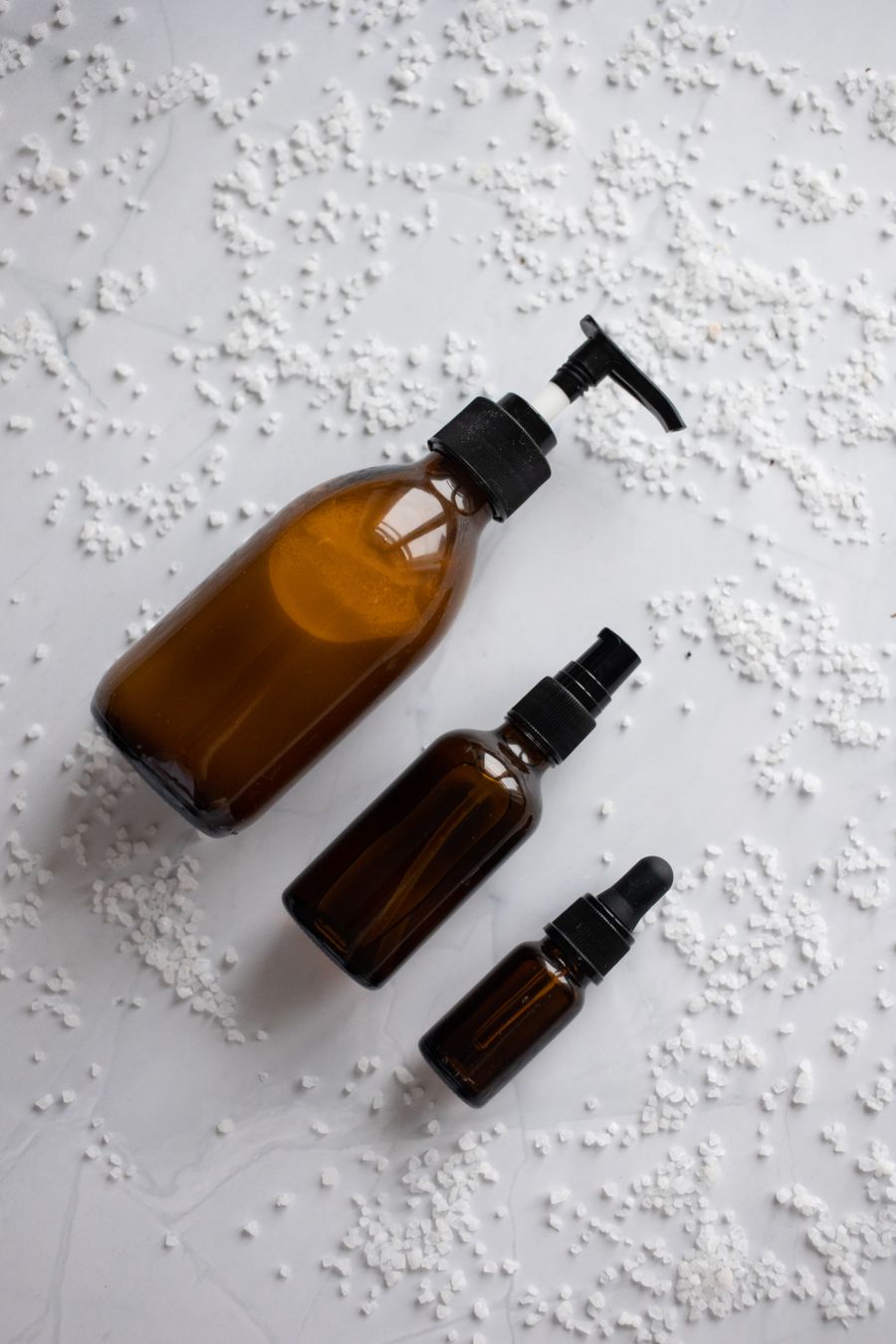
Stability testing examines the product in its packaging because the two react with each other across the months. Compatibility, the technical name for this interaction, runs both directions: the formula attacks the pack; the pack contaminates the formula; each effect visible only after the warmth accelerates it.
The formula’s attack on the pack shows as a plastic bottle that softens, swells, or panels inward as a solvent in the product permeates its wall; as a printed label that lifts; as a fragrance that migrates into the plastic, weakening as it goes. The pack’s contribution to the formula shows as a plasticiser leaching out of the container into the cream, as a metal closure seeding corrosion that discolours the product, as adsorption stripping an active or a preservative out of solution into the container wall, thinning the very protection the challenge test measures.
The study weighs the closed pack across the weeks to catch permeation as mass loss, inspects the container for distortion at each interval, tests the product for any species the pack donated. A formula proven stable in glass can fail in the plastic bottle it actually ships in, which is why the compatibility study tests the launch pack, using no convenient stand-in.
Simulating the user’s jar
The PAO claim demands a test the closed-pack study cannot supply: the product as a customer abuses it, opened daily, fingered, left with the cap loose, exposed to bathroom humidity. In-use stability simulates that life, the sample opened on a schedule, contaminated deliberately, returned to a warm humid condition between openings, the routine compressing months of bathroom-shelf reality into the study window.
The simulation targets the failures opening causes. Each opening admits air that feeds oxidation, moisture that dilutes the preservative at the surface, microbes that test the protection directly, so a product stable sealed can still fail once the user breaks the seal. The challenge test run on these in-use samples is the evidence behind the open-jar figure, proof the protection survives the abuse the symbol promises it will.
The packaging shapes this result as much as the formula. An airless pump that admits no air on dispensing protects the product through its life; an open jar that the user dips fingers into exposes the whole surface daily, so the same formula earns a longer PAO in the pump than in the jar. The in-use study reads the formula and the pack as one system, the figure on the label belonging to the pair.
What the chamber must hold
The machine behind this work is a temperature-controlled chamber of ordinary range, since the conditions sit between 5 degrees, 45 degrees, for most cosmetic protocols, with cycling chambers reaching from minus 10 upward for the freeze-thaw work, the temperature-cycling work. The demand is stability of the hold across long bookings, far above extreme temperature, since a twelve-week study at 45 degrees punishes any drift in the set point with a moving baseline that confounds the result.
Several conditions usually run at once, so a laboratory carries a bank of chambers each holding a fixed point, 5, 25, 37, 45 degrees, plus a cycling machine for the dynamic protocols. Uniformity across each chamber matters because a study compares samples that must all have seen the same history; a warm corner ages its samples faster than the cold corner, splitting one nominal condition into two real ones, so the loaded map applies here as in any climatic work.
Humidity enters where the product or pack is moisture-sensitive: an anhydrous balm in a breathing pack, a powder that cakes, a paper carton whose appearance is part of the claim. Where humidity matters, the study borrows the controlled-humidity conditions of the pharmaceutical stability methods, the chamber adding the water management those methods demand.
Reading the study like a pharmacist
Cosmetic stability borrows its structure from pharmaceutical stability testing, simplified to the risk. The monitored attributes are a fixed list read at every interval: appearance, colour, odour, pH, viscosity, the assay of any active that carries a claim, microbiological quality, preservative efficacy. Each attribute is a window onto one of the formula’s rebellions, the panel together telling whether the truce is holding.
pH earns particular attention because it moves early, explaining much. A drifting pH signals a reaction underway, a preservative losing its effective range, an emulsifier shifting its behaviour, so a pH curve that wanders across the weeks flags trouble before the eye sees it. Viscosity reads the emulsion’s structural health, a thinning cream betraying the start of a separation the surface has yet to show.
The intervals follow the pharmaceutical rhythm, readings at time zero, then at intervals across the accelerated weeks, matched by the real-time points across the months. The shape of each attribute’s curve, beyond its endpoint alone, carries the diagnosis, a sudden step naming the week a threshold passed, a steady slope projecting the month a room-temperature product will cross the same line.
When a reformulation restarts the clock
A stability claim belongs to one formula in one pack, so a change to either reopens the question. A new supplier for a single raw material, a switched preservative, a thinner bottle wall, a different pigment grade: each can move the stability behaviour the original study measured, so each calls for a fresh study or a reasoned bridge from the old one.
The bridging judgement decides how much retesting a change demands. A like-for-like swap of a well-characterised ingredient may bridge on a short confirmatory study; a change to the emulsifier, the preservative, the primary pack reaches the heart of the stability behaviour, so it restarts the full programme. The discipline is documenting the reasoning, since a regulator, a customer, a future formulator each need to know which studies cover which version of the product.
Version control closes the loop. Every stability file names the exact formula revision, the exact pack specification it covers, so a complaint about a batch traces to the study that cleared that batch’s recipe. A brand that runs one study, then changes the formula three times without retesting, is selling products its evidence no longer describes, the gap invisible until a field failure opens it.
Five ways a cosmetic stability study goes wrong
The first failure is the inert-vial shortcut, the formula tested in laboratory glass instead of its launch pack, so the compatibility failures stay hidden until customers find them. The study tests the product as it ships, container included, every time the pack is part of the claim.
The second is the missing control, accelerated samples read against memory or against a fresh batch in place of refrigerated samples of the same lot. Without the cold control, normal batch variation masquerades as instability, or real change hides inside it; the 5-degree control is the ruler the warm samples are measured against.
The third is the accelerated-only programme, a launch cleared on twelve weeks at 45 degrees with no real-time study running behind it. The accelerated result is an indicator, strong but fallible; the real-time study is the proof, so a responsible programme starts both together, never treating the fast one as the full answer.
The fourth is the appearance-only read, a study that logs colour, logs separation, skipping the challenge test, so a product that looks perfect ships with a preservative system that expired unseen. The microbiological attributes carry the safety claim, so they belong in the panel at the aged intervals, not just at time zero.
The fifth is the drifting chamber, a long study run in a machine whose set point wandered, so the samples saw a temperature history nobody recorded. The continuous trace is the evidence the study conditions were real, a flat line across twelve weeks the unglamorous foundation every other reading stands on.
Reading the clause into a purchase
A laboratory equipping for cosmetic stability buys a fleet of chambers, since the protocols demand several fixed conditions at once. The core is a bank of chambers holding 5, 25, 37, 45 degrees stably for months, each mapped loaded so every sample in it shares one history. Stability of the hold, evidenced by long traces, outranks any headline range, since nothing in the work needs extreme temperature, everything needs a flat line.
The cycling capability is the second line: a chamber that runs the 4-to-40 cycles, reaches minus 10 for freeze-thaw, transitions cleanly between the points the protocol names. Humidity control enters where the product range includes moisture-sensitive formulas or packs, the specification borrowing from the pharmaceutical stability chambers at that point.
The service questions match the long bookings: calibration traceable for the sensors a shelf-life claim depends on, uniformity mapping repeated on a schedule, capacity planned for studies that occupy a chamber for the full real-time duration. A vendor who quotes for the fixed-point bank, the cycling machine, the mapping discipline together has understood the work; a quotation for one general-purpose box has not.
Capacity planning carries a wrinkle specific to this work: a real-time study books a chamber for the product’s full claimed life, so a three-year shelf-life claim ties up a shelf for three years. A laboratory that sizes its fleet for accelerated studies alone discovers its real-time samples have nowhere to sit, the slow study squeezed out by the fast one. The honest fleet plan reserves long-stay capacity for the real-time work from the start, the accelerated chambers cycling fast while the real-time chambers hold their slow tenants undisturbed.
The truce, timed
A cosmetic stability study is a controlled provocation: warm the emulsion until it tries to separate, the fragrance until it tries to escape, the colour until it tries to turn, the preservative until its protection thins, then measure how long each held. The chamber supplies the patience the customer will spend on a shelf, compressed into weeks a formulator can watch. A product that emerges from the accelerated weeks with its appearance, its scent, its pH, its protection inside the limits has earned the shelf-life number on its pack, the real-time study standing behind the accelerated preview to confirm the launch was honest. The formula never stops wanting to come apart; the study proves it will hold together longer than the buyer needs it to.
Questions laboratories ask about cosmetic stability testing
How long does an accelerated cosmetic stability study take?
The accelerated phase commonly runs eight to twelve weeks at 37 degrees, often at 45 degrees, against controls at 25 degrees, 5 degrees. That phase clears a product to launch as a strong indicator of a one-to-three-year shelf life. The real-time study runs in parallel for the full claimed life, confirming the accelerated preview, since acceleration is a bet that real-time data settles.
What is the difference between shelf life, PAO?
Shelf life is the time an unopened product stays fit for use; PAO, period after opening, is the time it stays safe once the seal is broken, shown as the open-jar symbol with a figure such as 12M. Under the EU Cosmetics Regulation a product whose shelf life passes thirty months must declare a PAO, the figure supported by in-use stability data, far from a marketing estimate.
Why test freeze-thaw if the product ships to warm markets?
Distribution crosses climates the brand never chose: a winter warehouse, an unheated truck, an air-freight hold. Freeze-thaw between minus 10, plus 25 tests whether ice crystals forming in the water phase tear the emulsion apart, a mechanical failure that steady-heat ageing never reveals. A formula that recovers cleanly carries a robustness the label can rely on across the real supply chain.
What attributes does a cosmetic stability study monitor?
A fixed panel read at every interval: appearance, colour, odour, pH, viscosity, the assay of any claimed active, microbiological quality, preservative efficacy. Each attribute windows onto one failure mode, pH, viscosity moving early as leading indicators, the challenge test carrying the safety claim, the colour reading often doubling as a proxy for an active’s potency.
Why test the product in its own packaging?
The container reacts with the formula across the months. The formula can soften, swell, or permeate the pack; the pack can leach plasticiser, seed corrosion, or adsorb an active out of the product. These compatibility failures appear only in the real pack, so a formula proven stable in glass can fail in the plastic bottle it ships in. The study tests the launch pack, weighed for permeation, inspected for distortion.
Does cosmetic stability testing need humidity control?
Often only temperature, since most protocols sit between 5 degrees, 45 degrees. Humidity enters where the product or pack is moisture-sensitive: an anhydrous balm in a breathing closure, a pressed powder that can cake, a carton whose printed appearance forms part of the claim. There the study borrows the controlled-humidity conditions of pharmaceutical stability methods, the chamber adding the water management those conditions need.