Technical Solution Overview
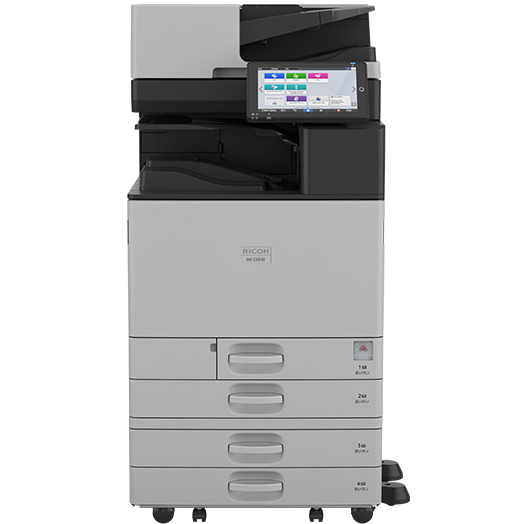
Ricoh IM C6010
Energy Efficiency & Performance
The fusing unit is the primary energy consumer in multifunction printers. To adhere toner to paper, it must be heated and melted, typically at temperatures between 120°C and 180°C. This thermal energy accounts for over 60% of the machine's total power consumption. A3 format high-speed color machines are particularly power-hungry, with TEC values (Typical Electricity Consumption measured by ENERGY STAR standards) commonly exceeding 1.0 kWh.
Toner Technology Evolution
Ricoh has invested many years in toner formulation research. In 2004, they introduced the first-generation PxP polymerized toner, replacing the styrene resin used in traditional pulverized toner with polyester resin, which lowered the melting point. The 2012 Color PxP-EQ version reduced the fusing temperature by approximately 30°C compared to the first generation. By February 2023, when the IM C series launched, it featured the Color PxP-EQ Advanced formulation, reducing the fusing temperature by another 12°C compared to PxP-EQ.
Polyester resin replaced traditional styrene resin in pulverized toner, successfully lowering the melting point.
Fusing temperature reduced by approximately 30°C compared to the first generation.
Fusing temperature reduced by another 12°C compared to PxP-EQ, featured in the IM C series.
How the 12°C Reduction Was Achieved
Ricoh's technical documentation explains this clearly: the toner particles contain two types of resin—one with a low melting point responsible for fusing, and another with good storage stability to prevent the toner from clumping in the warehouse. The arrangement of these two resins within the particle is specifically engineered. While it sounds simple, achieving both characteristics simultaneously required extensive formulation development time.
Particle Structure
IM C6010 Performance Excellence
The IM C6010 is the fastest model in the IM C series at 60 pages per minute. With a TEC value of 0.69 kWh, it has earned both ENERGY STAR certification and EPEAT Gold. Few machines in this speed class achieve below 0.7 kWh. The sleep power consumption of 0.32 W is also below the industry average. Traditional machines maintain fuser roller temperature during sleep mode, resulting in power consumption of 1 W or higher. Low-melting-point toner allows the fusing unit to heat rapidly from room temperature, reducing or eliminating the need for standby heating.


Industry-Leading Efficiency
TEC value of 0.69 kWh—few machines in this speed class achieve below 0.7 kWh.

Ultra-Low Sleep Power
0.32 W sleep consumption is below industry average. Traditional machines maintain fuser roller temperature during sleep, consuming 1 W or higher.

Rapid Warm-Up
24-second warm-up time. Low-melting-point toner enables rapid heating from room temperature, minimizing standby energy consumption.

First Page Output
B&W: 2.4 seconds, Color: 3.8 seconds. Ricoh has developed QSU quick-start technology since 1999, using various solutions including capacitor storage and IH induction heating.
QSU Technology: Ricoh has developed QSU quick-start technology since 1999, implementing several generations of solutions including capacitor energy storage and IH electromagnetic induction heating. The specific QSU technology generation used in the IM C6010 is not explicitly stated in official documentation.
Scanning Capabilities
For scanning, the standard configuration includes a 220-sheet SPDF (Single-Pass Dual-sided Feeder). Dual-sided scanning speed is 300 ipm at 200 dpi and 220 ipm at 300 dpi. After scanning, documents can be sent directly to SMB folders, FTP, email, or cloud storage. OCR for generating searchable PDFs requires an additional OCR unit—it is not included in the standard configuration.
- Direct scan-to-destination: SMB folders, FTP servers, email, and cloud storage
- OCR unit for searchable PDF generation available as optional add-on (not included standard)
Smart Operation Panel
10.1-inch Touch Display
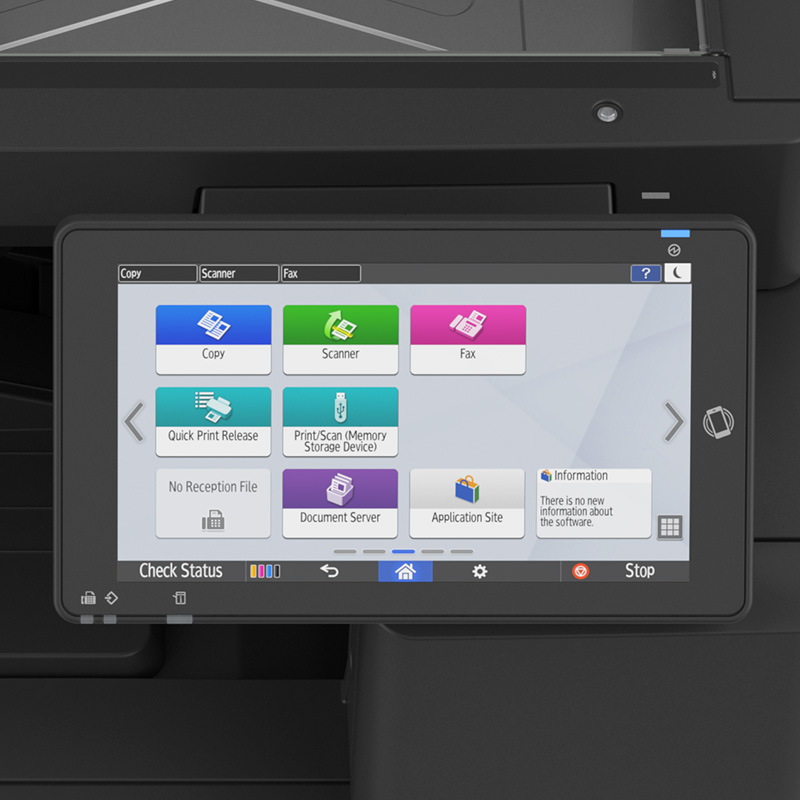
The operation panel features a 10.1-inch touchscreen, which Ricoh calls their third-generation Smart Operation Panel. It supports shortcuts and includes a web browser for direct access to SharePoint and Google Drive. The panel itself has 4 GB of memory, separate from the main unit's 4 GB.
Always Current Technology
Always Current Technology is a feature Ricoh has been promoting in recent years. When the device is connected to the network, it can automatically download firmware updates and security patches. Compared to the old method of waiting for a service engineer to visit and flash the firmware, this saves considerable effort.


Third-Gen Smart Panel
10.1-inch touchscreen with dedicated 4 GB memory (separate from main unit's 4 GB). Supports customizable shortcuts for frequent tasks.

Built-in Web Browser
Direct access to SharePoint and Google Drive from the panel. Seamless integration with cloud workflows.
Print Specifications
Print resolution is 1200 × 1200 dpi. Standard configuration includes PCL and PostScript 3 emulation—genuine Adobe PS3 requires an additional paid option. Paper tray capacity is approximately 1,200 sheets standard; with side large-capacity trays, this can reach 4,700 sheets. Paper weight support goes up to 300 g/m², accommodating coated paper and cardstock.
| Print Resolution | 1200 × 1200 dpi |
| PDL Support (Standard) | PCL and PostScript 3 emulation |
| Adobe PostScript 3 | Available as paid option |
| Paper Capacity (Standard) | Approximately 1,200 sheets |
| Paper Capacity (Maximum) | 4,700 sheets with large-capacity side trays |
| Paper Weight Range | Up to 300 g/m² (coated paper and cardstock supported) |
Post-Processing Options
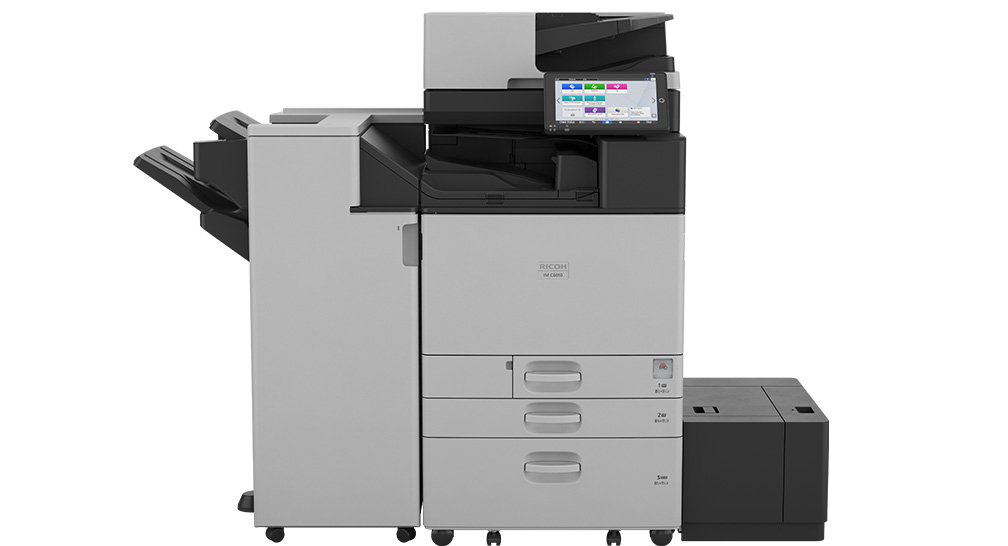
The post-processing options are comprehensive. The stapler handles up to 65 sheets. There is a stapleless finishing unit that uses creasing to hold paper together without metal staples. Saddle-stitch booklet finishing, tri-fold, and Z-fold options are all available as corresponding accessories. The folding unit has paper weight requirements of 64-105 g/m²—paper that is too thick cannot be folded.



Stapling
Maximum 65-sheet capacity. Standard staple finishing for professional document output.

Stapleless Binding
Uses creasing method to secure papers together without producing metal staples—environmentally friendly finishing.

Booklet Finishing
Saddle-stitch booklet binding available as optional accessory for professional publications.

Folding Options
Tri-fold and Z-fold available. Paper weight requirements: 64-105 g/m²—paper too thick cannot be processed.
Color Output & Management
For color output, the standard configuration uses the built-in calibration function. For professional color management, the Fiery Color Controller E-26C can be added, which supports ICC profiles. This is needed for design proofing or scenarios requiring high color consistency. Whether or not to add Fiery significantly affects the price.
Standard Color Calibration
Built-in calibration function provides consistent color output for everyday business documents and presentations.
Professional Color Management
Optional Fiery Color Controller E-26C with ICC profile support. Essential for design proofing and high color consistency requirements. Price varies significantly with this option.
Environmental Sustainability
The machine body plastic components use 50% post-consumer recycled material, and toner bottles are made from 100% recycled PET. Packaging plastic has been reduced by 54%. Maximum monthly duty cycle is 50,000 pages.


Sustainable Materials
- Machine body plastic components: 50% post-consumer recycled material
- Toner bottles: 100% recycled PET
- Packaging plastic reduced by 54%
- Monthly duty cycle: up to 50,000 pages
Physical Specifications
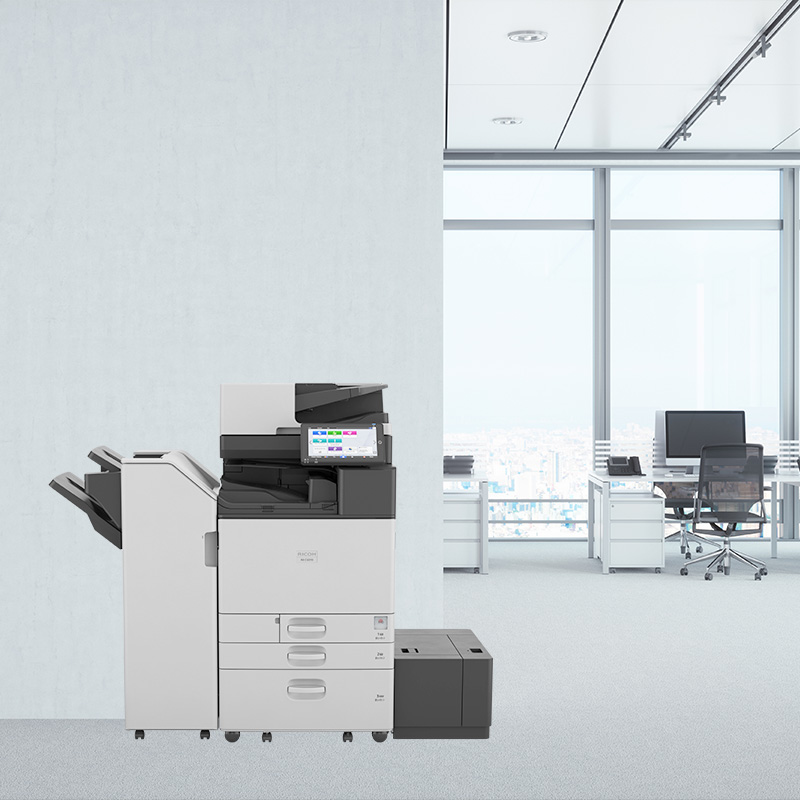
The complete unit weighs 100.8 kg with dimensions of 587 × 701 × 963 mm. It's not small—floor placement requires consideration of weight capacity and space requirements.
Weight: 100.8 kg
Width: 587 mm
Depth: 701 mm
Height: 963 mm
Floor placement requires consideration of weight capacity and available space.
Security Features
All essential security features are included: data encryption, hard disk security, user authentication, and WPA3. DOSS (Data Overwrite Security System) data erasure is available as an option.





Optional: DOSS (Data Overwrite Security System) data erasure is available as an additional option for enhanced data security compliance.