How to start the photocopier buying process from scratch
The buying process for a photocopier in Spain runs through six defined stages across four to eight weeks. Knowing the stages and the order shapes whether the eventual chassis matches the office or whether the dealer's first suggestion ends up in the corner.

Why the buying process matters more than the chassis selection
The chassis selection consumes most of the conversation in copier purchase decisions, but the broader buying process shapes the eventual outcome more than the model number on the brochure. An office that runs through the process correctly identifies needs accurately, evaluates competing options fairly, negotiates from informed positions, and ends with a chassis that fits the actual operation. An office that skips stages or runs them out of order ends with a chassis chosen by the dealer's preference rather than the office's needs.
The Spanish copier market includes roughly 600 independent dealers and the major manufacturer-direct channels. The dealers compete actively for new accounts, which means a buyer who runs the process well can reach better terms than a buyer who accepts the first proposal. The buyer's leverage diminishes once a dealer relationship is in motion, so the early stages of the process matter most for the final pricing and contract terms.


The process also matters because the chassis decision shapes office operations for five to eight years. An ill-fitting chassis produces ongoing friction across that period, and the cost of replacing a chassis mid-cycle exceeds the cost of selecting the right unit at the start. The investment of time in the buying process pays back across years of operational fit rather than only at the moment of acquisition.
Stage one needs assessment internally before any dealer contact
The needs assessment runs internally before any dealer arrives. The first input is the actual print and copy volume across the past 12 months. The volume comes from the existing chassis meter readings if any, from invoices for outsourced print work, and from staff observation of typical daily output. The number should reflect actual production rather than projections, because chassis sized for hoped-for growth rather than current reality runs at fraction of capacity for years.
The second input is the work mix breakdown. The breakdown covers the percentage of color versus monochrome output, the percentage of A3 versus A4 work, the percentage of jobs requiring finishing operations like stapling or hole-punching, and the percentage of work that arrives from mobile devices versus from desktop computers. The mix shapes which chassis features actually deliver value versus which features sit unused.
The third input is the integration requirements. The integration covers the existing print management platform, the document management system, the directory service for user authentication, the network security policy, and the cloud storage platforms staff use daily. The integration depth varies by office, and the chassis selection should match the existing infrastructure rather than forcing the office to change systems around the chassis.

Stage two budget framework before requesting quotes
The budget framework establishes the financial envelope the office can support before any dealer enters the conversation. The framework covers two questions. The first is the maximum monthly operational cost the office can sustain across the chassis service life. The second is the capital availability for purchase versus the preference for lease structure. Both questions need answers from the finance team or the office decision maker before dealer conversations begin.
The monthly operational cost includes lease payments or financing costs on a purchase, consumable expenses, service contract fees, and electricity. A typical small office spends 250 to 600 euros per month on the full operational cost depending on volume and chassis bracket. A typical mid-size office spends 600 to 1,400 euros per month. The numbers should match what the office's accounting can comfortably absorb across years rather than what fits a single month's budget.
The capital availability shapes the lease versus purchase choice. An office with capital available may prefer purchase to minimize total cost. An office with constrained capital may prefer lease to spread the cost across operational expense. The choice depends on the office's specific finance position and should be settled internally before dealer conversations because dealers will push the structure that matches their margin model rather than the structure that matches the office's needs.
Stage three vendor research before requesting visits


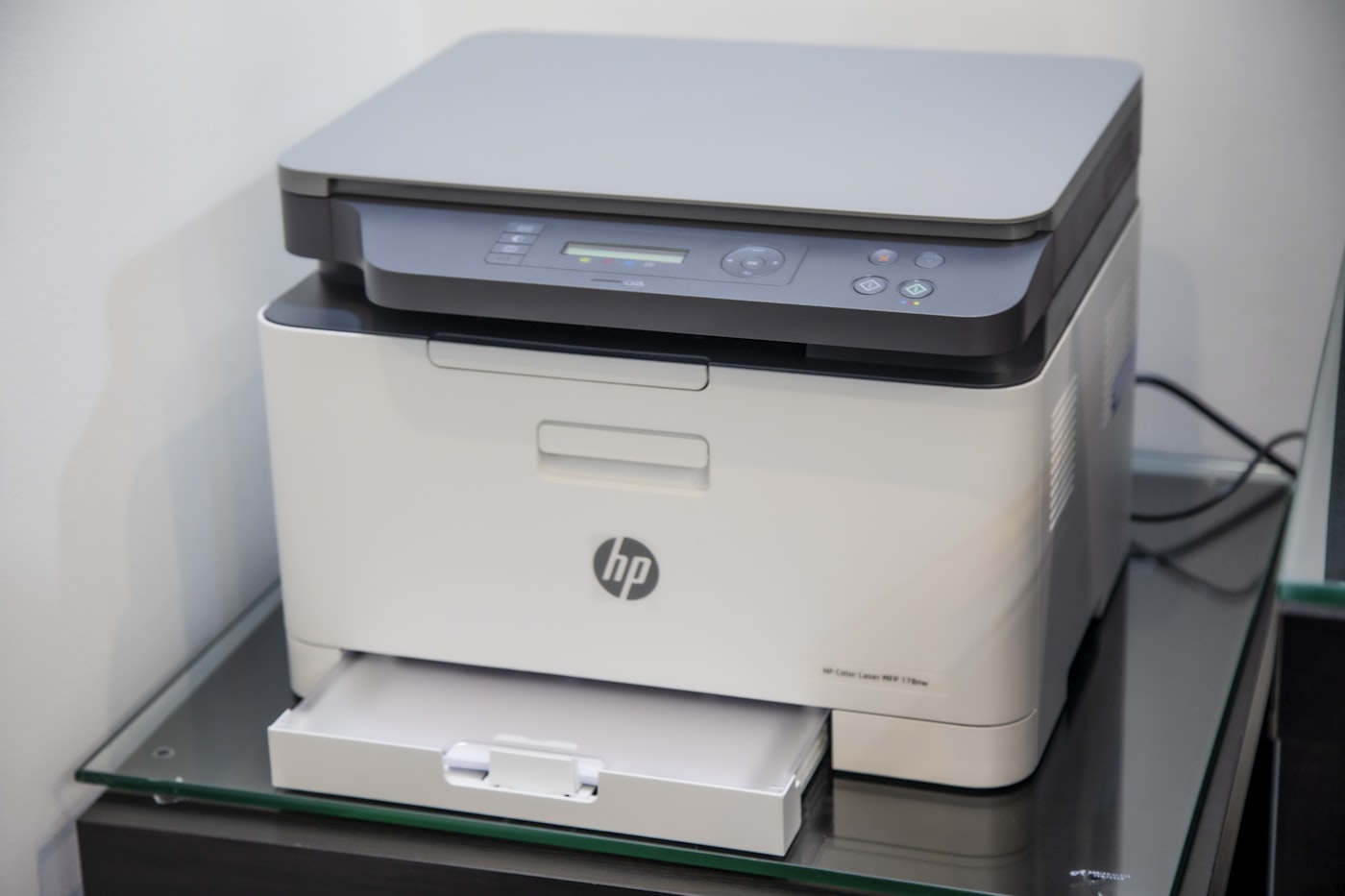
The vendor research identifies which manufacturers and dealers serve the office's bracket and operating region. The Spanish market carries strong representation from Konica Minolta, Canon, Ricoh, Xerox, Kyocera, HP, and Brother across various brackets. Each manufacturer operates through dealer networks that vary in service depth across Spanish cities. The research identifies which dealers actually serve the office's location with same-day service rather than which ones list the location on their website.
The research should include reading customer reviews, checking complaints registered with consumer protection bodies, and asking other offices in similar industries about their experiences. The complaints provide signal about dealer reliability beyond what the dealer's own marketing communicates. A dealer with consistent positive reviews across years offers more confidence than a dealer with mixed reviews or with reviews concentrated in recent months that may indicate a recent change in management.
The research narrows the dealer field to three or four candidates that serve the bracket, the location, and the integration requirements. The narrowing matters because too many dealer conversations consume excessive time without producing better outcomes, while too few conversations limit comparison. Three candidates is the typical sweet spot for office-bracket purchases because the buyer reaches enough comparison data without consuming excessive evaluation time.
Stage four dealer visits and proposals
The dealer visits should happen with all candidates within a two to three week window. The compressed timeframe ensures fair comparison because chassis pricing changes across longer periods and dealer attention diminishes when conversations stretch across months. Each dealer visit should cover the same agenda including chassis recommendation, pricing structure, contract terms, service commitments, and references from existing customers.
The dealer should provide a written proposal within five to seven business days of the visit. The proposal includes the chassis specifications, the pricing breakdown, the contract terms, and the service commitments. Verbal proposals are not actionable because the terms shift across the negotiation, and the buyer needs documented terms to compare offers fairly. A dealer who resists providing a written proposal reveals confidence issues with the offer that should themselves shape the buyer's evaluation.
The proposal evaluation should run on standardized criteria rather than on the dealer's framing. The buyer should compare the chassis specifications against the needs assessment, the pricing against the budget framework, the contract terms against industry-standard expectations, and the service commitments against the office's operational requirements. Each dealer's proposal will emphasize different strengths, and the standardized criteria prevent the dealer's framing from shaping the comparison.
Stage five negotiation across the final candidates
The negotiation begins after the proposal evaluation narrows to two finalist candidates. The buyer should communicate the negotiation position clearly. The position covers the price points the buyer needs to reach, the contract terms the buyer wants modified, and the service commitments the buyer requires. The position should reflect the buyer's priorities rather than the dealer's framing, and the dealers should respond to the position rather than restating their original proposals.
The negotiation produces three possible outcomes. The first is that one candidate meets the negotiation position cleanly and becomes the selected vendor. The second is that one candidate meets most of the position and the buyer accepts the partial fit. The third is that no candidate meets the position and the buyer either lowers the position or expands the dealer field. The third outcome is rare in the Spanish market because most dealers will move on price and terms when faced with serious comparison from a competing vendor.
The negotiation should also address the lifecycle terms beyond the immediate transaction. The lifecycle terms include the consumable pricing across the chassis life, the service response commitments, the contract termination penalties, and the end-of-life chassis disposal handling. These terms shape the chassis economics across years rather than at the moment of acquisition, and the buyer needs them documented in the final contract rather than left to verbal assurance.
Stage six contract execution and delivery planning
The contract execution finalizes the transaction terms and triggers the delivery process. The buyer should review the final contract carefully against the negotiated terms because dealers sometimes revise terms in the final document that did not appear in the negotiation. The review should compare every clause against the negotiated position and identify any discrepancies for correction before signing.
The delivery planning sets the installation schedule and prepares the office space for the chassis arrival. The delivery typically requires four to six weeks from contract execution because the dealer schedules manufacturer ordering, configuration, and technician availability. The office uses this period to clear the installation space, run any electrical work the chassis requires, and prepare the staff for the new chassis interface and workflow.
The delivery day itself runs across three to six hours depending on the chassis bracket and the configuration depth. The dealer's installation team handles the physical placement, network configuration, security setup, and basic staff training. The office should plan staff availability for the training portion so the chassis enters service with users who understand the basic operations rather than discovering features through trial and error in the first week.
The timeline at a glance
| Stage | Activity | Duration |
|---|---|---|
| 1 | Internal needs assessment | 1 week |
| 2 | Budget framework with finance | 1 week |
| 3 | Vendor research and shortlist | 1-2 weeks |
| 4 | Dealer visits and proposals | 2-3 weeks |
| 5 | Negotiation with finalists | 1-2 weeks |
| 6 | Contract execution to delivery | 4-6 weeks |
| Total | Process to operational chassis | 10-15 weeks |
The timeline runs 10 to 15 weeks from process start to operational chassis. Offices that compress the timeline by skipping stages typically end with chassis that match the dealer's preference rather than the office's needs. Offices that follow the full timeline reach better outcomes but require the time investment to do so. A note on how to compress the timeline without skipping stages covers when shortcuts work and when they backfire.