How the Ricoh GreenLine refurbished program works in plain language
GreenLine is Ricoh's manufacturer-grade refurbishment program for office MFP chassis returned at end of lease. The chassis run through a documented refurbishment process at Ricoh facilities, ship with new warranty terms, and reach Spanish buyers at meaningfully lower acquisition cost than equivalent new chassis.
Ricoh established the GreenLine program in 2009 as the manufacturer-controlled answer to the secondary refurbished market for Ricoh chassis. Chassis returning from lease termination, trade-in, or fleet refresh enter the program at a Ricoh refurbishment facility. The factory-grade process distinguishes GreenLine from third-party refurbishment operations that vary in standards and quality control. Spanish buyers reach GreenLine chassis through the same authorized Ricoh dealers that handle new chassis sales.
The program serves three distinct buyer profiles. Capital-constrained Spanish SMBs that need workgroup capability reach GreenLine at 50 to 60 percent of new acquisition cost. Public sector procurement bodies that prioritize sustainability scoring add GreenLine to their evaluations because the refurbishment counts toward circular-economy reporting. Backup-and-spare buyers acquire GreenLine units for redundancy without paying new-chassis premium.
The chassis comes back at end of leaseFrom Spanish offices and across Europe into a regional sortation hub
The journey starts when a leased chassis reaches end of term. Spanish offices return Ricoh chassis through the leasing partner's logistics network. The chassis travels to a Ricoh sortation hub where staff perform initial assessment. About 70 percent of returned chassis meet GreenLine eligibility based on age, meter reading, and physical condition. The remaining 30 percent route to parts recovery for component salvage or to certified recycling under EU WEEE directive.
Eligibility criteria sit in three buckets. Chassis age stays below five years from original delivery date. Meter reading sits below the 70 percent threshold of the chassis design life. Physical condition shows normal office wear without structural damage, water damage, or fire damage. Chassis that miss any of the three criteria exit the GreenLine track into recycling rather than refurbishment.
The technician opens the chassisFull inspection and component-by-component assessment against Ricoh service specs
Eligible chassis reach the inspection bay where Ricoh technicians perform full disassembly and component assessment. The process follows the same Ricoh service manual procedures that dealer technicians use for major service intervention on chassis under warranty. The technician documents every component against wear thresholds, photographs notable findings, and builds the refurbishment plan specific to the chassis under inspection.
- Imaging engine assessment covering drum, development unit, laser optics, and transfer belt against documented wear specifications
- Paper path inspection across cassette pickup, registration, fuser, and output rollers including the duplex unit
- Electronic systems verification for the main controller, network interface, panel touchscreen, and power supply
- Cosmetic inspection of all external panels, hinges, and finisher attachment points
- Memory and storage wipe with NIST 800-88 certified data sanitization on the hard drive
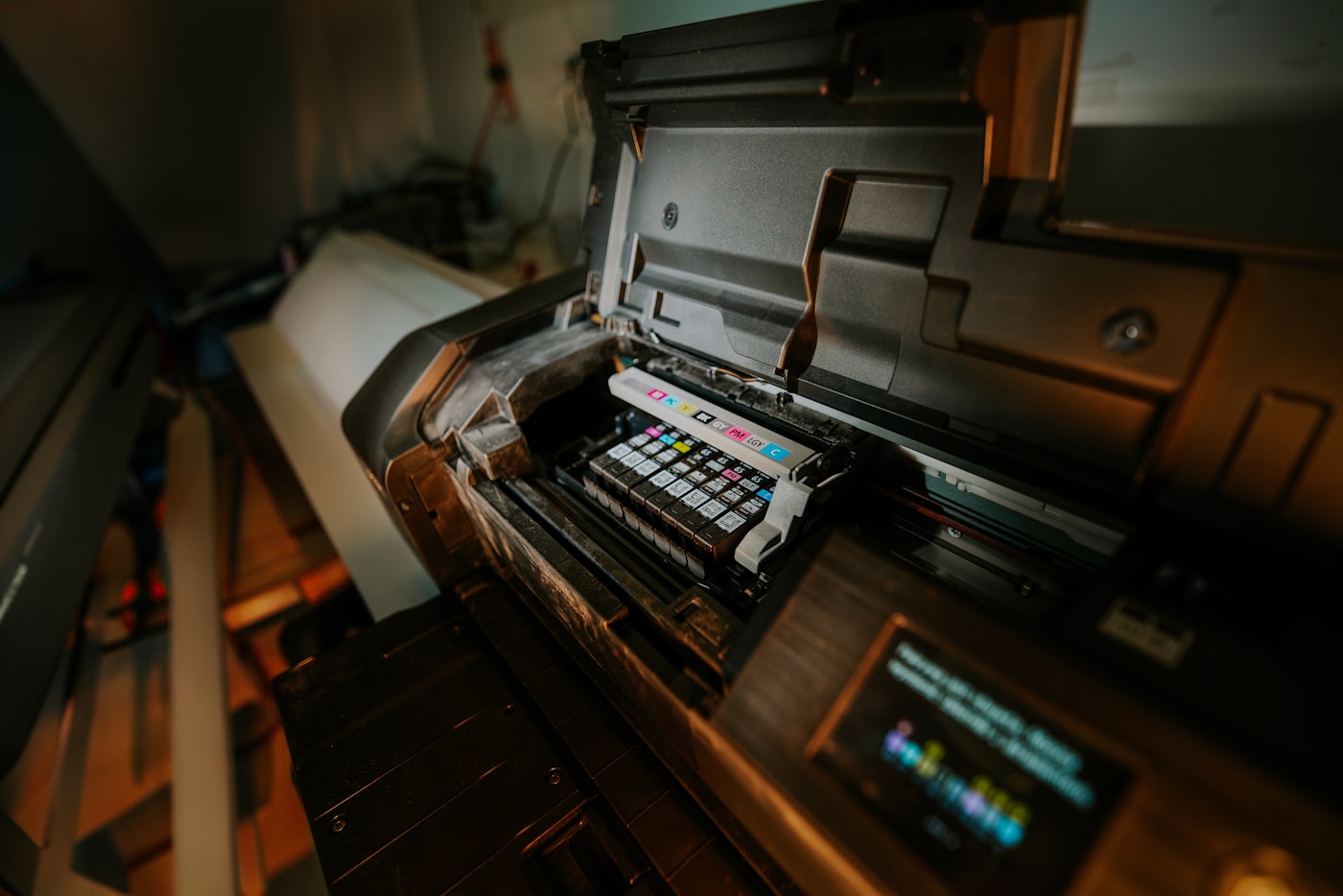

Wear components get replacedStandard refurbishment scope brings the chassis to factory-spec condition
The refurbishment phase replaces every component flagged during inspection plus the standard wear set that Ricoh applies across all GreenLine chassis regardless of inspection result. The standard set covers the drum unit, the development unit, the transfer belt, the fuser unit, the pickup and feed rollers across the paper path, and the document feeder rollers. The replacements use new Ricoh-manufactured parts rather than refurbished components, which produces chassis that match new-chassis behavior on the imaging side.
The cosmetic refurbishment runs in parallel. Panels and covers get cleaned, scuffs polished, and damaged trim pieces replaced. The chassis exits the refurbishment phase looking and behaving like a new unit. The serial number and original chassis frame carry forward, which preserves the chassis history for warranty and parts compatibility purposes.
Firmware updates apply during this phase. The chassis loads the current firmware version released by Ricoh at the time of refurbishment, which brings security patches and feature updates that the original lease customer may have skipped. Current firmware matters for security posture and resolves several common SC error code categories that older firmware produces.
Test print cycles confirm factory specsThe chassis runs through documented test sequences before resale clearance
Refurbished chassis enter a verification phase that runs documented test print cycles against factory benchmarks. The cycles cover monochrome and color output at multiple coverage levels, duplex operation, document feeder reliability across multi-page jobs, finisher operation on chassis equipped with stapling or booklet finishing, and network connectivity through the standard protocols.
The test phase produces a verification document that ships with the chassis at delivery. The document records the test results, the meter reading at refurbishment completion, the firmware version, and the components replaced during refurbishment. Spanish buyers receive this document with the chassis and reference it during the warranty period if any issues arise.
- 500-page test cycle at standard 5 percent coverage to verify imaging stability across sustained operation
- Color registration verification on color chassis to confirm CMYK alignment meets Delta E specifications
- Network protocol tests covering PCL, PostScript, AirPrint, Mopria, and cloud connector connectivity
- Security posture verification including encryption status, signed firmware confirmation, and panel authentication

The chassis reaches the Spanish dealer channelSame authorized dealers, same service relationship, with warranty that covers the refurbished status
GreenLine chassis ship through the same Spanish authorized Ricoh dealers that handle new chassis. The dealer carries the chassis under the same managed-print contract structure that covers new acquisition. Service response commitments match new-chassis terms. Toner and parts supply runs through the same dealer relationship. The post-purchase experience matches new chassis with the exception of the acquisition price and the disclosed refurbished status.
Warranty terms typically cover 12 months from delivery on parts and labor, extendable to 36 months under standard Ricoh extended warranty programs. The warranty covers the same scope as new-chassis warranty within the documented period. Buyers comparing GreenLine against third-party refurbished options should weight the warranty difference because most third-party refurbished chassis ship with 30 to 90-day warranties at most.
★ What buyers actually save
A GreenLine IM C2500 typically reaches the Spanish buyer at 2,200 to 2,800 euros against 4,200 to 5,200 euros for an equivalent new chassis. The savings compound when the chassis ships with the same finisher and cassette options as a new comparable unit. Buyers running cost analysis across the chassis service life should factor warranty coverage and the equivalent dealer service relationship into the comparison rather than weighing acquisition cost alone.
Where GreenLine fits versus where new chassis fit better
★ Strong GreenLine fit
- Capital-constrained SMBs needing workgroup capability without new-chassis budget
- Backup and redundancy units for offices with primary chassis already in service
- Public sector procurement with sustainability scoring in tender evaluation
- Stable volume profiles within typical office bracket without volume spikes
- Spanish regional cities where dealer service availability matches the refurbished service relationship
★ Weaker GreenLine fit
- Heavy production volume approaching chassis duty cycle ceiling on day one of operation
- Brand-new technology requirements like the latest cloud connectors or panel features that depend on hardware refresh
- Long-term retention plans beyond five years where the chassis age at acquisition limits remaining service life
- Mission-critical primary chassis in operations that cannot tolerate any extended downtime risk
- Frequent firmware-dependent feature adoption where the chassis hardware foundation determines firmware compatibility
The GreenLine program produces a clean alternative for Spanish buyers that match the program's strength zones. The factory-grade refurbishment, the manufacturer warranty, and the standard dealer service relationship distinguish GreenLine from the broader secondary refurbished market that varies in quality control. A separate piece on inspecting used copiers covers the broader secondary-market evaluation for buyers considering options outside the GreenLine track.
Spanish buyers reaching the GreenLine inventory through dealer channels often find specific chassis available in 4 to 8 week windows depending on lease return cycles and inventory turnover at Ricoh refurbishment facilities. Planning the acquisition window to align with the inventory cycle produces better chassis selection than treating GreenLine as instant inventory. The dealer relationship manages the inventory matching against buyer requirements during the order phase.
The program continues to expand its share of Ricoh's Spanish sales mix. Sustainability-driven procurement preferences in public sector and corporate ESG reporting push GreenLine consideration into shortlists that previously excluded refurbished options entirely. The companion piece on Ricoh's broader sustainability programs covers the corporate commitments behind the program structure.