How a color copier turns one image into four layers of toner
A monochrome copier holds one toner cartridge. A color copier holds four. The reason is not aesthetic. Color reproduction on paper is mechanically four monochrome operations stacked on top of each other in precise registration, each one depositing a single primary ink. Cyan. Magenta. Yellow. Black. The four layers combine in the eye of the viewer to produce the illusion of full color photography from what is, on the page itself, four superimposed greyscale images in different pigments.
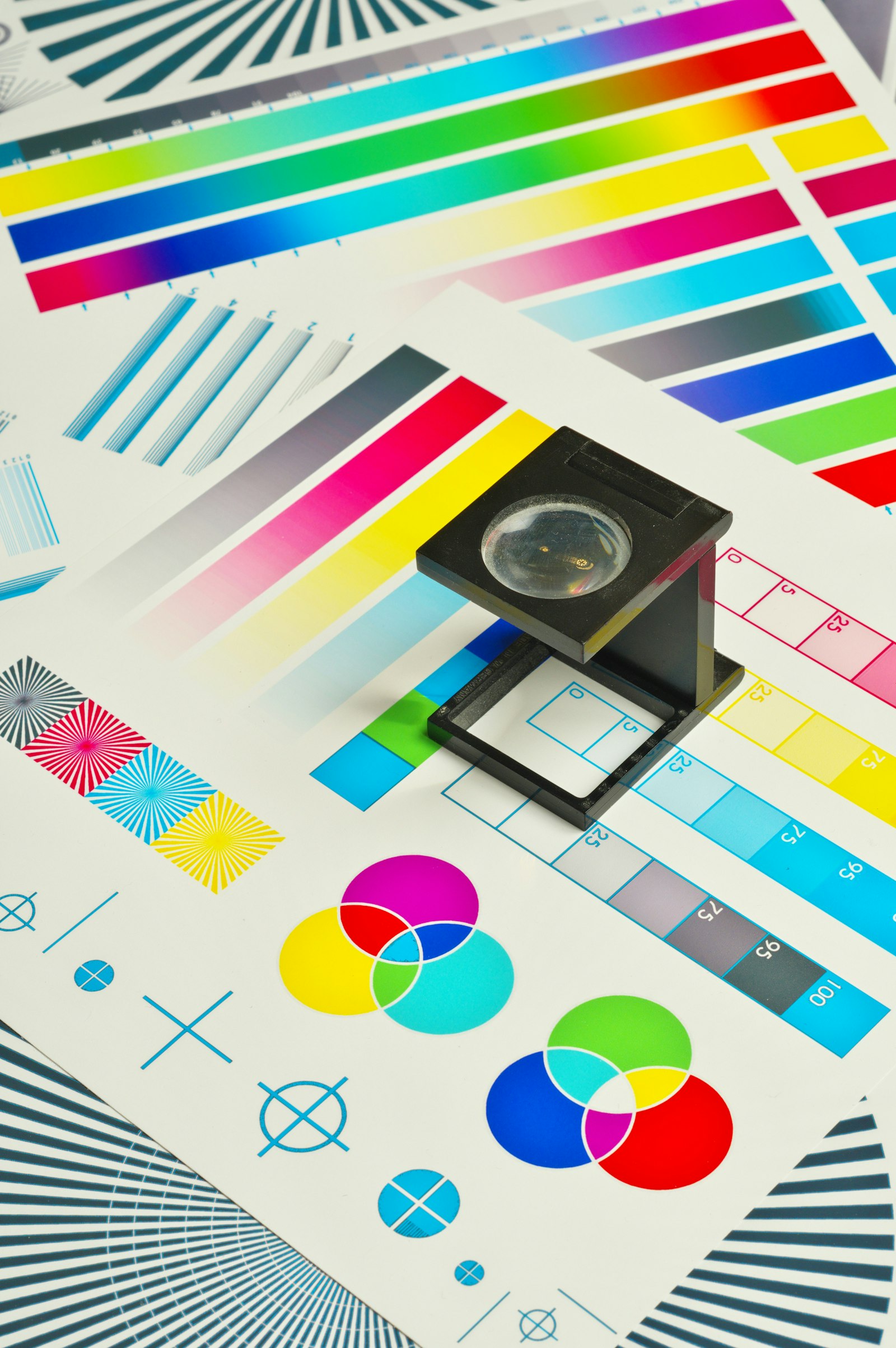
CMYK is the four letter abbreviation engineering teams use for these layers. The order of operations and the precision required to align them is what separates a color machine from a black and white one.
Why four colors and not three or seven
The eye senses color through three types of cone cells, sensitive to short, medium, and long wavelength light, which simplifies to blue, green, and red. In theory, three pigments could reproduce any color visible to a human. In practice, additive primaries like the red, green, and blue used in monitors do not transfer to subtractive printing on white paper. Print uses subtractive primaries, the inverse of additive. The subtractive primaries are cyan (the inverse of red), magenta (the inverse of green), and yellow (the inverse of blue). Each pigment subtracts its complementary wavelength from the white light reflecting off the paper.
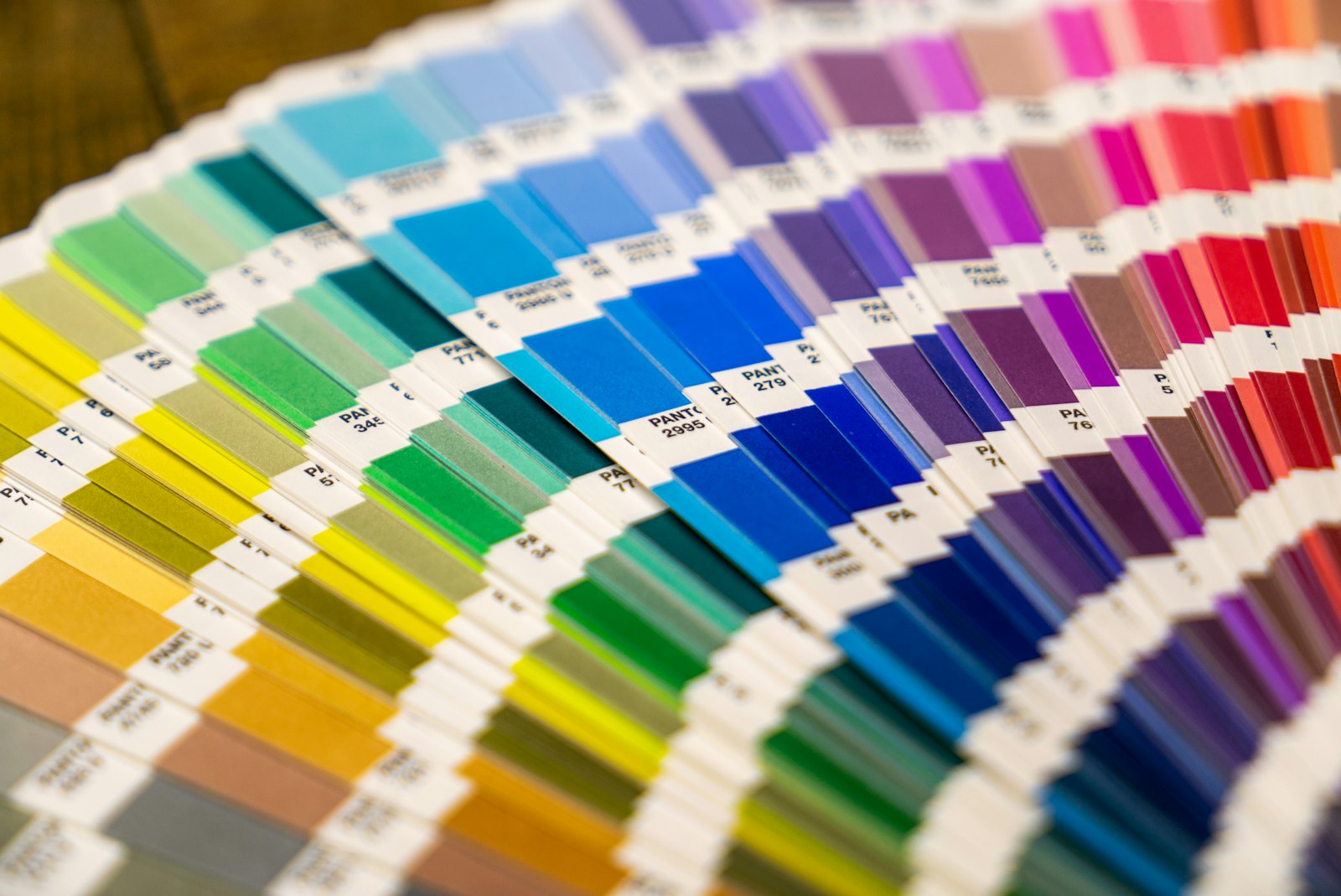 Three pigments are enough in theory. Three pigments are not enough in practice. Real cyan, magenta, and yellow inks do not absorb their full target wavelengths cleanly. Mixing all three to produce black actually produces a muddy dark brown. Adding a dedicated black pigment solves the muddy black problem and improves the rendering of dark areas across all images. The four ink configuration of cyan, magenta, yellow, and black became the print industry standard in the 1950s and stayed there. The simpler underlying frame for what an MFP does as a category is at The simplest possible explanation of what a multifunction printer does.
Higher end production presses sometimes add light cyan, light magenta, orange, green, or violet inks beyond CMYK to extend the color gamut. Office class color MFPs do not. CMYK on its own covers roughly 70 to 75 percent of the visible color gamut. The colors outside that gamut, particularly saturated greens, oranges, and violets, are approximated rather than reproduced.
Inside the chassis on a typical color MFP
Open the front cover of a color office MFP and the four imaging units are visible, stacked vertically inside the chassis. Each unit consists of its own photoreceptor drum, charge roller, laser exposure point, developer unit, and toner supply. The four units operate in parallel, each rendering its own color separation of the page being printed.
 A transfer belt runs vertically past the four units. The belt is a thin polymer loop, usually polyimide or PVDF, around 60 to 100 micrometers thick. Each imaging unit transfers its toner image to the belt as the belt rotates past. By the time the belt reaches the last unit, all four color separations sit layered on the belt surface, registered to each other within a tolerance of 100 to 200 micrometers depending on the machine class. The belt then transfers the combined CMYK image onto paper in a single second pass at the secondary transfer roller.
The geometry is called inline color or tandem color. It replaced an older approach called single drum four pass color, where one drum rotated four times for each page, depositing a different color each rotation. Single drum machines were standard in the 1990s and ran at quarter speed in color compared to monochrome. Inline color machines run at full speed in both modes, which is why a 35 page per minute monochrome machine printing color now runs at 35 pages per minute color rather than 8 or 9. The time when machines ran color at quarter speed and the historical reasons for the inline color shift are at A short walk through the history of the photocopier from Carlson to today.
How the source image becomes four separations
A digital image arriving at the controller carries color information in some color space. Photographs from a phone camera arrive in sRGB. Print ready files from design software might arrive in Adobe RGB or in CMYK directly. Web pages arrive in sRGB. The first job of the controller is to convert whatever color space the input uses into the printer's native CMYK space.
The conversion uses an ICC profile that describes how the specific machine's CMYK output maps to perceived color. ICC profiles are calibrated against measurement of test patches printed on the actual paper stock and read back with a spectrophotometer. Office class machines typically ship with one or two generic ICC profiles for common paper stocks. Production class machines run inline spectrophotometers that recalibrate the ICC profile automatically as paper, toner, and humidity conditions change.
After the color space conversion, the image exists as four greyscale separations, one per CMYK channel. Each separation tells the corresponding imaging unit how much toner to deposit at every pixel location. The four separations are then halftoned. Halftoning converts continuous tone greyscale into a pattern of solid black dots whose density at any point matches the desired tone. The four halftone screens are angled differently from each other, typically at 15, 75, 0, and 45 degrees, to prevent moire interference patterns from forming when the four colors overlay.
The four station inline geometry
Reading from top to bottom inside a typical office MFP, the four imaging units sit in this order. Yellow first. Then magenta. Then cyan. Then black. The order is mostly historical. Yellow first means yellow toner sits on the bottom of the stack on the belt and gets covered by the other three. Black last means black sits on top, which is fortunate because human eyes are most sensitive to black detail and noticing it through the other layers would degrade text quality.
 Each imaging unit operates independently. Each has its own photoreceptor drum, its own charge roller, its own laser exposure beam, its own developer unit, and its own toner supply. Replacing toner means replacing four cartridges, not one. Replacing drums means replacing four drums, except on Kyocera machines where the drums are rated for the life of the machine and rarely replaced. The case for choosing a manufacturer based on drum lifecycle costs sits at What the industry copier segments from one through six actually mean for you, where the segment system tracks total cost variations across brands.
The four units are physically aligned with each other to within tens of micrometers. Misalignment shows up immediately on the printed page as color fringing or registration errors. Modern machines run automatic registration calibration on a schedule, often every 24 hours or every 1,000 pages, by printing a known test pattern on the belt, reading it with onboard sensors, and adjusting the timing of each laser pulse to align the four separations. Without this calibration, color drift becomes visible within a week of operation.
The transfer belt and the second transfer
The belt accumulates the four color image as it rotates past each station. By the time it reaches the secondary transfer roller, the belt carries a complete CMYK image. Paper enters the path under the secondary transfer roller, the belt presses the image onto the paper, and the paper continues into the fuser carrying all four colors at once.
The belt itself is a wear part. Belts on office class machines are rated for 200,000 to 600,000 pages depending on segment. Belts on production class machines run higher rated lives. A worn belt produces ghosting, banding, or color shift across the page. Belt replacement is a service technician operation rather than a user replaceable part on most machines. Where the line between user replaceable consumables and technician parts sits varies by manufacturer and is one of the variables in the cost per page calculation that decides the long term economics of a machine. The dividing line between office class and production class equipment, where belt design becomes a more sensitive cost driver, is at How to tell whether you need an office class copier or a production class one.
The fuser stage runs the same as monochrome, with one difference. Color toner contains additional waxes and binders to allow four layers of polymer to fuse into a stable color image without cracking or peeling. Color fuser temperatures often run slightly higher than monochrome at 185 to 200 degrees Celsius, and the pressure across the fuser nip runs higher to ensure clean fusion of the four layers.
Why color drift happens and what corrects it
Color reproduction is not stable across a machine's life. Toner ages and changes its triboelectric charge characteristics. Drums wear and develop slight surface variations. Transfer belts elongate. Humidity affects toner flow. Paper batches differ in their absorption properties. All of these contribute to color drift, where the same digital image prints with slightly different colors on different days or on different paper stocks.
 Office class machines manage drift through automatic image quality control routines. The machine prints a test pattern on the belt or on a discarded page, reads it with a sensor, and adjusts toner density curves and ICC profiles to compensate. The routine runs on a schedule and during idle time. Office staff rarely notice it happens. Color quality stays roughly consistent over a six month window without operator intervention.
Production class machines extend this with inline spectrophotometers and operator panel adjustments. The spectrophotometer reads color patches on every print run and feeds back into a closed loop calibration. The trade off is that production class machines need trained operators to interpret the diagnostics. The two pieces of equipment look similar from the outside but operate at very different levels of color sophistication. The case for staying in office class equipment unless the workload genuinely demands production class is at How to tell whether you need an office class copier or a production class one.
What this means for buying a color machine
Color office MFPs in 2026 produce broadly similar output across the major brands at the same speed class. The differentiation that mattered in earlier decades, when single drum four pass machines varied widely in color quality, has compressed. Two MFPs from different brands at Segment 3 produce equivalent everyday color quality on plain office paper.
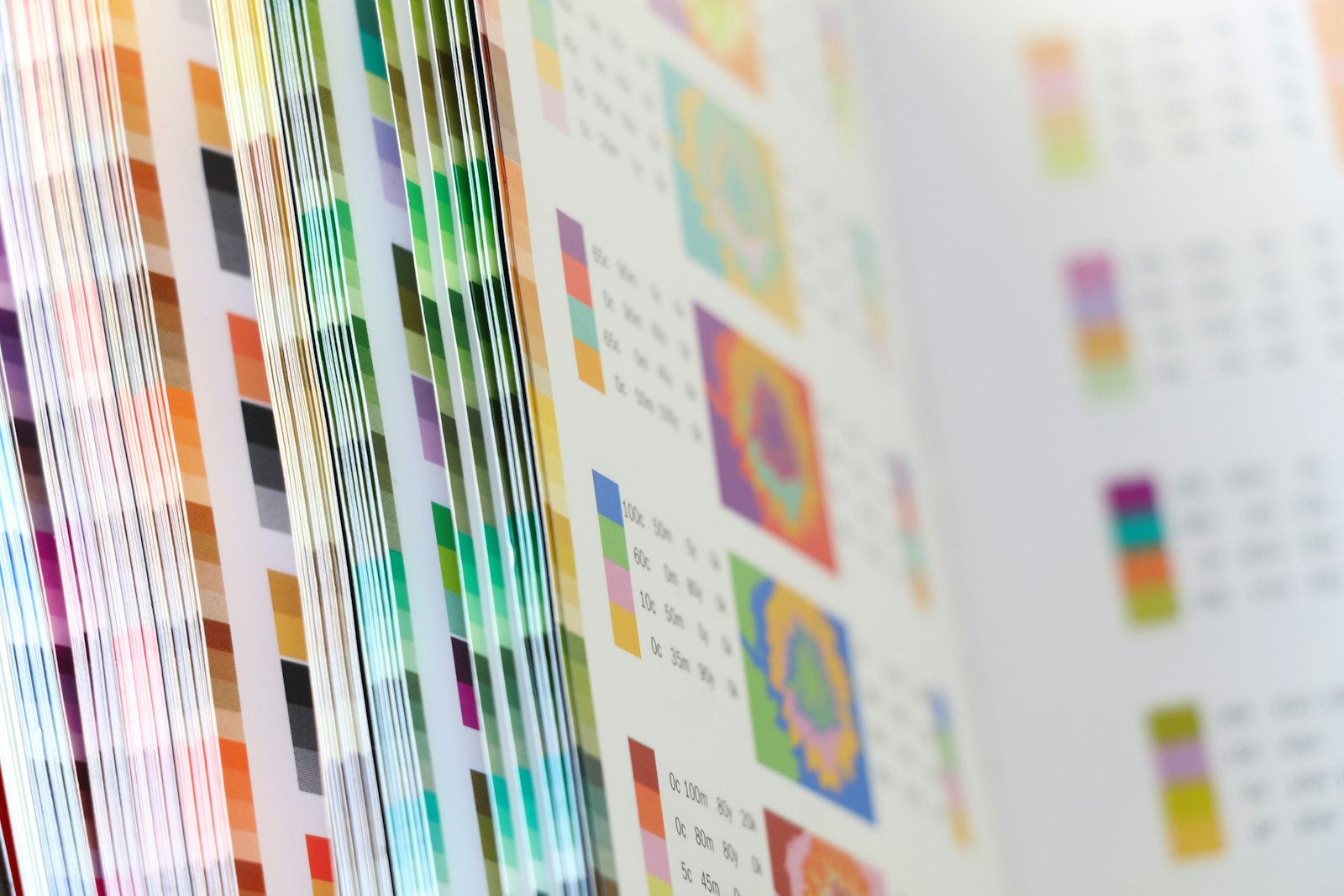 Where color quality matters more is in specific use cases. Marketing teams producing customer facing print runs on coated stock benefit from machines with finer halftone screens and tighter color calibration. Medical clinics producing patient information sheets where specific color fidelity matters benefit from automatic ICC profile management. Educational institutions printing color test materials with specific curriculum colors require consistent reproduction across machines and across years.
For a typical Spanish SMB office printing color presentations, occasional brochures, and color charts in reports, any Segment 3 color MFP from any major brand handles the workload. The decision tree shifts from color quality to cost per color page, controller features, dealer support, and warranty terms. Cost per color page on the dealer service contract sits between 0.04 and 0.07 euros in 2026, an order of magnitude above the 0.005 euros for monochrome on the same machine.
Color is four greyscale operations layered on top of each other with high precision. Cyan, magenta, yellow, black. Each one runs through the same six step process the monochrome side runs. The four imaging units, the transfer belt, and the registration calibration are the engineering that makes the four layers register cleanly enough to look like a single color image to the human eye.