Humidity Test Chamber For Capacitor Aging Per IEC 60068 2 67 Cy
Hold 85 degrees and 85 percent steady for a thousand hours; a component writes its own biography in leakage current.
IEC 60068-2-67 defines Test Cy, the steady-state accelerated damp heat method written for components: a constant hot, humid condition, held without a single swing for hundreds or thousands of hours, so that the slow moisture chemistry which ages parts across years of service runs to completion in weeks. Capacitors are its classic subjects, since their failure habits under humidity are gradual, parametric, well charted across decades of industry data. The clearest way through the standard is to read the test as a biography, the life of a component compressed, with the chamber as the unhurried room where the years are spent.
The 85/85 condition
The method’s signature setting is 85 degrees Celsius at 85 percent relative humidity, the pairing the component world abbreviates to 85/85. Durations step through the customary 168, 500, 1000, 2000 hours, a week to nearly three months of unbroken condition, with the severity being the condition held for the duration, no third axis hiding anywhere. Class names travel on datasheets exactly this way, the hours standing beside the condition like a vintage on a label.
Nothing swings, by design. The cyclic methods age products with change; Cy ages them with constancy, keeping vapour pressure against the component’s seals around the clock so diffusion, the slowest of transport mechanisms, gets the uninterrupted time it needs to carry water where splashes never reach.
The steady condition is also what makes results comparable across the industry. 85/85 for 1000 hours means the same exposure in any compliant chamber on any continent, which is why component datasheets quote it as shorthand, why procurement contracts lean on it without footnotes. The condition’s universality is itself an asset the chamber must protect, since a laboratory whose 85/85 runs two points humid is privately redefining a public standard.
How water ages a capacitor
Moisture attacks capacitors along three chemistries, each with its own signature on the test bench. The first is dielectric absorption: polymer films, impregnated papers take up water molecule by molecule; a damp dielectric polarises differently, so capacitance, dissipation factor drift upward together, the gentlest of the three injuries, the one that largely reverses on drying. The second is electrochemical migration: where any bias exists across damp insulation, silver, other electrode metals too, dissolve, travel, replate as dendrites, conductive filaments growing through the exact gaps that defined the component, read on the bench as insulation resistance collapsing by decades. The third is corrosion of the small metals, terminations, internal welds, the thin sputtered electrodes of film parts, where dissolved oxygen, ionic contaminants turn condensed moisture into a slow electrolyte, raising equivalent series resistance one micro-ohm at a time until ripple heating finishes the work in the application the part eventually joins. Aluminium electrolytics add a private fourth chapter, their rubber seals breathing vapour both ways until electrolyte chemistry shifts, a mechanism that runs on its own clock beside the other three. Test Cy is engineered to give all of these mechanisms exactly what they need, warmth for the kinetics, vapour pressure for the supply, unbroken time for the diffusion that feeds them both, which is why its results map onto years of tropical service more honestly than any quick test can, with the mapping’s own arithmetic treated further down, where the honest limits of acceleration claims belong.
Chapter one: the baseline
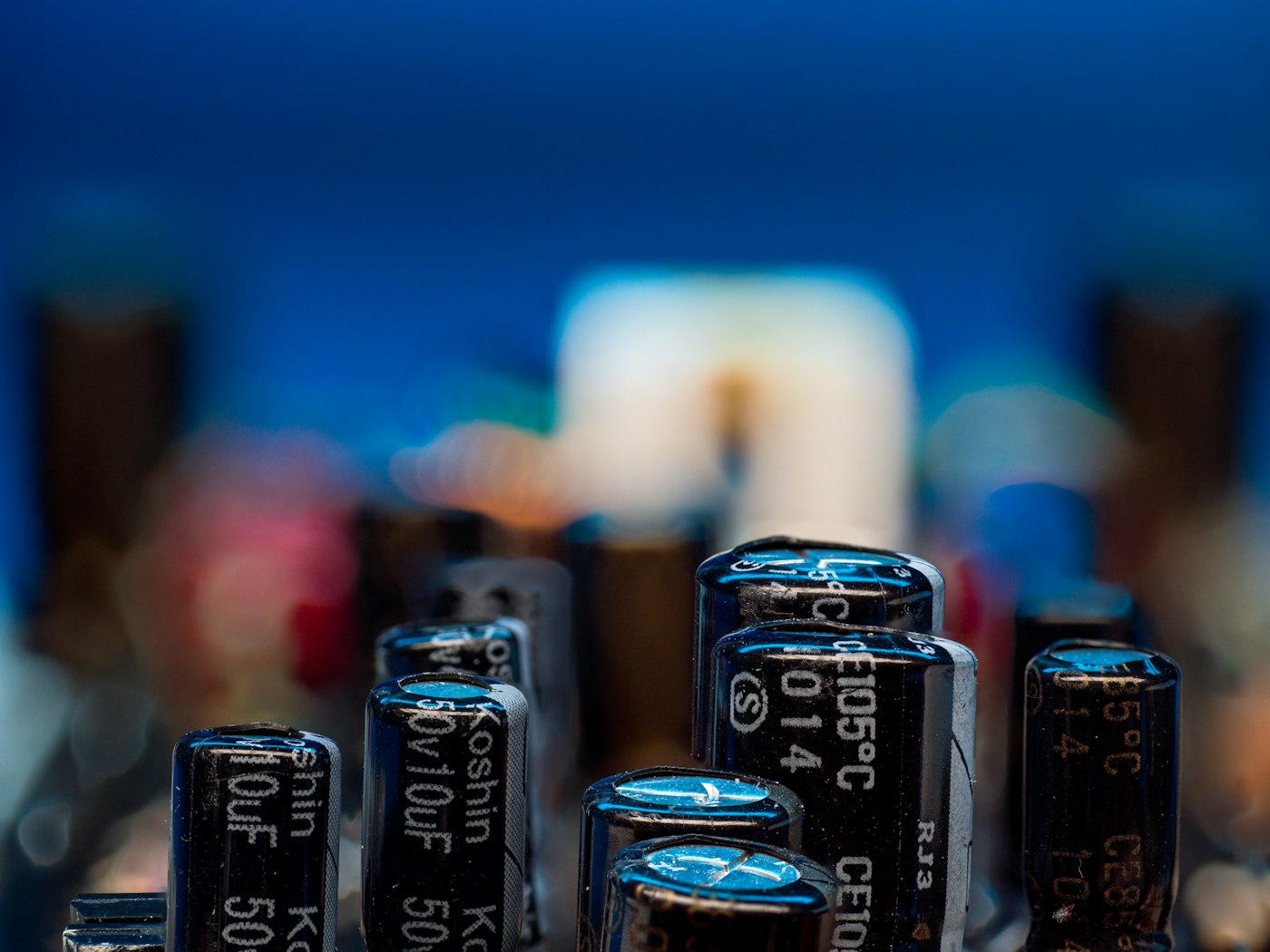
The biography begins before the chamber door closes. Every monitored parameter, capacitance, dissipation factor, insulation resistance or leakage, equivalent series resistance where relevant, gets measured at standard conditions, on identified individuals, with the instruments, fixtures that will repeat the measurement later. Measurement conditions get written down to the digit, test voltage, frequency, stabilisation time, since a drift claim is only as clean as the pairing of its two readings.
Identity discipline matters more here than in any visual test, since the verdicts are numerical drifts per serial number. Parts get marked or mapped to carriers; a tray that gets shuffled mid-test converts a thousand hours of aging into anonymous noise. The carrier map photographed at loading settles every later doubt for the cost of one frame.
Chapter two: moisture moves in
The first hundred hours belong to absorption. Water works through case materials, through seals, along concentration gradients, the dielectric’s parameters begin their drift; the first interim measurement, where the plan includes one, shows the gentle slope that marks a normal part aging normally. Nothing in this chapter is failure; it is the price of admission every polymer pays for living in vapour.
The slope itself is information, free with every interim point the plan affords. Families of parts plotted together reveal their construction: hermetic styles draw a flat line, epoxy-dipped parts a steady climb, cheaply sealed examples a slope that already hints where the 1000-hour story ends. Reading construction from slope is a skill the method teaches free of charge to anyone who plots as they go.
Chapter three: the chemistry settles in
Past the absorption knee, the slower mechanisms take the pen. Insulation resistance, the sharpest-eared narrator in the cast, eases downward as leakage paths organise; under bias, migration begins its filament work in the parts that will eventually fail; terminations corrode at rates their plating quality sets, none of it visible from outside the case.
This is the stretch where good and bad construction diverge visibly. Two capacitor lots that matched at incoming inspection separate into distinct bands on the insulation-resistance plot by mid-test, which is precisely the discrimination buyers run Cy to obtain. No incoming meter reads sealing quality; only weeks of vapour pressure do, which is the service the method sells.
Nothing dramatic should be happening in the chamber itself through these weeks, which is the point: the drama belongs to the components; every ripple in the environmental trace subtracts from the story’s credibility.
Chapter four: old age, read on the bench
The final measurements close the biography against the standard’s acceptance limits: capacitance change within its allowed percentage, dissipation factor under its ceiling, insulation resistance above its floor, visible condition acceptable. Parts that drifted past any line have aged out; the certificate records how many, of which lot, in which direction, with the failed individuals retained for the analysis that turns a count into a cause.
Failure analysis reads the direction as diagnosis. Capacitance up with dissipation factor up says absorbed water; insulation resistance collapsed by decades says migration, with the dendrite findable under magnification; ESR risen says corrosion at the small metals. The biography’s ending names its cause, which is what lifts Cy data from bookkeeping to engineering.
Recovery measurements, taken after a standard dry-out where the plan calls for them, separate the reversible chapters from the permanent ones: absorption releases its hold as water leaves; migration’s filaments, corrosion’s losses stay, separating the parts that merely got wet from the parts that genuinely got old. Specifications that skip the recovery step lose this distinction, then argue about it later without the data that would have settled it.
Bias, the test with teeth
Run unpowered, Cy examines materials, sealing, on their intrinsic merits. Run with voltage applied, the industry’s THB practice, temperature-humidity-bias, it adds the electric field that migration chemistry feeds on; failure rates climb accordingly in the styles that harbour the weakness.
The bias level comes from the component’s rating, from the plan’s intent, with rated voltage proving service reality while derated fractions probe margins. Polarity matters for the polar styles; orientation of the field decides which electrode dissolves, so the fixture’s wiring diagram belongs in the report beside the voltage. Bias also demands its own infrastructure, per-part series resistors so one failure cannot take down the row, supply monitoring that timestamps every event, feedthroughs carrying the load without leaking the climate, all of it specified at 85-degree saturation, because ordinary lab wiring ages too in this air.
For buyers comparing component vendors, biased Cy at matched conditions is the sharpest pencil available: same parts, same hours, same voltage, with the failure count, the parameter drifts doing the talking afterward. Purchasing decisions counted in millions ride on trays costed in hundreds, the best ratio quality engineering ever offers.
The method in one line
Hold everything constant except the component, then read its diary.
The chamber’s part: the discipline of nothing happening
A Cy chamber is judged on flatness. The band around 85/85 must hold for a thousand hours through laboratory seasons, door events on neighbouring equipment, water deliveries, weekend silences, since every excursion stamps itself into a biography that was supposed to record only the components’ own aging. Flatness is a systems property, plant sizing, control tuning, room climate, water supply, all converging on the dull trace that is this method’s definition of excellence.
The humidity system runs the marathon configuration: continuous vapour at moderate output, demineralised feed as standing rule, humidifier service scheduled into the calendar because a thousand-hour booking does not pause for descaling. Output sits far below a Db chamber’s sprint duty, while the endurance requirement runs far past it, a different athlete built for a different race entirely. The damp heat family’s water lessons apply with the volume turned down, the duration turned up.
Sensor drift becomes the patient adversary on these timescales. An RH element that wanders two points across six weeks rewrites the condition without anyone touching the controller, the failure mode no alarm threshold catches because nothing ever stepped, so Cy laboratories calibrate humidity channels on tightened cycles, log a reference check at every interim measurement, then keep a spare element seasoned.
Loading discipline rounds out the machine’s duties: components in open carriers, spaced for airflow, away from walls, away from the supply jet, so every specimen on the tray meets the same micro-climate for the same thousand hours. A corner tray two degrees cool runs a different test at the same address, the spatial tolerance lesson applied at component scale. Two degrees at 85 also moves local relative humidity meaningfully, doubling the offence: the cool corner is simultaneously the damp corner, aging its tray on private terms.
What a thousand hours buys in service years
The acceleration question deserves honest handling. Industry models relate humidity-test hours to service years through temperature, humidity exponents fitted per failure mechanism, with the literature’s best-known forms carrying an Arrhenius term for heat, a humidity power term for moisture. The fitted exponents move with dielectric system, package style, even solder chemistry, which is why serious programmes quote their sources by name in the test plan.
The catch is the phrase per mechanism. Absorption, migration, corrosion accelerate differently, so a single multiplier covering all three is always somebody’s average; quoted factors spanning from tens to hundreds of equivalent ambient months per 1000 test hours reflect parameter choices as much as physics.
The defensible practice states the model, the exponents chosen, the service condition assumed, then presents the equivalence as an estimate wearing its assumptions openly. A datasheet line reading “1000 h 85/85” makes a comparable claim; a marketing line reading “equals fifteen years” makes a negotiable one.
For buyers, the cleanest use of acceleration arithmetic is relative, never absolute: two parts run side by side at 85/85 rank the same way their service lives will, whatever the multiplier turns out to be, which is the comparison Cy delivers with full confidence.
Reading a lot comparison
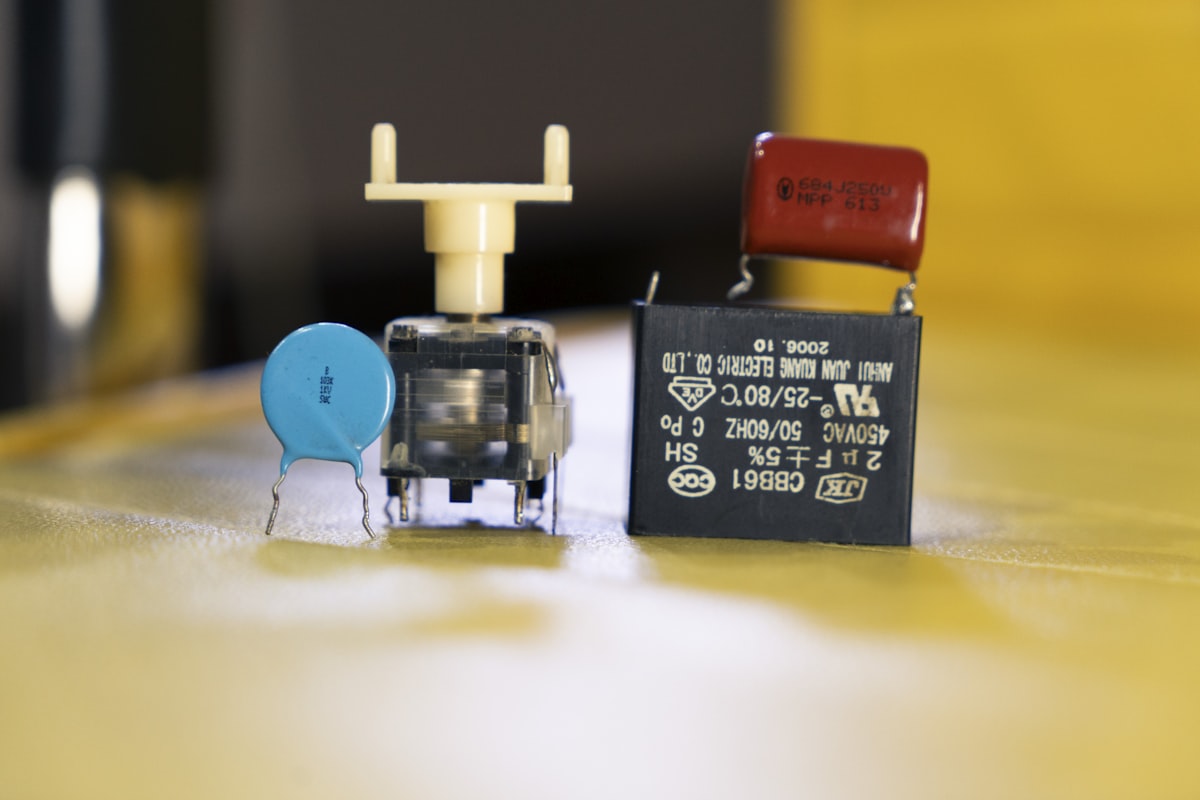
Vendor comparisons repay their budget when read statistically; a pair of pass counts wastes most of what the trays just spent six weeks writing. Plot every part’s drift, never only the means: two lots with matching averages can carry different tails; the tail is where field failures live. A distribution that hugs its centre describes a controlled process; a scatter with outliers describes a process that has bad days. The plot costs nothing the spreadsheet did not already hold; the insight it surfaces routinely redirects six-figure orders.
Early outliers deserve special attention; excluding them throws away the most informative parts on the tray. The one part in forty whose insulation resistance breaks formation at 300 hours is a preview of the population’s weakest construction path, findable now under a microscope while the lot decision is still open, cheap to study this week, expensive to meet again in the field.
Sample size honesty closes the reading: a dozen parts discriminate construction classes; warranty-grade claims about rates per million need the statistics nobody buys a single tray to obtain. Cy comparisons rank vendors superbly; they estimate field rates only with help from production volumes, field returns, the modelling the reliability office runs downstream.
Cy among its damp relatives
The family offers a general steady method at milder settings for whole products, the cyclic methods for condensation, for breathing, the composite cycle for moisture that freezes. Cy’s distinct seat is component-scale acceleration: hotter, harder, longer than the general steady test, aimed at parts before assemblies exist, with parameter drift as the verdict where function would be too blunt.
Choosing between the steady relatives follows the specimen: an assembled product in tropical service takes the general method at its own severities; the components inside it qualify upstream under Cy, often a year earlier, in a different laboratory, on the strength of the same physics. The two answer different layers of the same reliability question, which is why component specifications cite them separately from equipment ones, with neither layer able to stand in for the other when a field failure finally asks which one was skipped.
The seasoning shelf
The spare-parts habit this method rewards has a detail newcomers miss: a replacement humidity element installed straight from its sealed bag reads differently for its first days in saturated air, settling toward its true calibration as the sensing layer equilibrates. A laboratory that swaps a drifted element mid-run for a factory-fresh one has traded a known error for an unknown one, in the middle of a biography that tolerates neither.
The cure is a seasoning shelf: spare elements stored powered in a small humid enclosure, logged against a reference weekly, so the spare that goes into a mid-run swap arrives already settled, with its own recent history attached. The same shelf hosts the spare probes for specimen channels. Five minutes of weekly attention keeps the laboratory’s repair capability as calibrated as its running instruments, an unglamorous corner of practice that separates the sites which survive mid-run failures from the sites which restart.
Running a thousand-hour tenancy
Long bookings get managed like the asset they occupy. Interim measurements, where the plan includes them, happen on a schedule that minimises door-open time, parts out, measured warm per the procedure or stabilised per the plan, parts back, with the excursion logged, the clock’s treatment of the pause stated in advance. A two-person drill, one handling carriers, one driving the bench, halves the exposure for the price of an hour’s coordination.
The alarm chain inherits the highest stakes in the laboratory, since an unattended week is routine for this method; a failed humidifier on day 30 of 42 erases more value than any single event the facility hosts, weeks of aging, the customer’s programme schedule behind them. Notification paths get tested before the booking starts, on the calendar, with names attached, including the name that answers when the first name does not. A standby plan for the humidifier, spare elements staged, the swap rehearsed, turns the worst mid-run failure into a logged hour in place of a lost campaign.
The interim measurement dilemma
Every measurement mid-test costs condition. Opening the door drops the humidity column; pulling parts to a bench interrupts their soak; even a swift, practised exchange leaves a dent in the trace that the flatness doctrine above spends weeks avoiding, a thermal restart besides for every part that left the warmth. Yet drift curves with only two points, start, end, hide the shape of the aging, the knees where mechanisms hand over.
The resolutions form a ladder of investment. The plain approach batches interims at a few planned points, executed fast, logged honestly, with the clock’s treatment of each pause written in the procedure before anyone needs to interpret it under deadline. The better-instrumented approach wires measurement to the parts in place, bias networks doubling as monitoring taps, leakage logged continuously through feedthroughs while the door stays shut for the duration.
In-situ monitoring repays its cabling on long classes: a thousand-hour run that logs leakage hourly produces a curve no three-point plan approaches, catching the exact hour an outlier broke formation, which to a failure analyst separates a suspect from a confession carrying its own timestamp. Laboratories quoting serious component programmes treat the monitored configuration as the default, with door-open interims reserved for parameters no wire can carry.
Five ways a Cy test gets failed
The first failure is the wobbling condition, a chamber that holds 85/85 beautifully for a week then wanders through a heat wave, leaving the biography contaminated with environment. The full-duration trace, reviewed as overlapping weeks, is the audit; flatness is the claim. Sites whose plant rooms swing with the seasons learn to check their long traces in July before quoting six-week classes in August, since the chamber’s flatness inherits the room’s, particularly on machines whose condensers breathe the plant-room air.
The second is anonymous parts: serial discipline lost at an interim measurement, drifts averaged across shuffled identities, the per-part stories the method exists to write reduced to a lot mean that hides exactly the outliers procurement needed to see. The damage is irreversible by definition, since no amount of later care can un-shuffle a tray.
The third is hard water’s slow signature, mineral carryover dulling components week after week until corrosion data reflects the supply line. The white film arrives too gradually to notice, too late to fix; the demineraliser’s maintenance log is the prevention, checked at booking start like every other consumable of the method.
The fourth is bias without per-part isolation, one early dendrite shorting a rail then unbiasing its neighbours for the remaining hundreds of hours with nobody told. The series-resistor rule exists for this; the supply log proves whether it held, current per row reviewed at every interim, flat where it should be flat.
The fifth is the missing baseline, final measurements with nothing to subtract, drifts unquantifiable, six weeks of careful soaking reduced to a pass-fail visual condition any one-hour test could have delivered. The biography needs its first chapter, measured with the same instruments that will write the last, on fixtures whose own contribution to the reading was characterised once then trusted thereafter.
From verdicts to design rules
Cy data repays the programme twice when its endings become rules. A capacitor family whose insulation resistance held formation through 1000 biased hours earns a place on the preferred-parts list with the evidence attached; a family that scattered gets a derating note, a second-source requirement or an unceremonious retirement, each decision citing the tray that decided it. Rules with trays behind them survive design reviews that opinions never finish.
Coating, protection decisions inherit the same data one level up the assembly. Boards destined for humid service get their conformal-coating call made against the migration results of the parts they carry: components that proved migration-prone justify coating’s cost, its rework burden too; a board of flat-line performers may decline it with the test as the signed justification. Either way the decision stops being a habit inherited from the previous product; it becomes a conclusion with a tray number.
Class margins translate into sourcing language. A specification calling for the 1000-hour class on a product whose service is gentle indoor air is buying insurance at a defensible premium; one calling for 500 hours on a tropical outdoor design is drafting the warranty team’s future apologies a year in advance. The class line in the component specification deserves the same service-file scrutiny the severity lines of every other method receive.
The archive completes the loop. Drift curves filed per family, searchable by part number, turn every future selection meeting into a lookup, with the new candidate plotted against the incumbents’ history. Laboratories that keep this archive become, in effect, the company’s memory of how components age, an asset no datasheet library replaces, compounding in value with every tray it absorbs, for no spend beyond folder discipline.
Reading the clause into a purchase
A chamber bought for Cy work answers on stability first: the band held at 85/85 across the loaded workspace for the full duration class, evidenced by a long trace, never a screenshot. Uniformity at component scale follows, mapped with the carrier layout the laboratory genuinely uses, since trays full of small thermal masses behave differently from the open volume any generic mapping assumed.
Endurance forms the second line: humidifier duty rated for continuous months, service intervals stated at this duty, water treatment integrated, RH sensors specified with their drift behaviour, replacement access, in writing, the whole sheet priced for the marathon the method runs in real bookings.
The third line is bias infrastructure where THB work is intended: powered feedthroughs, rack provisions, monitoring channels, every one cheaper on the original order than as a retrofit through a humid wall. The in-situ monitoring case from the interim section above belongs on this sheet too, specified as channel count, as logging, while the holes still cost a drawing note.
The diary, countersigned
A compliant Cy test is a long stillness with excellent bookkeeping: a condition held flat for a thousand hours, components identified like patients on a ward, parameters measured before, during where planned, then after, with drifts attributed to the three chemistries by their signatures on the plots. The chamber’s contribution is the stillness; the standard’s is the comparability; the laboratory’s is the discipline that keeps both intact for six unglamorous weeks while nothing visible happens behind the glass. Components that emerge with their parameters inside the limits have testified, in the only language they have, that years of damp service will pass the same way. The ones that drifted past the lines testified too; the laboratory’s job was making sure both testimonies were taken down accurately, then filed where the next design can call them as witnesses.
Questions laboratories ask about steady-state component aging
What is the 85/85 test exactly?
Steady-state accelerated damp heat per IEC 60068-2-67 Test Cy: 85 degrees Celsius at 85 percent relative humidity, held constant for a declared duration, customarily 168, 500, 1000 or 2000 hours, with component parameters measured before, measured after, against acceptance limits. The pairing is the industry’s shared shorthand for humidity endurance of components, quoted on datasheets, in procurement specifications, precisely because the condition means the same thing everywhere.
Why does Cy hold one condition from start to finish?
Because the targeted mechanisms run on diffusion, on slow chemistry. Constant vapour pressure drives water through cases, through seals, along unbroken gradients; constant warmth keeps reaction kinetics fed; the absence of swings removes condensation events that would confuse attribution. Cyclic methods examine what change does to products; Cy examines what time in dampness does to materials, the two questions complementing rather than replacing each other.
What parameters are measured on capacitors?
Capacitance, dissipation factor, insulation resistance or leakage current, equivalent series resistance where the style warrants, each at baseline, again after the soak, against the limits the governing specification sets. The drift directions diagnose the chemistry: capacitance rising with dissipation points at absorbed moisture, insulation resistance collapsing points at electrochemical migration, ESR climbing points at corrosion of terminations or electrodes.
What does adding bias change?
Voltage across damp insulation feeds electrochemical migration, the mechanism that grows conductive dendrites, collapsing insulation resistance, so biased testing, the THB configuration, exposes weaknesses that unpowered soaking leaves dormant. Bias requires per-part series isolation so one failure cannot unbias the rest, supply monitoring that timestamps events. Specifications choose rated voltage for service realism or derated fractions for margin studies, with the choice recorded beside the results.
How long should the test run?
The duration class comes from the component specification, from the claim being made: 168 hours screens, 500 discriminates construction quality, 1000 is the workhorse qualification class, 2000 supports the longest service claims. The damage accumulates with time under constant condition, so longer classes find slow mechanisms shorter ones merely start. The honest choice matches the duration to the published class the part claims, never to the calendar space the laboratory happens to have.
What matters in a chamber used for this method?
Flatness over everything: the ability to hold 85/85 across a loaded workspace for months, evidenced by full-duration traces, with humidity sensors managed against drift, demineralised water as standing supply, a humidifier rated for continuous duty with service intervals quoted at that duty. Bias infrastructure, powered feedthroughs, monitoring, joins the specification where THB work is planned. The machine’s virtue is the absence of events, which is harder to buy than it sounds.