Combined Cold Dry Heat Low Pressure Test Chamber Per IEC 60068 2 39
Thin air rewrites three laws a product relied on at sea level. The combined method takes all three away at once.
IEC 60068-2-39 covers combined testing of temperature with low air pressure: a product held cold or hot while the chamber pumps the air down to altitude, the stresses applied together because that is how flight, mountains, high plateaus apply them. The method exists for one reason. Reduced pressure rewrites three pieces of physics every design leaned on at sea level without posting a notice; a part that passed cold alone, then heat alone, can fail the moment thin air joins either one. Reading the standard through those three rewrites makes sense of the test plan, of the chamber behind it.
What the combined method runs
The standard pairs the familiar temperature severities, the cold rungs of the cold test, the hot rungs of dry heat, with air pressures stepped down from sea level toward the thin end, the published values reaching from high-plateau pressures through airliner cruise toward the near-vacuum of extreme altitude. A test point is a pair: a temperature plus a pressure, held together for the declared soak, with the pair’s joint arrival, never either axis alone, defining when the clock arms.
Sequences come from the product’s mission, read out of its flight envelope or its installation altitude. Avionics commonly meet cold at altitude, the cruise condition; engine-bay equipment meets heat at altitude; some profiles walk a flight, climb, cruise, descend, with temperature tracking the journey. The standard supplies the building blocks; the specification assembles the mission. The assembly question gets its own section further down, since the profile is where combined testing is won before the chamber ever starts.
Tolerances carry over from the parent methods, temperature bands of a couple of degrees, with pressure held within its own stated window. The chamber must control both axes at once, which is the entire engineering difference separating this machine from the two simpler ones it resembles.
Three rewrites at altitude
The first rewrite is thermal, the one every powered product feels. Convection, the workhorse that carries heat from every warm surface into the surrounding air, weakens as the air thins, because fewer molecules pass by to take the heat away. A powered device that ran warm at sea level runs hotter at the same ambient temperature once the pressure drops, with the gap widening as altitude climbs; at the thin end of the standard’s range, convective cooling has faded toward irrelevance; radiation is doing what work remains. The second rewrite is electrical. Air is the insulation inside ordinary equipment; its dielectric strength falls with pressure along the curve Paschen described, passing through a minimum where modest voltages jump gaps that sea-level intuition calls safe by a wide margin. A clearance that never sparked on the ground can arc, corona or track at cruise pressure, which is why altitude testing of anything carrying real voltage is non-negotiable. The third rewrite is mechanical. Every sealed volume, every blister of trapped air in a potting compound, every gasketed lid, holds sea-level pressure inside while the chamber removes it outside; the differential pushes outward, swelling pouches, lifting lids, driving gas out through whatever path exists, with the force scaled to the enclosed area times the pressure gap, numbers that grow startling on anything the size of a hand. Three rewrites, one method: the combined test exists because all three arrive together in service, multiplied by whatever temperature the mission adds; every clause in the standard traces back to keeping one of the three honest while the others run.
Rewrite one: cooling that fades
For unpowered specimens the thermal rewrite barely registers; for powered ones it is the headline. The test’s prize measurement is the gap from component temperatures at sea-level pressure to the same components at altitude, same ambient, same load, a delta that turns datasheet margins into facts a thermal engineer can defend in review.
Test design follows: power the specimen through the pressure descent, log its hot points continuously, hold at the mission pressure until temperatures flatten. The flattening takes longer than intuition expects, since the weakened convection slows every thermal settling the product attempts. Soak clocks borrowed unadjusted from sea-level practice end the hold while junctions are still climbing, which under-tests exactly the components the mission worries about without leaving a mark in the paperwork; the cure is arming the clock from the specimen’s own trace.
Rewrite two: the spark that comes early
Paschen’s curve gives the method its sharpest teeth. Breakdown voltage falls as pressure drops, reaches a minimum, then rises again toward vacuum; equipment that cruises near the curve’s low region lives where air insulates worst. High-voltage supplies, displays, igniters, any switching node with inductive kick deserve attention here. The unglamorous suspects deserve it just as much: connector pins at the edge of their creepage, relay contacts opening under load, the places service reports already know by name.
Partial discharge arrives before outright arcing: corona at sharp points, micro-discharges in voids, a hiss of degradation that erodes insulation across a service life without ever announcing itself as a failure on the day. The erosion is cumulative chemistry, ozone, bombardment, etching the polymer one flight at a time, which is why discharge-free at mission pressure is the requirement language that matters. Altitude testing that monitors for discharge, with detection on the supply lines or an antenna in the workspace, catches the degradation a simple pass-fail run sleeps through for its entire booking.
The design responses are spacing, encapsulation, pressurised enclosures; the test’s job is to expose which response a product genuinely relies on, then prove it at the mission’s pressure with margin, since the curve’s geography punishes optimism near its minimum.
Rewrite three: the outward push
Pressure differentials work on anything that encloses gas. Electrolytic capacitors bulge, pouch cells swell, membrane vents pass their rated flow, conformal-coating blisters inflate, gasketed enclosures breathe out through their seams. The descent’s rate decides how violent the push becomes: a slow pump-down lets pressures equalise through designed paths, while a rapid decompression profile, where the specification calls one, slams the differential on at once.
Sealed-product testing reads this rewrite in both directions. The climb to altitude pushes outward; the return to ground pushes inward, driving ambient air, with its moisture, into whatever volume just vented. Products cycled repeatedly breathe at every cycle, the altitude cousin of the damp heat methods’ thermal breathing, with the same long-term consequence: interiors that slowly acquire the outside world’s moisture one inhale at a time.
Leak measurement pairs naturally with the method: pressure-decay checks before, during where instrumentation allows, again after the temperature work, since cold stiffens gaskets exactly when the differential tests them. A seal that holds at room temperature regularly gives up its secret once -40 meets altitude, which is why the leak numbers that matter come from the mission corner; the bench figures a datasheet prefers to print were measured on a warmer, kinder day.
Cold joins the thin air
The cold-plus-altitude pairing is the cruise condition, the method’s bread and butter. Cold stiffens seals while the differential works on them; cold thickens lubricants in mechanisms the thin air is already starving of convective cooling on their drive electronics; condensation rules change since the little moisture present freezes on the coldest available surface. Motors sized with sea-level cooling margins meet both penalties at once, the classic discovery of first-time drone programmes every winter.
The pairing also stresses the chamber itself in a particular way, with the refrigeration holding its band while the air it cools keeps thinning, a control duty the equipment section below returns to. Cold-altitude holds are where mediocre combined machines wander, since both control loops lose their usual leverage in the same hour.
Heat joins the thin air
Heat at altitude compounds the thermal rewrite: ambient already high, convection already weakened, the powered specimen’s self-heating now lands on top. Components rated by sea-level airflow assumptions run far past their datasheet’s comfort, which is the test’s exact target. Derating tables get audited here in reverse: the test verifies whether the margin the designer applied was generous enough for air that no longer cooperates.
This corner of the envelope also examines materials’ outgassing, since warm plastics, coatings release volatiles faster; low pressure invites them out; optics, contacts downstream collect the condensable products. Programmes for sealed optical assemblies treat the hot-altitude soak as their contamination screen, with witness plates in the workspace collecting whatever the materials chose to exhale for later analysis.
The method in one line
Remove the air; see which of its three favours was load-bearing.
The pressure ladder, translated

Pressure values read abstract until they wear altitudes. Near 84 kPa the air matches a mountain town around fifteen hundred metres; 70 kPa sits near three thousand metres, the world’s high plateaus with their permanent thin-air duty; 55 kPa corresponds to roughly five thousand metres, the ceiling of inhabited ground.
The aviation rungs follow: around 40 kPa for altitudes near seven thousand metres, 30 kPa near the nine-thousand-metre band where airliners cruise, with the deeper values, 15 kPa downward, belonging to the upper troposphere, to what lies past it, territory for balloons, high-altitude platforms, the unpressurised corners of aircraft, where the three rewrites run at full strength; design margins get spent fast there.
Translating the specification both ways keeps everyone honest. A requirement quoting 30 kPa is claiming cruise-altitude bay exposure; a product whose mission tops out on a plateau has no business there, while an unpressurised avionics bay has no business stopping at 55. Mistranslations in either direction surface eventually, one as money spent proving the impossible, the other as a fleet grounded by the unproven. The kPa column should reconcile with the mission column line by line before any booking, a five-minute table check that retires whole categories of wasted chamber time.
Who genuinely needs this test
Aviation, aerospace head the list, avionics, cabin equipment, anything flying unpressurised bays, where the method is written into the qualification documents by name with no negotiating room. Drones, eVTOL platforms inherit the requirements at lower altitudes, consumer-grade cost pressure attached, a combination making cheap honest altitude data newly precious. Their motors, batteries, ESCs all live or die on the thermal rewrite, which a single combined session quantifies per design.
The ground-based clientele surprises newcomers: telecom, power equipment for high plateaus, mining, observatory instruments, vehicles for mountain markets. Service at three or four thousand metres applies a permanent mild version of all three rewrites, with thinner cooling air the chronic complaint. Warranty statistics from plateau deployments read like slow-motion altitude tests, fan-cooled supplies failing first, which is the field’s way of recommending the laboratory version.
A chamber that holds two axes
The machine is a pressure vessel first: a workspace built to hold near-vacuum against the lab’s atmosphere, with the door, the window, every feedthrough engineered as part of the boundary that the certificate ultimately stands on. Round-cornered, heavy-walled construction follows from the load, which is why altitude chambers look like the pressure equipment they are. The load is constant whenever the floor is held: a square metre of wall carries tonnes of atmosphere the moment the inside approaches vacuum, arithmetic that shapes every plate thickness on the drawing.
The pump train sets the floor: stages sized for the lowest pressure the laboratory sells, with descent rates the specification’s profiles demand. The refrigeration, heating live partly inside the boundary, partly across it, with the design challenge of moving heat into a workspace whose air, the usual courier, is being removed. Conditioning solutions split: circulating what air remains at moderate floors; conduction, radiation paths, shelf plates, jacketed walls, for the thin end where moving air has nothing left to move.
Instrumentation crosses the wall through sealed penetrations, power for the specimen, sensor lines, discharge detection, each one a leak path bought deliberately, plumbed with its own evidence, counted against the boundary’s budget from the day it was drilled. Connector-style feedthroughs beat potted bundles for service life, since a failed pin swaps in minutes while a failed potting recertifies the boundary. Channel generosity at purchase repeats its usual argument; retrofit holes in a pressure boundary cost certification, never merely drilling.
One vessel, several methods
The combined chamber moonlights well. With the pump idle, the vents open, it runs the plain cold, dry heat methods inside its pressure-rated shell, so a laboratory buying for altitude work inherits a competent climatic machine in the same footprint.
The economics often decide fleet plans this way: one combined vessel covering the occasional altitude campaign, the daily temperature work, in place of a climatic chamber with a rarely-used altitude unit in the corner. Utilisation arithmetic from the walk-in cost chapters applies unchanged.
The boundaries deserve respect in both directions. Climatic-only bookings should still log that the vessel held site pressure, since a vented run is part of the machine’s history; altitude bookings inherit whatever the climatic weeks did to seals, to feedthroughs, which is one more argument for the leak-rate calendar above.
The reverse moonlighting never works: no climatic chamber becomes an altitude vessel by ambition. The boundary, the pump train, the certified penetrations are bought on day one, the same lesson the temperature ladder taught about cascade floors, written here in steel thickness.
Staging the specimen for thin air
Loading practice shifts with the physics. At moderate floors the remaining air still circulates, so ordinary spacing rules apply; toward the thin end, conduction, radiation carry the conditioning, so the specimen’s mounting becomes its thermal connection. A box bolted to a shelf plate lives at the plate’s temperature; the same box hung on nylon standoffs floats thermally, coupled to the walls by radiation alone, two different tests sharing one setpoint.
The procedure states the mounting for exactly this reason, material, contact area, torque where it matters, so the retest next year reproduces the thermal path along with the profile. Cabling gets dressed with slack at the feedthrough side, since flexible lines stiffen with cold while connectors carry the differential’s load, a small mechanical detail that has ended more than one long soak early.
Measuring through the descent
The trace that matters pairs the axes: pressure with temperature on one timeline, the specimen’s hot points, any discharge events, stamped on the same clock. A combined test reported as two separate charts hides the one event that justified the booking, what happened at the corner where both axes arrived together.
Functional monitoring belongs in the transitions, since failures cluster where the differential moves: relays chatter during descent, displays flicker near the Paschen region, oscillators shift as boards flex under the push. A specimen checked only at the holds passes tests its mission would fail. Continuous functional logging through the moving phases costs a few channels while buying the test’s best evidence; the standard’s transitions exist to be watched.
Recovery deserves the same paperwork as the parents’ methods: return to site pressure at a controlled rate, the inward breath logged, function confirmed after the product has re-equalised, with any moisture drawn in during the return acknowledged in the final inspection. Sealed products get their post-test leak check here, while the differential’s work is fresh; a week’s delay lets slow seals recover their composure along with their secrets.
Reading the mission into a profile
Profile design starts from the aircraft’s day, or the plateau’s year, written as pressure-temperature pairs with durations. A short-haul avionics box might see repeated climbs to cruise with cold soaks between sectors; a balloon payload sees pressure descend for hours as temperature falls; a plateau telecom cabinet sees a single permanent pair held for a service life.
The standard’s building blocks assemble any of these missions faithfully, with the discipline living in the transitions: rates of pressure change matched to the platform’s real climb, its real descent, temperature tracking on the schedule the mission imposes, holds placed where the product genuinely dwells in service rather than where round numbers fall.
Profiles also decide instrumentation timing. Discharge monitoring matters during the pressure band where the Paschen region crosses the product’s gaps; thermal logging matters at the thin holds; leak checks bracket the whole journey. Writing the measurement plan into the profile, point by point, is what turns a pressure schedule into a test.
The honest profile review asks one closing question: which corner of the envelope does this product never meet in service; why is the plan visiting it? Trimming decorative corners shortens bookings while sharpening claims, the same archaeology the temperature methods teach, applied here in two axes at once, to the same saving.
The chamber’s own leak budget
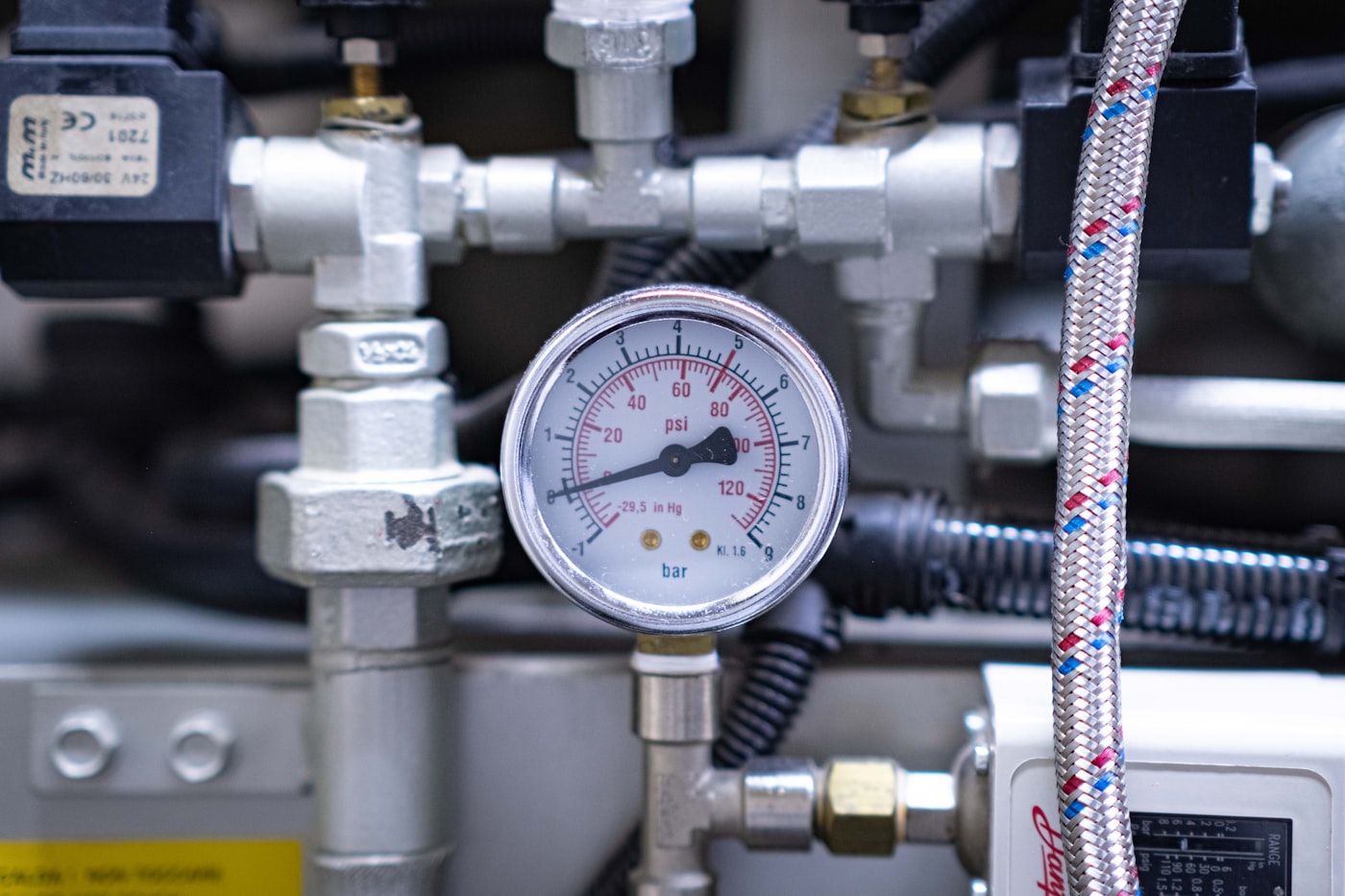
Every altitude chamber leaks; the question is how much; the second question is whether anyone measures it. The boundary’s penetrations, the door seal’s age, the window’s gasket all admit laboratory air at rates that rise with wear; at deep floors the pump must outpace the leakage merely to stand still.
A published leak rate, rechecked on a calendar, converts the chamber from an assumption into an instrument. The check is cheap: pump to floor, valve off, log the rise over a defined window, compare against the acceptance figure; the whole exercise fits inside a spare afternoon between bookings. Laboratories that file this curve beside their calibration certificates answer boundary questions in seconds.
The budget also disciplines feedthrough sprawl. Each added penetration spends leak allowance, so the channel plan balances instrumentation generosity against boundary integrity, with blanking plugs proving their seal on the same calendar as everything else.
The data’s second career
Combined-test results age unusually well. The altitude-versus-sea-level thermal delta measured on one controller board transfers, with engineering judgement, to its derivatives; the discharge-free pressure margin proven on one connector family covers its catalogue siblings; the leak behaviour of a sealing concept informs every enclosure that borrows it. One careful campaign seeds years of derivative justifications.
The reuse only works if the file recorded the conditions exactly: power levels, air state at the specimen, gap geometries for the discharge work, rates for the seal work. Campaigns documented to this standard become reference assets quoted in design reviews long after the original product retired, which changes the economics of doing the first one properly.
Five ways a combined test gets failed
The first failure is sequential substitution, running cold, then altitude, then calling the pair combined. The interactions are the test; a seal examined warm, a differential examined soft, prove nothing about the corner where both arrive together. The substitution usually hides in scheduling language, two bookings on two machines wearing one report number, visible to anyone who asks for the single trace.
The second is the unpowered shortcut on a thermal mission: altitude’s thermal rewrite only exists for devices making heat, so a powered-in-service product tested cold, tested dark, has skipped the physics it flies with. The certificate will read identically either way, which is the entire danger; only the power line in the procedure separates the two tests.
The third is voltage tested at the wrong pressure, a high-voltage check run at the hold floor when the Paschen minimum sits partway down the descent. The dangerous pressure is the curve’s, never the mission’s lowest; the profile should pause where the physics is worst, with the pause’s location computed from the product’s own gap geometry in advance.
The fourth is boundary amnesia: a chamber whose own leaks let the floor drift up during a long soak, with the specimen credited for an altitude the workspace stopped holding. The chamber’s leak rate belongs in the file beside the specimen’s, dated within the calendar the laboratory’s own procedure names, since an undated leak figure is an opinion about a gasket that has aged since.
The fifth is the unlogged return, specimens yanked to site pressure at whatever rate the schedule liked, moisture inhaled, function never rechecked. The mission descends too; the test should land the way the aircraft does, on a programmed rate, with the same channels watching that watched the climb.
Reading the clause into a purchase
The buying translation runs five lines. Pressure floor with margin below the thinnest selling severity, stated as a held value. The chamber’s own leak rate belongs in the quotation, since a floor reached for a screenshot differs from a floor held against leakage through a 96-hour soak.
Combined authority: temperature performance specified at pressure, the loaded workspace holding its band at the floor, demonstrated as one trace, since separate altitude certificates beside temperature ones describe two machines that happen to share a shell.
Descent, return rates programmable across the specification’s range, including any rapid-decompression duty the laboratory intends to sell, named explicitly because the structural difference is real.
Penetration provision sized for powered, instrumented, discharge-monitored work, each feedthrough delivered with its leak evidence. The window for observation, rated for the differential, large enough to see what the mission does, with internal lighting on its own sealed circuit so the view survives the floor.
Service reality closes the sheet: pump maintenance intervals, seal replacement access, the boundary’s periodic proof, because a pressure vessel keeps its certificate on a calendar the buyer inherits with the keys, line items the quotation should price before the first service visit reveals them.
The air, accounted for
A compliant combined test removes the air’s three favours on schedule, cooling, insulation, balanced pressure, while temperature does the work the mission promised, on a specimen powered the way service powers it, inside a boundary whose own honesty is on file beside the product’s, both leak rates dated, both traces on one clock. Products that hold their margins through that subtraction have been qualified for the thin part of the world, a claim neither parent method can make alone at any level of execution.
Questions laboratories ask about combined altitude testing
What does IEC 60068-2-39 combine?
Temperature severities drawn from the cold family, from dry heat, with low air pressures stepped toward altitude, applied together as pairs or as mission profiles. The point is interaction: thinner air cools electronics worse, insulates voltage worse, presses on sealed volumes, while temperature stresses arrive on top. A test point is always a temperature plus a pressure held together, never the two run in sequence, which is what separates the method from its parents.
Why do electronics run hotter at altitude?
Because convection weakens as air thins. Heat leaving a component rides on passing molecules, so fewer molecules per second means less heat carried away, with the same ambient temperature producing higher component temperatures as pressure falls. Toward the standard’s thin end, radiation carries what convection abandons. The practical measurement is the delta from sea-level to altitude temperatures for the same powered load, which converts cooling assumptions into mission facts.
What is the Paschen minimum; why does it matter?
Air’s breakdown voltage falls as pressure drops, reaches a minimum at a particular pressure-distance combination, then rises again toward vacuum. Equipment operating near that minimum lives where air insulates worst, so clearances that behaved at sea level can arc or sustain corona at cruise pressures. Testing pauses where the curve is lowest for the gaps in question, never only at the mission’s floor, because the dangerous pressure belongs to the physics, not the flight plan.
What happens to sealed enclosures during the test?
The trapped sea-level air pushes outward as the chamber descends, swelling flexible volumes, loading lids, loading gaskets, venting through whatever paths exist; the return to ground reverses the push, drawing moist ambient air inward through the same paths. Repeated cycles breathe at every pass. Pairing the method with leak measurement, before, during where instrumentation allows, then promptly after, turns these pushes into quantified seal data with dates attached in place of anecdotes.
Which products need combined temperature-altitude testing?
Anything that flies, first: avionics, cabin equipment, bay equipment, drones, eVTOL platforms with unpressurised electronics. Then the standing ground market the name hides: telecom, power, instrumentation, for high plateaus, for mountain sites, where several thousand metres of permanent altitude apply the same physics in mild chronic form. The deciding question is the mission’s pressure-temperature history, read from the service file rather than the product category.
What makes an altitude chamber different from a climatic chamber?
The pressure boundary. The workspace is a vessel holding near-vacuum against the laboratory, so structure, door, window, every penetration are engineered as pressure equipment, certified as such, with a pump train setting the floor, the chamber’s own leak rate a published figure. Heating must move energy into a space progressively emptied of its usual courier, cooling facing the same wall. The result costs more than its climatic twin, weighs more too, which is the honest price of the third axis.