Robotic Temperature Humidity Chamber For Production Line Burn In
A burn-in chamber on a production line is a step in the line, taking units at the line’s own rate. A robot loads it and unloads it through the day and the night. The chamber holds heat, and often power and humidity. The weak units fail inside the factory, before they reach the field.
Some units fail in their first hours of life. A bad solder joint, a cracked die, a marginal part: these show up early, under stress, long before the rest of the population. Burn-in puts every unit through that stress on purpose. The units that would have failed in the customer’s first week fail on the line. The screening is what separates a reliable shipment from a stream of early returns.

◆What burn-in does
Failure rates follow a known shape over a product’s life. The rate is high at the start, drops as the weak units die off, stays low through the useful life, and rises again at wear-out. The early peak is the target of burn-in. Heat speeds up the chemistry that turns a marginal joint or a weak part into an open circuit. A few hours of heat, often with power applied, ages the unit through the steep part of the curve. The units that survive start their service life on the flat part, where the failure rate is low.
The test is a screening. It removes the weak units. It does nothing for the survivors. The value is in the units it takes out before they reach a customer. A field failure costs a service call, a return, and a name. A burn-in failure costs an hour of chamber time. The early failures are not random. They come from defects already in the unit at the start: a void in a solder joint, a scratch in an oxide, a contaminant under a bond wire. Each defect sits at the edge of working. Heat and power push it over. The same unit might run for a week in the field before the defect grew enough to fail. Burn-in compresses that week into a few hours.
The compression has a number behind it. Heat speeds the chemistry of failure. A common rule of thumb doubles the rate of many reactions for every ten degrees of rise. A part run forty degrees above its service temperature ages many times faster than it would in the field. A few hours of burn-in can stand for weeks of early life. The exact factor depends on the failure mechanism. It is an estimate for planning. The Arrhenius relation puts maths under the rule of thumb. Each mechanism has its own activation energy. A higher activation energy means a steeper speed-up with heat. A burn-in plan picks a temperature high enough to age the part in hours. It stays low enough to leave the good units unharmed.
◆What burn-in cannot do
Burn-in is a screen. It is not a cure. It removes the weak units. It does nothing to the strong ones. A good board comes out of burn-in exactly as good as it went in. The test buys reliability by subtraction. It takes out the units that would have failed early. The screen reaches the early failures, the ones born from a defect already in the unit. It does nothing for wear-out, the failures that come at the end of a long life. A different discipline covers those. There is a cost to screening too hard. Every hour at temperature spends a little of every unit’s life, the good with the bad. A screen set too hot or too long ages the survivors and can seed the faults it means to remove. The right screen is the lightest one that still catches the early failures. More stress is not more quality.
◆Why it belongs on the line
A lab tests a sample. A production screening tests every unit. A sample tells you the design is sound. It says nothing about the one board in a thousand with a cold joint. Only a hundred-percent screening catches that board. It has to run at the speed of the line that makes the boards.
This sets the chamber apart from a lab instrument. A lab oven is loaded by hand, runs one batch, and is unloaded by hand. A line chamber takes a steady flow of units, holds each one for the set time, and returns it to the line with a result. The chamber is sized and controlled for throughput. The load changes every few minutes as units come and go. The chamber capacity is matched to the line. A line that makes a unit a minute, with a four-hour soak, needs a chamber that holds two hundred and forty units at once. A chamber too small becomes the bottleneck of the entire line. The capacity, the soak time, and the line rate are worked out together, before the chamber is built.
◆The cost of a field failure
The case for burn-in is money as much as quality. A unit that fails in the field costs far more than one caught on the line. A field failure brings a service call, a replacement, the freight both ways, and the time of an engineer. A warranty claim carries all of that. The same fault caught in burn-in costs an hour of chamber time and a place on a tray. The gap between the two numbers is wide. A reputation sits on top of it. A run of early failures in the field is remembered long after the refund clears. Burn-in moves the failure from the customer’s bench to the factory floor, where it is cheap to find and no one outside ever sees it.
A burn-in chamber on a line lives by the clock. The line feeds it at a steady rate. The chamber has to take a unit as often as the line makes one, and return a finished one just as often. A chamber that falls behind backs the line up behind it. A small buffer ahead of the chamber smooths the short stops, the gaps where the line pauses for a reel change or a break. A long stop is a different problem. Units already inside go on soaking. A unit held twice its planned time is over-screened. The control logs the real soak each unit got. A unit held long by a line stop shows in the record. The chamber and the line are timed as one machine, because that is what they are.
◆The robot at the door
A person cannot load a chamber at line rate around the clock. A robot can. A robot arm or a shuttle takes each unit from the line, places it on a tray or a rack inside the chamber, and pulls it out when its time is up. The work runs through the night with no one at the door. The chamber door opens and closes on the robot’s own schedule, through every shift.
The loading pattern is part of the test. Each unit needs the same position, the same airflow, and the same time. A robot gives every unit the same handling. The stress is the same from the first board of the shift to the last. The placement is recorded with the unit. A later question about one board has an answer. The handling suits the unit. A six-axis arm places a unit that needs care. A shuttle slides a tray in and out. A gantry covers a wide rack. The weight, the shape, and the line rate set the choice.
Repeatability is the reason a robot earns its place beyond speed. A burn-in result only compares across units if every unit met the same stress. A robot places each one in the same spot, in the same airflow, for the same time. The first board of the shift and the last get the same handling. A human loader drifts as the shift wears on, a little higher here, a little longer there. The robot does not drift. The placement of each unit is recorded with it. A later question about one board has an answer about where it sat. The robot runs through the night and the weekend with no break, at the line’s own pace, with the rest of the floor dark.
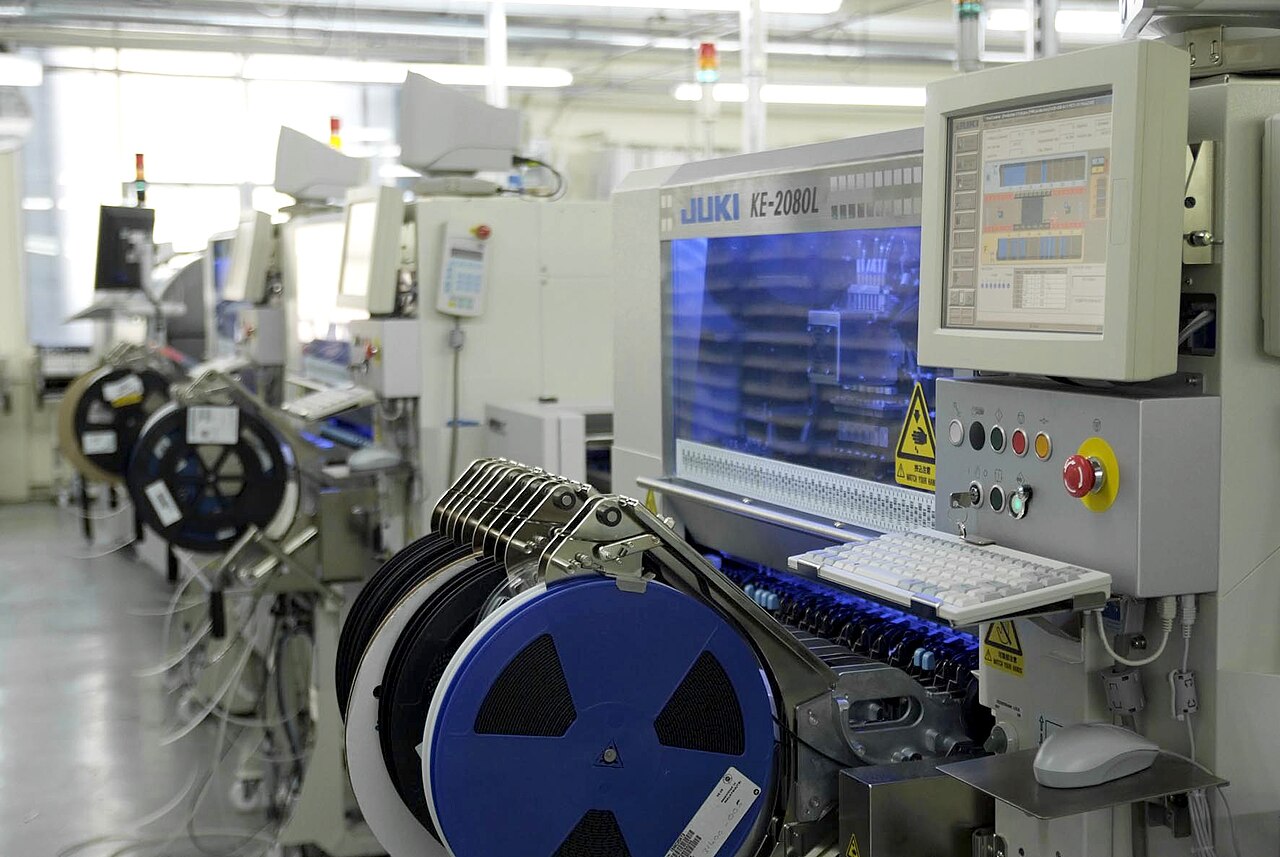
◆A held soak and a powered screening
A held soak keeps the units at temperature for the set time and looks at them at the end. It finds the failures that heat alone brings out. A powered screening does more. It runs the units under power through the soak and watches them for the entire time. A unit that drops out at minute forty is caught at minute forty, with the temperature and the state recorded. The powered screening finds the marginal part that a held soak would miss, because the fault shows only when the unit is hot and working at once.
Powering the units inside the chamber adds wiring and connections. Each tray needs power and a data link. The chamber has to bring those through its wall and still keep the seal and the uniformity. The reward is a screening that catches more, and a record that says when and how each unit failed. Burn-in is one form of environmental stress screening. The wider practice can add vibration and temperature cycling to the heat. These find a broader set of defects. The screening runs inside the limits the design can take. It weeds out the weak units. The recipe is fixed once, on a sample. It then runs unchanged on the line.
Running the units under power turns the soak into a continuous watch. The unit runs its real firmware, or a test pattern that drives every block. A monitor reads each output through the soak. The record then carries more than a pass or a fail. It carries the minute and the temperature at which a unit fell. A held soak is simpler and cheaper. A powered screen catches the marginal parts and times the failure. The product’s failure modes decide which one earns its place.
◆A screen, not a limit test
Burn-in shares a family with a different kind of test. The two are easy to confuse. A burn-in or a stress screen runs a known stress on every unit to weed the weak ones. A limit test, run on a sample at design time, pushes the stress up until the part breaks, to find where its limits lie. One screens production. The other explores a design. A screen that borrows a limit test’s stress would destroy good units. The burn-in floor runs the screen, inside the limits the design test already found.
◆Temperature and humidity together
Heat alone brings out many early failures. Some failures need moisture as well. A path of contamination across a board conducts only when the air is damp. A seal that lets water in shows its fault under humidity. Dry heat alone leaves it hidden. A chamber that controls temperature and humidity together reaches these failures. The humidity is held with the heat, on a profile the product’s own standard sets.
Adding humidity changes the build. The chamber needs a water supply, a way to raise and hold the humidity, and a way to manage the water that condenses on a cool surface. The control holds two values at once, temperature and humidity, across the working space and through the soak.
A hygroscopic part swells and shifts as it takes up moisture, a fault a dry soak never wakes. The damp profile is a pair of numbers held together, a temperature and a relative humidity, for a set dwell. The product’s own standard names the pair. The damp screen also makes water the chamber has to manage. A surface below the dew point pulls condensation out of the air. The chamber holds the cool spots above that point, or it drains what gathers. A unit pulled from a damp run into warm room air can sweat. A short, controlled return to room conditions lets it dry before a hand touches it.
◆The same stress on every unit
A screening is only fair if every unit gets the same stress. The chamber holds a tolerance band around the target temperature, and around the target humidity, across the entire working space. A unit in a warm corner is over-stressed. Its result then means less. The tolerance band has to hold at every tray position, for the full soak, on calibrated sensors. A mapping survey proves the tolerance band across the loaded space. The loading pattern keeps it true between surveys.
An uneven chamber corrupts the result in two directions. A unit in a warm corner is over-stressed. It may fail a test it would have passed at the right temperature. A good unit is thrown away. A unit in a cool corner is under-stressed. A weak unit sails through. The very defect the screen exists to catch walks out the door. The first error costs yield. The second costs the reliability the screen promised. Only a tolerance band held across the entire loaded space makes every unit’s result mean the same thing.
◆Reading the failures
A burn-in failure is data. Each unit that drops out names a weakness the design or the process let through. A cluster of the same failure points back to a bad batch of parts or a drifting solder process. The line watches the failure rate as a trend. A rate that climbs is a warning the process has slipped, caught while the boards are still in the building. The failed units go to analysis with their trace attached: the recipe they ran, the time they fell, the temperature at the moment. The analysis closes a loop. A root cause found on the burn-in floor fixes the process that made the fault. Burn-in screens the units in front of it. The feedback it gives screens the units still to come.
The failures are not spread evenly across causes. A handful of mechanisms account for most of them. A bad lot of one component, a solder profile that ran cold for a shift, a connector seated by a worn tool: a few sources drive the early-failure rate. Burn-in finds them in the units it screens. The trend it draws points the engineer at the source. A fix at the source lifts the entire line at once. The screen catches the units already built. The trend it feeds back stops the next batch from being built wrong.
◆A result for every unit
A lab test ends in a certificate for a batch. A production screening ends in a result for each unit: passed, or failed at a stated time and temperature. The result travels with the unit back to the line. A passed unit goes on to the next station. A failed unit goes to a bin for analysis, with its trace attached. The line software counts the failures, watches the rate, and flags a rising trend before it becomes a recall. The chamber is the instrument. The per-unit record is the product. A shipment leaves with a file behind it, one line per unit, each line a passed screen at a known stress. A customer who never sees the file still feels its absence, in the returns that do not come back. The chamber holds the stress. The robot holds the pace. The record holds the proof. The best screen is the one no one downstream ever has to think about.
◆The ramp and the dwell
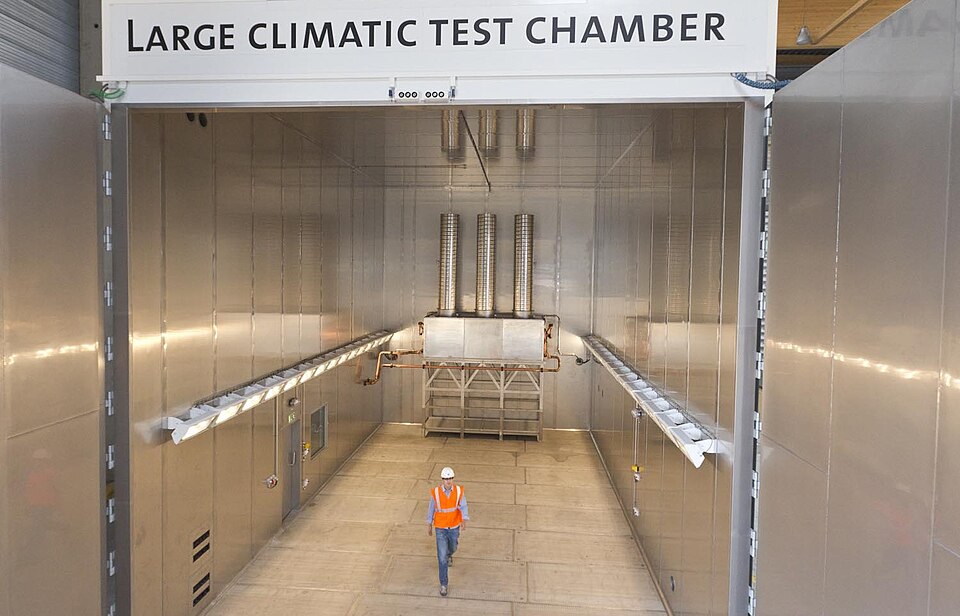
A burn-in profile is more than a number and a clock. The chamber ramps the units up to the test temperature at a controlled rate. A ramp too steep builds stress that belongs to a thermal shock test. The units reach temperature together, then hold for the dwell. The soak clock starts when the units arrive at temperature. It does not start when the air display first reads the setpoint. A dense board lags the air. A clock started on the air alone gives that board a shorter screen than the recipe asks. At the end, the units ramp back down at a controlled rate. The ramp, the dwell, and the return are all part of the recipe the sample proved.
◆One recipe, every unit
The screen is only fair if every unit runs the same recipe. The temperature, the soak, the powered state, and the humidity are fixed once, on a sample lot, and frozen. The recipe takes a name and a version. Every unit after runs that exact version. The temperature is not raised on a slow day to clear a backlog faster. The soak is not trimmed to catch up. A recipe nudged on the floor breaks the link between today’s result and last month’s. The recipe lives in one place, changed only through the review any process step gets. The version each unit ran is recorded with the unit. A field return years later can be read against the exact recipe that screened it.
◆Calibration and the trusted number
Every reading the screen makes is only as good as the sensor behind it. A chamber that holds a tolerance band on an uncalibrated probe proves nothing. The control sensor runs the loop. Separate monitoring probes, calibrated against references with current certificates, carry the proof. They sit at the unit’s position, at the spots a survey has shown to run to the extremes. The references go to a national standard on a fixed cycle. The chamber probes are checked against them. A drifted probe with a stale certificate quietly undoes a year of records. The calibration schedule is part of running a screen anyone can trust.
◆Questions on production-line burn-in
What is burn-in and why run it on the line?
Burn-in puts a finished unit through heat, often with power, to bring out the failures that would otherwise happen in the customer’s first weeks. A lab tests a sample and proves the design. A production screening tests every unit and catches the one board with a hidden fault. To test every unit, the screening has to run at the speed of the line. The chamber sits on the line as one more step.
Why is the chamber loaded by a robot?
A line runs around the clock at a steady rate. A person cannot load and unload a chamber at that rate through the night. A robot takes each unit from the line, places it in the chamber, holds it for the set time, and returns it with a result. The robot also gives every unit the same position and handling. The stress is the same from the first unit to the last.
What is the difference between a held soak and a powered screening?
A held soak keeps the units at temperature and checks them at the end. Under power, the chamber runs the units through the soak and watches them the entire time. It catches a marginal part that fails only when the unit is hot and working at once. It records the moment of failure. It costs more wiring and more data links inside the chamber.
When does a burn-in chamber need humidity as well as heat?
Heat alone brings out many early failures. Some failures need moisture: a contamination path that conducts only when damp, or a seal that lets water in. A chamber that controls temperature and humidity together reaches these failures. The humidity is held with the heat on a profile the product standard sets. This adds a water supply and condensate management to the build.
How does the chamber give every unit the same test?
It holds a tolerance band around the target temperature and humidity across the entire working space, at every tray position, for the full soak, on calibrated sensors. A unit in a warm corner would get a harder test. A mapping survey proves the tolerance band across the loaded space. The loading pattern keeps it true between surveys.
How long does burn-in take?
It depends on the product and the temperature. The hotter the screen, the faster a weak part ages, and the shorter the soak that catches it. A few hours is common. The plan trades temperature against time, with the rule of thumb that many failure rates double for every ten degrees of rise. The soak is counted from the moment the units reach temperature. It is not counted from the air display. A dense board takes longer to arrive. Its soak starts later.
Why load the chamber with a robot?
A line runs around the clock at a steady rate. A person cannot load and unload at that rate through the night, shift after shift. A robot can. It takes each unit from the line, places it in the same spot in the chamber, holds it for the set time, and returns it with a result. The robot gives every unit the same handling. The first board of the shift and the last meet the same stress. The placement is recorded with each unit for the trace.
What is the difference between burn-in and a HALT or limit test?
Burn-in is a production screen. It runs a known, safe stress on every unit to remove the weak ones. A limit test, often called HALT, runs on a sample at design time. It pushes the stress past the rating until the part breaks, to find where the limits are. One protects a shipment. The other improves a design. A screen must stay inside the limits the design can take. A screen run at a limit test’s stress would damage good units.
Does burn-in slow down the production line?
Not if the chamber is sized to the line. The capacity lets the chamber take a unit as often as the line makes one. A line that builds a unit a minute, with a four-hour soak, needs room for two hundred and forty units at once. A chamber sized too small becomes the slowest step and backs the line up. A small buffer ahead of it absorbs the short stops. Sized right, the chamber adds hours to a single unit’s journey. The line’s output rate holds.
Envsin builds robotic temperature and humidity chambers for production-line burn-in that take units at line rate, hold the same stress on every one, and return a result for each.