Power Temperature Cycling Test Chamber Per JESD22 A105
What power cycling does
Power and temperature cycling is an active test where other reliability methods are passive. JESD22-A105 powers the device under test, letting it heat itself by dissipating real current, and cycles the chamber temperature around it, then switches the power off and lets it cool, over and over for thousands of cycles. The stress it builds is mechanical rather than chemical: every heating and cooling expands and contracts the materials inside the package by different amounts, working the joints between them until fatigue cracks one open.
What the test hunts is the slow failure of the interconnect, the die attach that bonds the chip to its base, the wire bonds that carry its signals out, and the solder that fixes the package down to its board. A part that survives the prescribed cycles has shown those joints can take the thermomechanical working a powered life in the field will give them.
The two sources of heat
The defining feature of A105 is that the device makes its own heat, so the part is cycled by two sources at once rather than by the chamber alone. Power runs through the device until its junction warms from within, the chamber sets the air around it, and the two together swing the part between a hot state, when the power is on and the air is warm, and a cold one, when the power is off and the air is pulled down. That inside-out heating is what makes the test lifelike, since a chip in service heats itself every time it works and cools when it idles, and the gradient runs the way it really runs, hottest at the junction and cooler out through the package to the board, not uniform the way a part baked in an oven would be. The gradient is the point. It puts the strain exactly where the silicon meets its die attach and where the leads meet the board, the interfaces that carry both the heat and the current, and works them on every cycle the way a passive oven cycle never quite does. The chamber has to allow for that self-heating in its own control, reading and holding the air while the parts pour their own watts into it, so the swing the devices feel is the swing the standard sets and not one inflated or softened by the heat they make.
How the joints fatigue
The mechanism is thermomechanical fatigue, and it follows from materials that disagree about how much to expand. Silicon, copper, solder, the moulding compound, and the lead frame each have their own coefficient of thermal expansion, so a temperature swing makes each grow and shrink by a different amount, and the mismatch shears the joints that hold them together. Cycle after cycle the strain works the die-attach layer until microcracks spread across it and lift the chip from its heat path, fatigues a wire bond at its heel until it lifts from the pad, and ratchets a solder joint through plastic strain until it cracks.
The life follows the Coffin-Manson pattern, where the cycles to failure fall as a power of the temperature swing: double the swing and the life drops not by half but by a far steeper factor set by the exponent for the joint in question. That steep dependence is why the junction temperature swing, the delta-Tj, is the number every power-cycling programme records and controls, since a few extra degrees of swing can halve the life it measures.
Active against passive cycling
Heat from within changes everything.
The method has a passive sibling, and the difference is the point of choosing it. The passive thermal cycle of JESD22-A104 moves an unpowered part between temperature extremes, a clean test of the package on its own. Power cycling adds the live current and the internal gradient, loading the die-attach and the bond wires the way real operation does. For a part that spends its life switching load current and heating itself, the active test is the faithful one, and a full qualification often runs both.
A chamber that is also a power supply
The equipment for A105 is a temperature cycling chamber married to a power and measurement system, and neither half works without the other. The chamber swings the ambient between its limits at a controlled rate; a power supply drives current through the devices in step with it, switching them on to heat and off to cool; and a controller coordinates the two so the junction swing lands where the test specifies. Buying an ordinary cycling chamber and expecting to run A105 misses the half of the machine that makes the test active.
Carrying the current through the wall
Powering the parts means heavy wiring, and the wiring has to cross into a chamber that is itself cycling. A power-cycling load can draw real current, tens or hundreds of amps across a board of devices, so the feedthroughs carry heavy conductors rather than the fine signal wires a bias test needs, sized for the current without dropping voltage or heating on their own account. Those feedthroughs and the cabling inside also live through every thermal cycle the parts do, flexing and fatiguing with each swing, so they are built to outlast the devices rather than fail first and end the run.
The connections to each part have to be solid and low in resistance, since a loose or corroded joint adds its own heat and its own voltage drop and corrupts the junction-temperature reading the test depends on. A board carrying a hundred amps across many devices needs busbars and lugs rather than hookup wire, and every junction in that path is a place heat can be made or a voltage lost.
The feedthroughs themselves are sealed against the chamber atmosphere while passing that current, and they are sized so their own resistance neither warms the entry nor steals from the voltage the measurement reads. The wiring is as much a part of the rig's reliability as the chamber itself, and on a long run it is as likely to be the thing that fails as any device on the board.
Carrying away the heat the parts make
A board of powered devices dumps real heat into the chamber, and the cooling has to take it away to hold the ambient. When dozens of power parts switch on together they can release a kilowatt or more into the air, and the chamber's refrigeration has to remove that load on top of pulling the air down through its cold dwell, so a rig sized only for an empty cycle falls behind the moment the parts come on.
The heat load is itself cyclic, surging when the devices conduct and vanishing when they switch off, which the cooling control has to track without overshooting cold once the source disappears. The control has to hold the set ambient against a heat source that turns on and off with the cycle, a harder job than steering an empty box, and the cooling capacity is specified against the full powered load rather than the bare chamber. Underestimate the device dissipation and the chamber cannot reach its cold point with the parts live, quietly shrinking the very temperature swing the test was meant to apply.
Reading the junction as it works
The junction temperature is the test's central number, and it is read without ever touching the die. The standard trick uses a temperature-sensitive electrical parameter, usually the forward voltage of a junction at a small sense current: the voltage falls with temperature in a known, calibrated way, so measuring it in the first instant after the power switches off, before the junction has cooled, gives the junction temperature it reached under load.
From that the rig computes the swing each cycle and confirms the stress is what the schedule called for. The same in-situ measurement watches for failure as it arrives, a rising on-resistance or a climbing thermal resistance betraying a die-attach crack that is choking the heat path, or a step in voltage marking a bond that has lifted. Catching the degradation as it develops, rather than only at an end-of-test bench check, tells the engineer not just whether the part failed but at which cycle and by which mechanism.
Ramp, dwell, and the count
The shape of the cycle sets what the test means. Each cycle ramps the ambient up and down at a controlled rate, dwells at each extreme long enough for the part to settle, and times the power within it so the junction reaches its planned high and low. The cycle count to a defined failure, run into the thousands, is the life figure the qualification reports. The temptation to rush the ramps is checked by the need to let the junction reach its extremes each pass, since a swing cut short understates the stress and overstates the life.
What gets tested this way
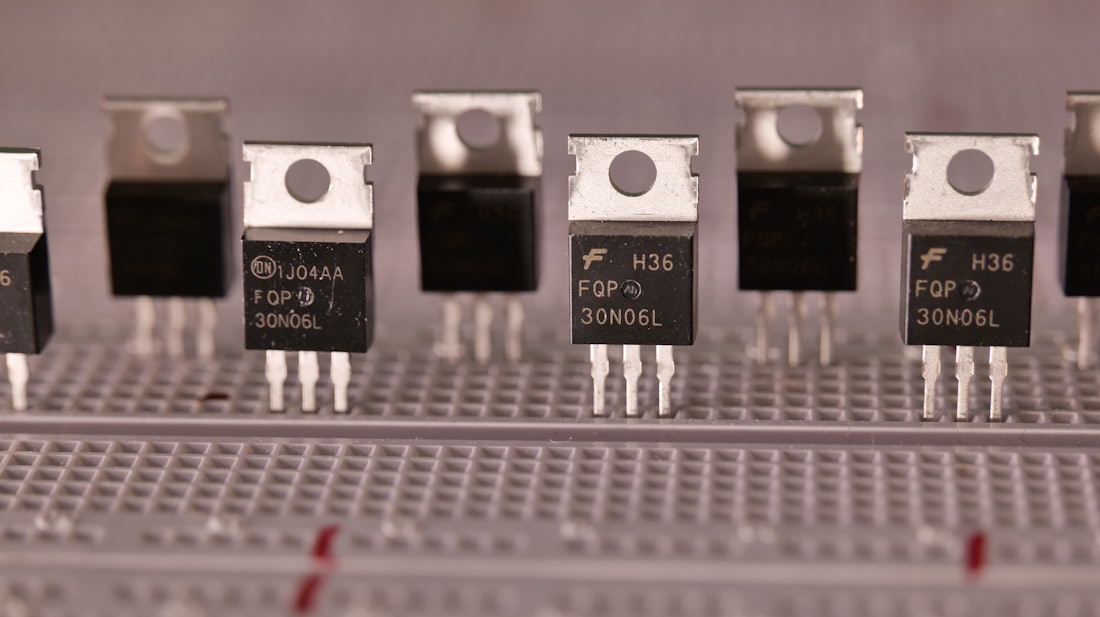
Power cycling is the proving ground for parts that earn their living switching current. Power semiconductors lead the list, the insulated-gate bipolar transistors and power MOSFETs and the modules that pack many of them onto one baseplate, along with high-power LEDs and rectifiers that heat themselves hard every time they conduct. These are the devices whose field failures are dominated by solder and die-attach fatigue, and a small signal chip that barely warms has little to prove here.
Pulling it together
The A105 chamber is a temperature cycling box with a power system grafted on, built so a device can heat itself from within while the air swings around it from without. The two heats together drive a junction temperature swing larger and sharper than either alone, and that swing fatigues the die-attach, the bond wires, and the solder through the thermomechanical mismatch of the materials, on the steep Coffin-Manson curve where a few degrees of extra swing cost a large share of the life.
The rig has to carry heavy current through cycling feedthroughs, shed the heat the live parts dump, and read the junction temperature through a calibrated voltage to confirm the stress and catch the failure. The number it controls above all is the junction temperature swing, since the Coffin-Manson curve is so steep that a swing widened by a handful of degrees can halve the cycles a part will last, and a chamber that lets its cold point creep up under the heat of the live load quietly understates the stress and overstates the life.
Run with that swing held true, power cycling wears a part the way years of switching service would, and the cycle count to failure is the single number that tells a power device whether it is fit to go to work.