Softened Water Versus Reverse Osmosis Water For Chamber Humidifier
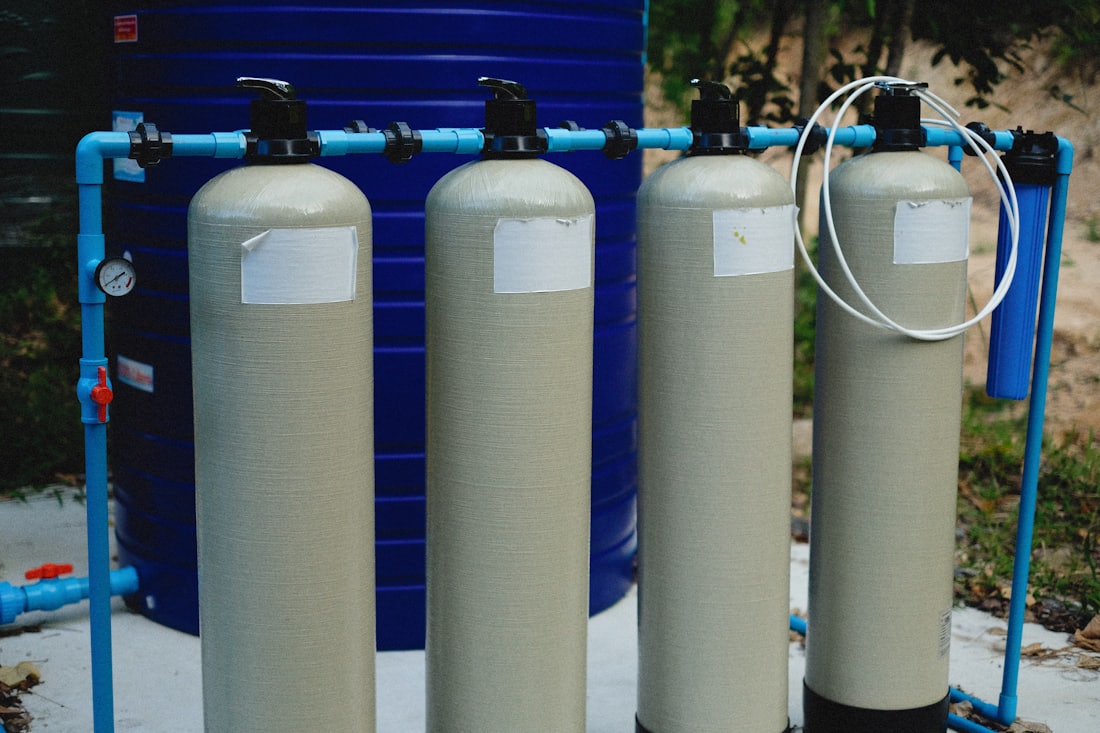
How a softener works
A water softener is an ion-exchange column, and the trade it makes is a swap rather than a removal. The water passes through a bed of resin beads charged with sodium, and as the calcium and magnesium that make water hard touch the resin they stick to it, while the sodium they displace washes out into the water in their place. The hardness is gone, in the sense that no calcium or magnesium remains to build limescale, but nothing has left the water overall.
Two sodium ions ride out for every calcium ion that stayed behind, so the count of dissolved particles barely changes and the total dissolved solids stay roughly where they began. When the resin fills with calcium it is regenerated by flushing it with a strong brine, a flood of sodium that strips the calcium back off and sends it to drain, readying the bed for the next run. The output is water that will not scale a kettle and will still read several hundred microsiemens on a conductivity meter, because the sodium it now carries conducts just as the calcium did.
What reverse osmosis does instead
Reverse osmosis works by exclusion rather than exchange. A pump forces the water against a semi-permeable membrane whose pores pass water molecules and turn back almost everything larger, so the calcium, the magnesium, the sodium, the chloride, and the bulk of the silica are all left behind and only clean water crosses. A single pass strips ninety-five to ninety-nine percent of the dissolved solids, dropping a feed of five hundred microsiemens into the tens. The product is genuinely low in dissolved solids of every kind, a different class of water from anything a softener can make.
Softening trades the minerals; osmosis removes them.
The reading that exposes the difference
One number tells the two apart at a glance. Put a conductivity meter on softened water and it reads much what the raw supply did, a few hundred microsiemens, because the dissolved-solids count has hardly moved; the sodium simply stands in for the calcium. Put the same meter on reverse-osmosis permeate and it reads a small fraction of that, ten or twenty microsiemens where the softened water shows three or four hundred, the dissolved load stripped away rather than rearranged.
A chamber humidifier specification written as a maximum conductivity, below five microsiemens on the strict units, is a demineralisation target, and softened water misses it by two orders of magnitude however soft it feels to the hand. The hardness test and the conductivity test measure genuinely different things, one counting only the calcium and magnesium and the other counting every dissolved ion alike, so a supply can pass the hardness test outright while failing the conductivity limit by a factor of a hundred. Reading both numbers, rather than trusting the single word soft, is what keeps the wrong water out of a humidifier that cannot tolerate it.
The sodium it adds, in numbers
The swap is easy to follow once the hardness is put in chemical terms. Hardness measured at two hundred milligrams per litre as calcium carbonate works out to about four milliequivalents of hardness in every litre, and the softener trades each of those for an equivalent of sodium. Four milliequivalents of sodium weigh close to ninety milligrams, so the softened water now carries roughly ninety milligrams of sodium per litre where it held the calcium and magnesium before.
The mass of dissolved matter has barely shifted, and since both ions conduct, the conductivity holds near its old figure too. That ninety milligrams is what dries into the soft crust in the pan and sprays as dust from the atomiser, and it is the plain reason a softener can leave a residue while the hardness test reads zero.
Why softened water still leaves a deposit
Removing the hardness solves one fault and not the other. A softener takes out the calcium and magnesium that form hard, bonded scale, but it does it by trading them for sodium, so the water leaves the column carrying just as much dissolved matter as it arrived with, only in a more soluble form. Boil that water in a chamber humidifier and the sodium does not vanish; it concentrates as the water turns to steam and drops out as a soft, powdery deposit instead of a hard crust. The deposit is easier to wipe away than limescale, which is the softener's one real gain, but it still builds, still has to be cleaned, and still has to be carried somewhere. In an atomising humidifier the picture is worse, because that type does not boil the water but flings it into the air as a fine mist, so every dissolved solid the droplets carry, sodium included, dries onto the chamber surfaces and onto the parts under test as a fine white dust. There the softener has actively made things worse, raising nothing while adding a salt that now coats everything. This is why softened water is never a general answer for a chamber, since it suits one kind of humidifier and harms another, and the only water that leaves nothing behind in any of them is water with the dissolved solids truly removed.
The electrode boiler turns it around
One humidifier wants the opposite.
One humidifier prefers the softener's output to the membrane's. An electrode steam cylinder boils water by passing current through it between metal plates, and that current needs dissolved ions to flow, so the cylinder wants conductive water and sits cold and dead on the near-pure permeate that reverse osmosis makes. Softened water suits it well, the sodium holding the conductivity in the band the electrodes need while the absence of calcium slows the scaling that would bridge the plates. For this one design the softener is close to ideal, the exact reverse of every other humidifier in the room.
Matching the water to the humidifier
The choice falls out once the humidifier type is named. An ultrasonic or other atomising head demands reverse-osmosis or deionised water and nothing less, since only the removal of the dissolved solids stops the dust, and softened water fails it outright. A resistive steam boiler or a heated pan runs best on reverse-osmosis water too, the low dissolved load keeping both scale and any residue to a minimum, though softened water is a tolerable second best where scale is the only worry.
The electrode cylinder alone wants softened water, for the conductivity its principle depends on. Reading the maker's water specification settles the rest, since a conductivity limit points at reverse osmosis and a hardness limit alone may permit softening. Where the manual gives a single conductivity figure and no separate hardness line, softening is being ruled out by implication, and the membrane is the only treatment that reaches the number.
Running costs and upkeep, side by side
The two systems ask for different attention and different money. A softener is cheap to buy and cheap to run, its main demand a hopper of salt topped up every few weeks and a regeneration cycle that backwashes the resin and draws brine on a schedule or a meter; the resin itself lasts many years before it needs replacing. Reverse osmosis costs more at the outset and carries a membrane that fouls and is replaced every few years, asks for a sediment and carbon pre-filter to protect that membrane, and throws a meaningful fraction of its feed to drain as reject, a water cost a busy lab budgets for. A softener wastes little water but adds sodium and salt; an osmosis unit wastes water but delivers a far cleaner product. Neither is simply cheaper, and the running pattern of the lab decides which burden sits easier.
Why the two are often paired
The systems are not rivals so much as stages, and a well-built water plant runs them in series. Hard feed water scales a reverse-osmosis membrane the same way it scales a boiler, the calcium dropping out on the membrane surface and choking its flow, so a softener placed ahead of the osmosis unit strips the hardness first and lets the membrane work on softened water that will not foul it.
The softener protects the membrane; the membrane delivers the purity the softener never could. Many laboratory and industrial supplies are plumbed exactly this way, softener then osmosis then a polishing deioniser, each stage handing cleaner water to the next. Spoken of as alternatives the two confuse; arranged as a chain they make sense, and the humidifier at the end drinks the result.
The mistake that keeps recurring
The error that follows from treating the words as synonyms is a familiar one. A lab installs a softener, calls the water soft, and feeds it to an ultrasonic humidifier, and within weeks the chamber and its sensors wear a white film the maintenance log cannot explain, because the sodium the softener added sprays out exactly as the hardness would have. The fix is never more softening; it is the removal the softener was never built to do.
Another lab buys reverse osmosis for an electrode boiler and finds the cylinder will not heat, the water too pure to carry current, and the cure is to feed it the conductive water it wanted all along. Both faults trace to the same confusion, that soft and pure describe the same water. They do not, and the humidifier is unforgiving about the distinction.
Pulling it together
Softened and reverse-osmosis water sit on opposite sides of a simple line: one rearranges the dissolved minerals and one removes them. Softening kills hardness and leaves the dissolved-solids count and the conductivity almost where they were, good against scale and useless against dust. Reverse osmosis strips the dissolved load wholesale, the water a clean humidifier needs and the wrong feed for the electrode boiler that lives on conductivity. Match the treatment to the humidifier rather than to the word on the label, read the conductivity rather than the marketing, and where the supply is hard, run the softener ahead of the membrane rather than in place of it, the one protecting the other so the membrane never fouls on calcium it could have been spared.
The two are a sequence rather than a choice between equals, and the chamber that drinks the right water at the end of the chain holds its humidity for years without scaling, dusting, or stalling on the supply it was handed.