Combined Cold Dry Heat Low Pressure Test Chamber Per IEC 60068 2 39
Three stresses, brought together

Test 2-39 puts cold, dry heat, and low air pressure together, and runs them in the combinations the standard lays out instead of one after another in isolation. The point is the interaction. At sea level a part keeps its cool because the surrounding air carries heat away, and a high-voltage gap holds because dense air resists a spark. Take the pressure away and both of those props fall, so a part that passed cold and heat on their own can still fail once altitude joins them.
Altitude changes the rules.
Thin air carries less heat, so a powered part runs hotter at altitude than it does on the ground at the same air temperature. Thin air also breaks down at a lower voltage, so a gap that never sparked at sea level can flash over at cruising height. Neither effect shows in a plain cold test or a plain dry heat test. The low pressure has to ride along with them to surface it.
Thin air, two surprises
Altitude does more than chill. It stops air from carrying heat away and lets a spark jump a gap that held at sea level.
Worst is in between
The thinnest air is not where arcing peaks. The danger sits at a middle pressure many products pass through on the climb.
What low pressure does
Low air pressure works on a part in ways heat and cold alone do not reach. With fewer air molecules to carry heat off a surface, convection nearly stops, so anything that makes its own warmth climbs in temperature even while the surrounding air reads cold. A sealed enclosure feels the outside pressure fall while the inside stays high, so the case bulges and a weak seam or seal can split or leak. Liquids boil at a lower temperature, and gas trapped in a material at sea level works its way out.
Then there is the spark.
Air is a fine insulator when it is dense. Thin it out and the voltage needed to jump a gap drops, reaching its easiest point in the partial vacuum of high altitude. A circuit that runs clean on the ground can arc or glow with corona once the pressure falls. Flight hardware and high-voltage gear face this test before they leave the ground.
Where arcing peaks
The thinnest air is not where arcing is worst. As pressure drops, the voltage needed to jump a gap falls to a low point at a particular pressure, then climbs again once the air grows too thin to carry a discharge at all. That low point, the Paschen minimum, sits at a height many products pass through on the way up, so a circuit can be safe on the ground and safe in deep vacuum yet flash over at the altitude in between. A run that swept only the lowest pressure would step right over it. The method dwells across the range instead of parking at the floor.
The chamber behind the test
A chamber for 2-39 is part climate box, part vacuum vessel. It heats and cools like any temperature chamber, and it also pumps the air down to the low pressure the test calls for, holding the specimen in a sealed, thick-walled space that takes the load of the outside air pressing in. A vacuum pump pulls the pressure down, a gauge tracks it, and the controls move temperature and pressure together along the profile the standard sets.
The vessel is the part that sets it apart. A plain climate chamber has a light box and a simple door. An altitude chamber has a pressure-rated shell, a sealed door that holds against the pressure difference, and feed-throughs for sensor and power lines that stay tight as the air leaves.
Holding pressure and temperature at once
Running pressure and temperature together is harder than running either alone. A vacuum pump pulls the vessel down and then holds that thin air steady while the heaters or the refrigeration drive the temperature through its profile. Heat the gas that remains and its pressure tries to rise; chill it and the pressure sags, so every degree of temperature change nudges the altitude the part is meant to be seeing. The pump and the bleed valve answer those nudges without pause, trimming the leak rate so the gauge stays on its setpoint while the thermal loop does its own work. The two controllers run in cascade, each watching the other, because a fast ramp on one side throws a disturbance straight into the other. Cold surfaces under vacuum add their own trouble: any trace of moisture left in the chamber migrates to the coldest wall and freezes there, and that frost has to be purged before it skews a reading. The standard fixes the order, the ramp rates, and the hold times, and the chamber follows them to the second, so a part meets the same altitude and the same temperature in every lab that runs the method.
Why dry heat, and no humidity
This test keeps the air dry. At altitude there is little water to carry, and feeding humidity into a low-pressure box makes little sense, since moisture behaves oddly as the pressure falls. 2-39 pairs its low pressure with cold and with dry heat, and leaves the damp work to the humidity standards. The combination here is about thin air and temperature rather than moisture.
Measuring the thin air
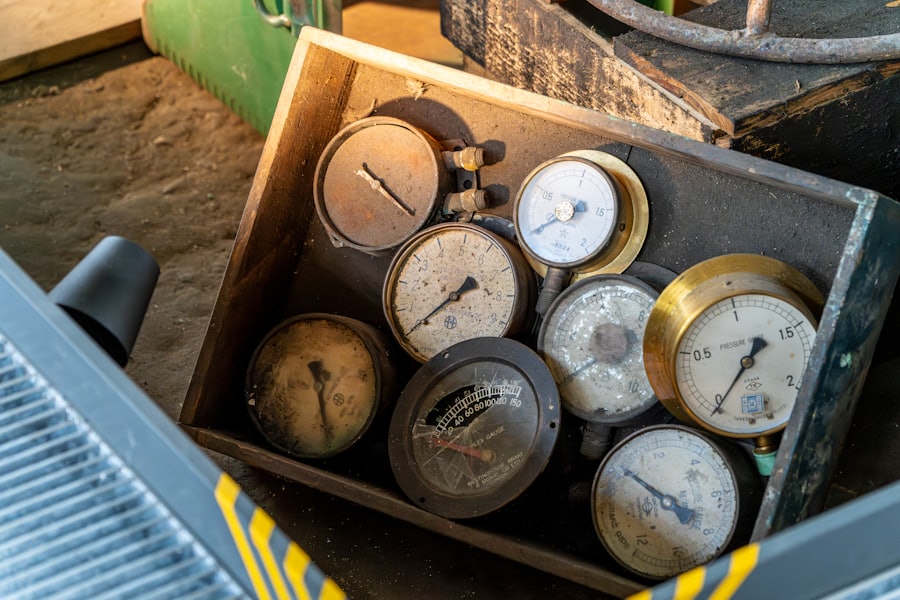
Pressure is the reading that defines this test, so the chamber measures it as closely as it measures temperature. A pressure gauge or transducer tracks how far the air has been pulled down, often expressed as an equivalent altitude rather than a raw pressure, since a product spec usually names the height it has to survive. The control system trims the pump against that reading and logs it through the run, so the report shows the altitude the part saw at each step.
Equivalent altitude is the language the work speaks. A spec asks for 15,000 metres or 25,000, and the lab sets the pressure that matches that height in the standard atmosphere. Naming a height keeps the test tied to the real envelope a product flies in, while the gauge underneath still reads the pressure the pump holds.
Cold and the seals
Cold and low pressure work on a seal together.
A gasket that stays soft and tight at room temperature shrinks and stiffens in the cold, and at the same moment the pressure outside drops and tries to pull the seal open. A joint that would hold either stress alone can leak when both arrive at once, which is the pairing 2-39 is built to find. A chamber that runs cold and low pressure together catches the leak a cold test or a vacuum test on its own would let slip.
The self-heating problem
A powered part is where lost convection bites hardest. On the ground, moving air pulls heat off a chip or a transformer and carries it away fast enough to keep the junction inside its rating. Thin air carries far less, so natural convection all but stops and the only paths left are conduction through the leads and the board and radiation from the case. A device that shed nearly all its heat to the air now has to lose it some other way, and a design that never planned for that lets the junction climb toward a temperature it never reaches on the bench. A margin that looked generous at sea level can close in minutes. The effect stacks with the dry heat leg, where the surrounding air is already warm, so the part starts its climb from a higher floor. A 2-39 run on powered gear watches the component's own case or junction temperature alongside the chamber air, because the air can read comfortably cold while the silicon inside cooks past its limit, and only the part sensor catches it before the failure does.
Outgassing in thin air
Low pressure pulls volatiles out of materials. Plasticisers, solvents left in a coating, and moisture held in a plastic all escape more freely as the air thins, and what leaves can settle on a cooler surface nearby, including an optic or a contact that needs to stay clean. The test shows how much a material gives up and where the vapour lands, which matters for anything carrying a lens, a sensor window, or a switch that a thin film would foul.
Checking the part at altitude
Some of the sharpest checks happen while the part is still at pressure.
A dielectric or a corona check run at the low pressure catches the arcing that would never show once the air came back, and a functional check at altitude proves a powered part keeps working in the thin, hot or cold air it has to survive. The standard names when those checks happen, since a fault that needs low pressure to appear hides the moment the vessel returns to room conditions.
The failures altitude finds
The faults gather around the three things thin air takes away.
Overheating shows first on anything that runs warm, since the cooling it leaned on at sea level is gone. Arcing and corona show on high-voltage circuits as the breakdown voltage falls. Sealed enclosures bulge, vent, or leak as the pressure difference works on them. Materials outgas, lubricants and potting can foam, and a sealed sensor or display can lose its fill. Cold layered on top stiffens seals and embrittles plastics while the rest of it unfolds.
Sequence and combination
The standard offers the stresses in set sequences and combinations rather than as a free mix. A part might face cold at low pressure, then dry heat at low pressure, each held for a set time, so the run walks through the altitude envelope the product will meet. Keeping the order fixed makes the result repeatable and lets a lab compare one unit against another and one lab against the next without arguing over how the test was run.
The order of cold and heat
The order the stresses come in shapes what the test finds. Cold first at low pressure stiffens a part and shrinks its seals before the pressure pulls at them, while heat first at low pressure softens and outgasses the part before the cold sets in. The standard fixes the sequence for a given severity so the run stays repeatable, and a chamber follows that order without improvising, holding each leg for its set time before it moves on to the next.
Pump-down and the rate that matters
How fast the pressure falls and rises is part of the test. A slow pump-down lets a sealed part breathe and equalise, while a fast one loads the seals and the case the way a quick climb does. The standard sets the rate so the mechanical stress of the pressure change is known, and a chamber built for the test holds that rate steadily.
Coming back down is its own step. Repressurising too fast slams air back into the vessel and shocks the specimen, and if the part is still cold from the run, the returning air can frost onto it as its moisture meets the chill. A careful chamber brings the pressure and the temperature back together at a controlled pace so the part lands at room conditions without a fresh shock.
Cousins in the vacuum world
Test 2-39 shares a border with the thermal-vacuum work done for spacecraft.
Both pair temperature with low pressure, and both watch for the same outgassing, overheating, and seal trouble. The difference is depth and intent. The IEC method covers the altitudes of flight and high terrain with a practical vessel and pump, while a space thermal-vacuum chamber reaches a far harder vacuum and pairs it with the radiative heating and cooling of orbit. A product bound for the sky meets 2-39, and one bound for orbit goes further still.
The vessel's own limits
The vessel sets a ceiling on the test.
A chamber rated to a certain altitude cannot pull lower without risking its own structure, and the door, the seals, and the feed-throughs each have a pressure they can hold before they leak or distort. A lab matches the chamber to the altitude a product needs and checks that the empty box holds its vacuum before a specimen ever goes in, since a leak in the vessel reads as a pressure the part never met.
Where the combined test fits
A product earns 2-39 when its life takes it up high. Avionics in an unpressurised bay, equipment carried on high-altitude aircraft or balloons, gear bound for thin-aired plateaus, and anything that has to keep working as a cabin loses pressure all face this trio. The test trades the humidity of the damp-heat methods for the altitude the others cannot reach, and it answers the question those tests leave open: what happens when the air itself starts to run out.
What thin air takes away
Low pressure works on a part in ways heat and cold alone do not reach, and the first is cooling. With fewer air molecules to carry heat off a surface, convection nearly stops, so anything that makes its own warmth climbs in temperature even while the surrounding air reads cold. A powered chip that stayed within its rating on the bench can overheat at altitude on the same temperature setting, because the air that pulled its heat away at sea level is simply too thin to do the job. A run on powered gear watches the part's own temperature alongside the chamber air, since the air can read cold while the component cooks inside.
The second surprise is the spark.
Air is a fine insulator when it is dense; thin it out and the voltage needed to jump a gap falls, reaching its easiest point in the partial vacuum of high altitude. A circuit that ran clean on the ground can arc or glow with corona once the pressure drops, and the worst case is the Paschen minimum, a middle pressure a product passes through on the way up rather than the deepest vacuum at the top. The payoff is a single profile that catches the cold-and-thin failures a one-variable run would miss.
Pulling it together
The combined cold, dry heat, and low pressure test is the altitude test of the IEC 60068 family. It cools, heats, and pumps the air down in one vessel so a product meets thin air and temperature together, the way it will at height. A chamber built for 2-39 carries a pressure-rated shell, a sealed door, a vacuum pump, and a gauge alongside its heaters and refrigeration, and it walks pressure and temperature along the profile in step. Run that way, the test tells a maker whether a product will keep its cool, hold its seals, and resist a spark when the air grows thin and cold around it.